First autumn nights: low light, a quiet room and a baby’s bedtime ritual
When September ends the days shorten, dusk comes early and the nights in a newborn’s home grow longer. Three things I learned in Hamza Bera’s first autumn: dim the light, do the same things in the same order, and make the room his room.
By Merve Çokal Doğan · · 3 min read
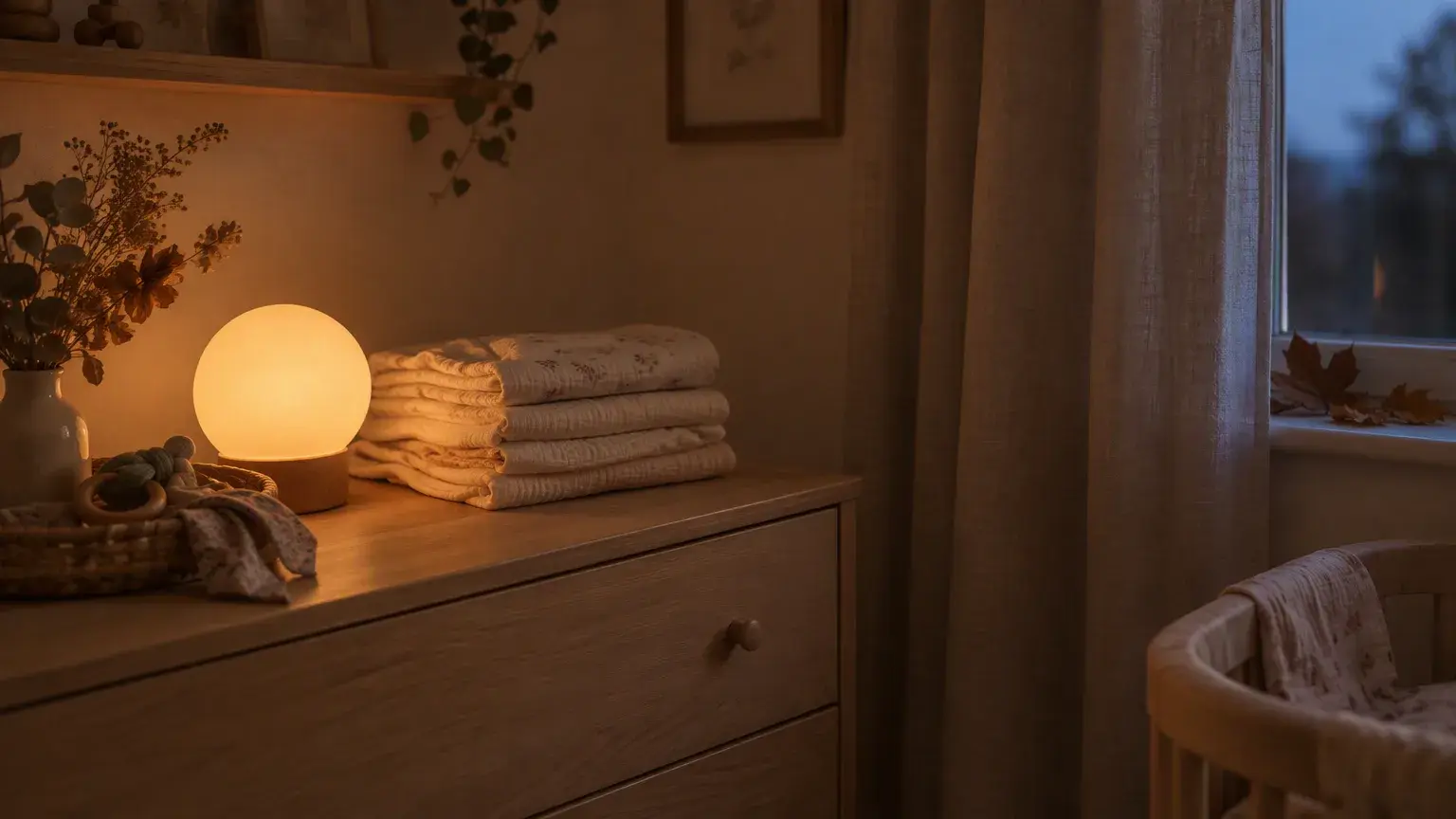
Hamza Bera was born in January, but it is his first autumn I remember best. We had just moved to İstanbul; the flat was strange, the street was strange, we didn’t know the neighbours. One evening at the end of September I went to draw the curtains at six and found it was already dark outside. What we had called night all summer now began in the afternoon.
Anyone living with a newborn knows the nights are long. When autumn arrives, they get genuinely longer.
Dimming the light
The first thing I learned was about light. In summer the evening light coming into the room had eased him towards sleep on its own; I did nothing, the day did it. In autumn that job fell to me.
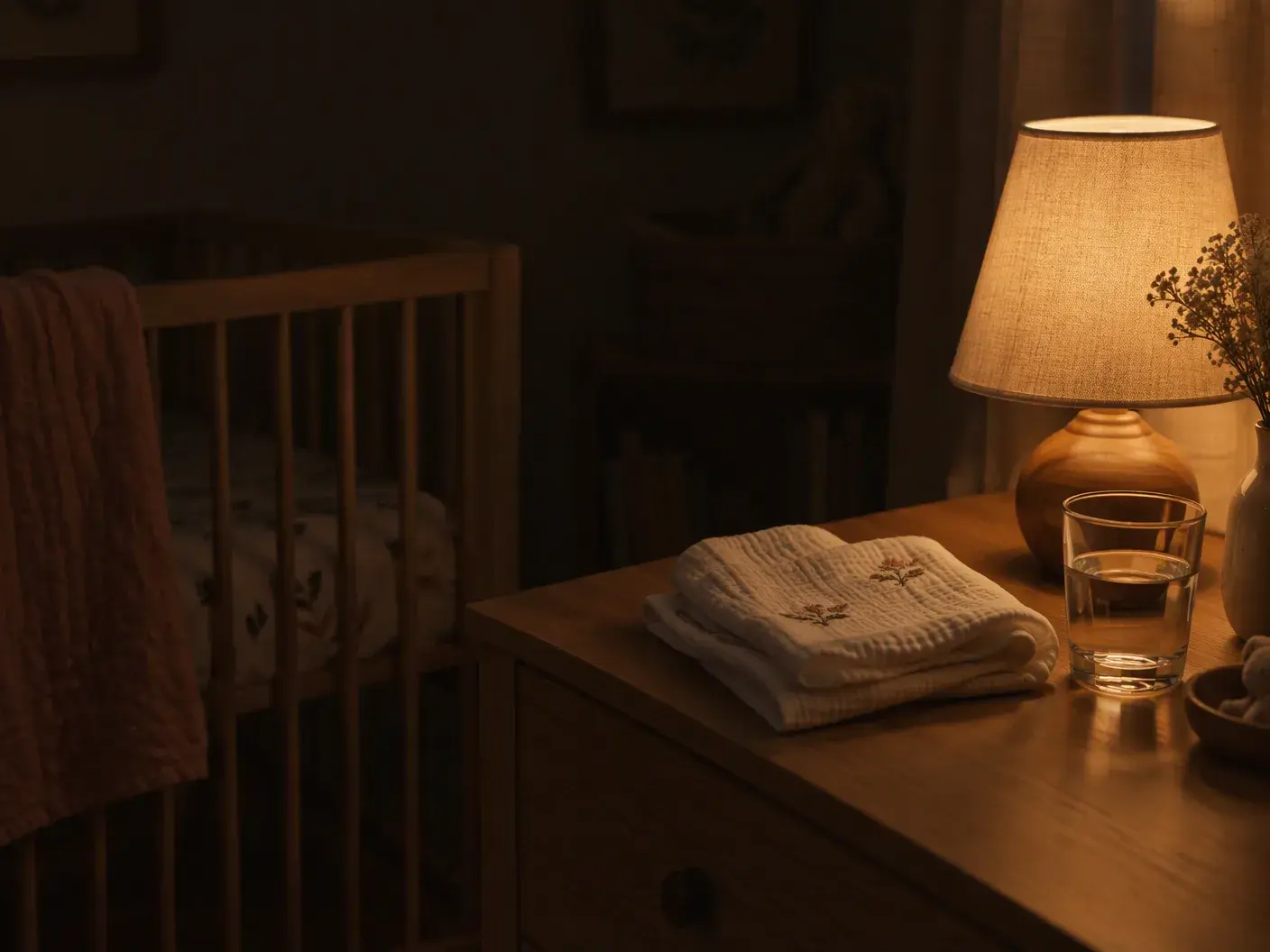
I stopped switching on the ceiling light. We put a small lamp on the dresser — warm, yellowish, lighting from the side rather than from above. Feeding, changing, settling him again at two in the morning: only that lamp was on. Within a week Hamza Bera started yawning when he saw it. The light had taken the place of the clock.
My grandmother used to say “no lamp in a baby’s room, or the eyes get used to it”. She was right and wrong at once. Yes, a baby should get used to the dark; but a mother cannot change a nappy in it. Low light is the middle ground.
The same things, in the same order
The second thing was order. Bath, towel, muslin, lamp, lullaby. Every evening the same. The order matters, the content doesn’t — the lullaby needn’t be sung well, and mine never was.
Babies don’t know the time, but they know the sequence. By step three their eyes grow heavy, because they know what step four is. In the shrinking days of autumn that sequence becomes the one orderly thing in the house. It was good for me too: for those five steps the phone was elsewhere, the flat was quiet, and the darkness outside didn’t matter.
Making the room his
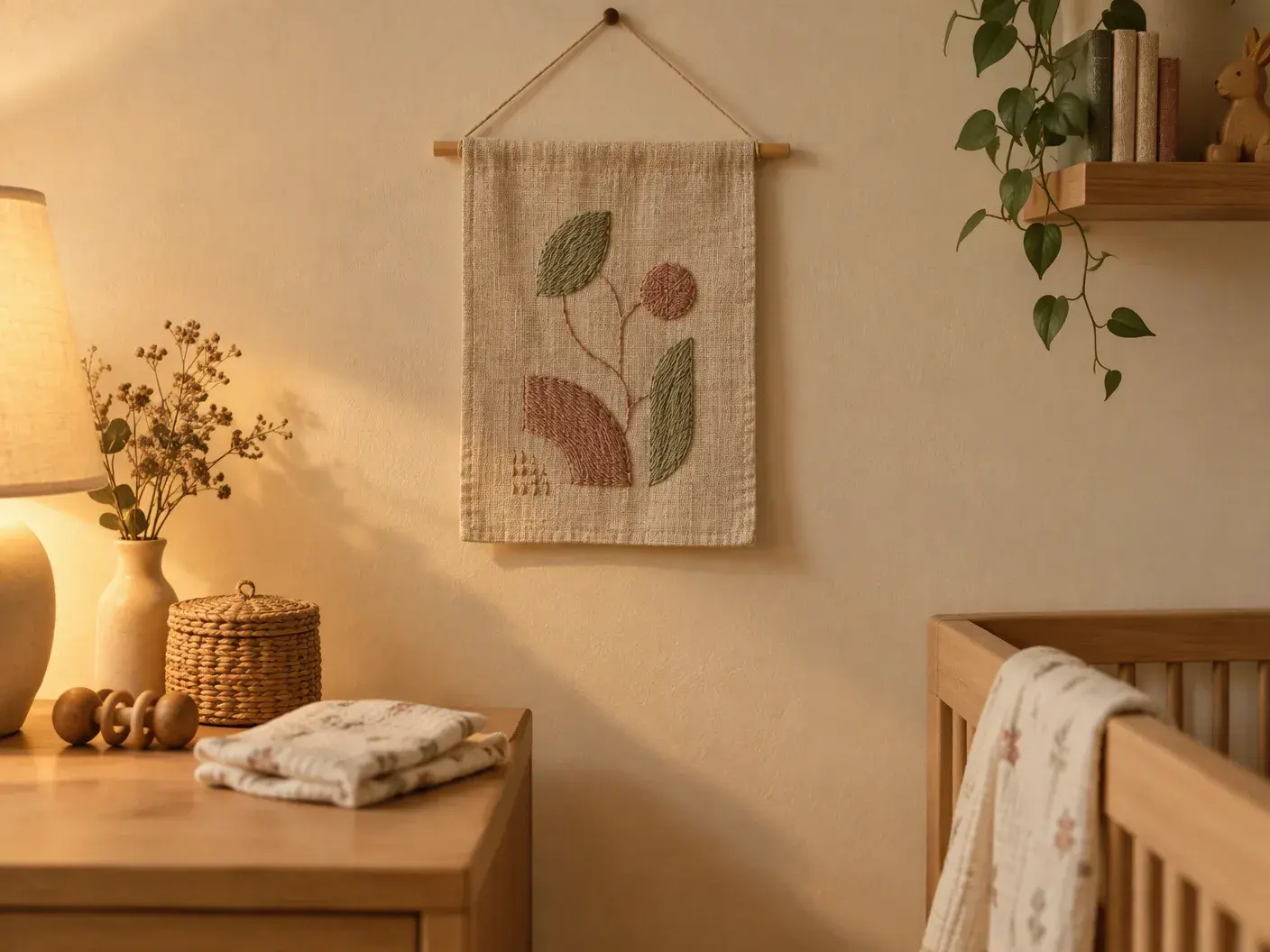
The third thing took me longest. That İstanbul flat was foreign to us — and to Hamza Bera. In his room in Konya his name had hung on the wall, embroidered on a cloth by his grandmother. It had stayed in one of the moving boxes.
One evening I dug the cloth out and hung it beside the lamp. Nothing changed; a baby can’t read. But it changed for me. That night the room became his room. His name was there, the light fell on it, and for the first time I said “this is home”.
Getting ready for autumn nights
- One low lamp. Warm-toned, at dresser or bedside height, lighting from the side. The ceiling light stays off all night.
- Draw the curtains early. In autumn it gets dark outside before it does inside; once the curtains close, the room’s clock is yours.
- Write down the five steps. Not on the fridge — in your head, and in the head of whoever else puts the baby down: partner, grandmother, sitter. Same five steps.
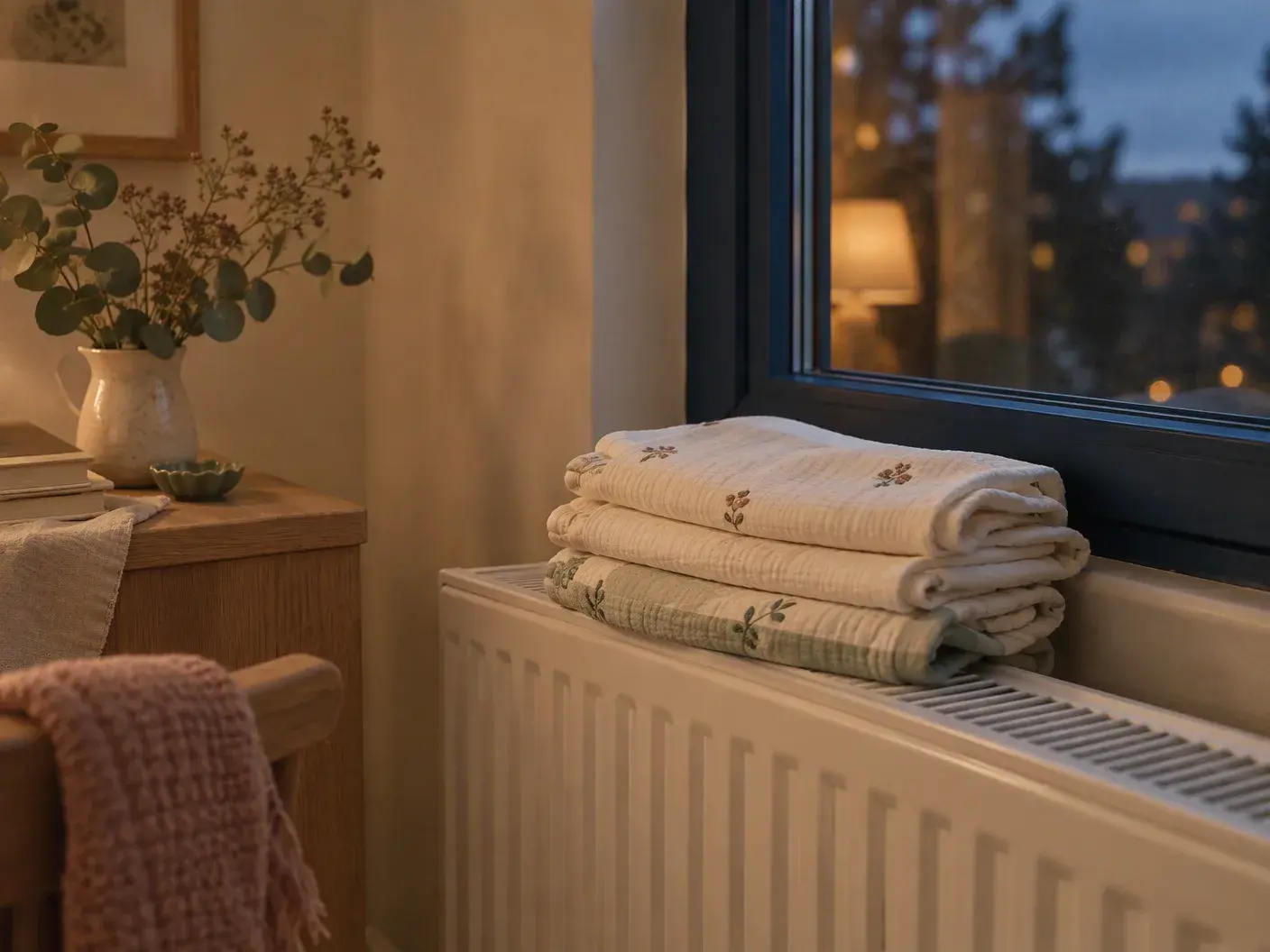
- Warm the muslin first. Two minutes on the radiator. A baby who meets a cold cloth on an autumn night wakes up; one who meets a warm cloth keeps sleeping.
- Put their name in the room. On the wall, the door, next to the lamp. Not for the baby — for you, so you see every night whose room it is.
Let the light carry the name
In that first autumn the lamp on the dresser was an ordinary lamp; his name hung on the cloth beside it. It occurred to me only later that the two could be one thing. The name itself could give the light.
Their name, glowing through the night
Your little one’s name becomes a soft, warm light — for night feeds, bedtime stories and the early dusk of autumn evenings.
The curtain and the lamp
Hamza Bera has his own room now and switches off his own lamp. But on the first evening of autumn, drawing the curtains at six, I still think the same thing: it is dark out there, and in here is ours. A low light, the same five steps, a name on the wall. Let the nights be long. The room is ours.
— Merve Çokal Doğan
Questions from readers
Mothers ask, we answer — questions under this story that others may have too.
Ask your own question
Ask the author anything about this story. We send a one-time code to your WhatsApp so real mothers, not bots, get answered — your number is never shown.
Keep reading
Mother & Baby
Two lives in one day
A day that starts with four children’s voices, continues in a white coat and comes home again to four small hearts. Meliha Özyalvaç, a specialist physician and mother of four, on the hardest part of working motherhood — and the thing without a name that rises through all the tiredness.
· 1 min read
Mother & Baby
Choosing a name four times: how we learnt to love a name
Süleyman Taha, Muammer Esat, Hamza Bera, Mehmet Emde. We chose a name for four boys and learnt the same lesson each time: a name isn’t found on a list, it’s found by calling it out loud. On the quiet side of naming a baby — with a note on why Turkish children so often carry two names.
· 3 min read
Sewing
Sewing a name into the school smock: the small ritual of September mornings
Every September the same scene plays out in Turkish kitchens: four school smocks on the table, a reel of thread, a needle, and a name sewn into each collar so nothing gets lost. As the mother of four boys, I learned that the little label holds far more than lost cardigans.
· 3 min read