The shortening days: bringing a hand-poured candle to a new mother
By mid-October it is dark at five, and a house with a newborn slips into long early evenings. What do you carry to that house? From the jar candle my mother brought to Konya to the first candles I poured myself: why the oldest gift for a loğusa — a woman in her first forty days after birth — has always been light.
By Merve Çokal Doğan · · 4 min read
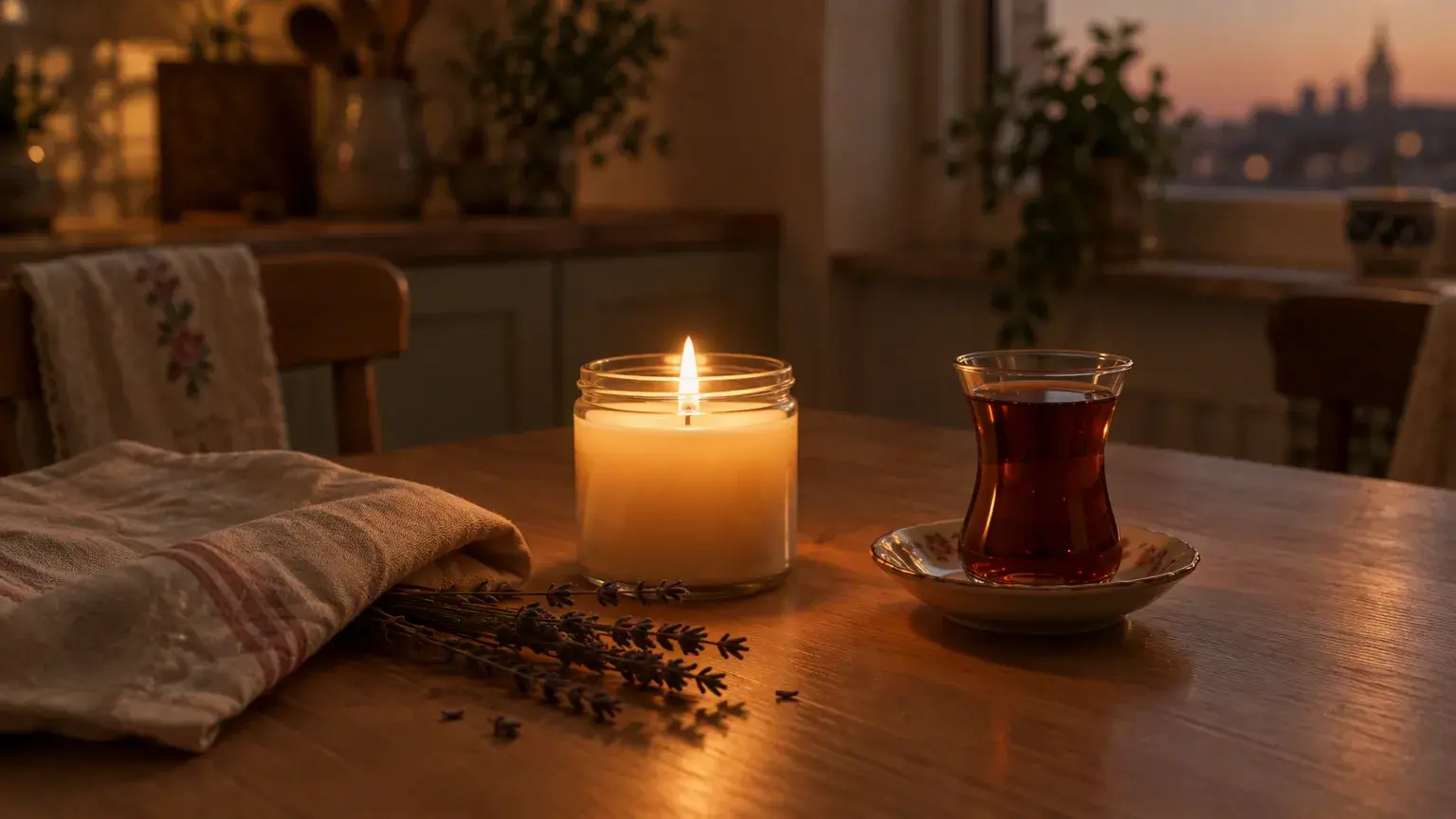
Süleyman Taha was born in October, and that October darkened early. In our flat in Konya the curtains were drawn at five and it was night by six. My mother came from Zonguldak with a jar in her bag: a cream-coloured candle she had poured herself. “You bring light to a loğusa,” she said, and set it on the kitchen table.
For forty days that candle burned every evening. While Süleyman slept, while I drank tea, while Abdullah came in from work. At the end of the forty days a finger’s depth of wax was left in the bottom of the jar. The jar is still here.
Why light for a new mother?
In Anatolia you never visit a loğusa — a woman in the forty days after giving birth — empty-handed; but what you bring changes from region to region. What my mother knew from Zonguldak was light: an oil lamp once, later a candle. It was believed that the light in a new mother’s house must not go out for forty days, lest the dark “press down” on mother and baby.
Nobody believes that now. But bring a candle to a woman who has given birth in autumn and the same thing still happens: her house is a little less dark for one more evening. Not a belief — a hand held out. “The nights are long; let this be with you.”
Pouring my own
When my mother’s candle was gone I learned to pour my own. Around the time Muammer Esat was born a neighbour of mine was a loğusa, and I had nothing to take. So: the kitchen, a saucepan, the way my mother described it.
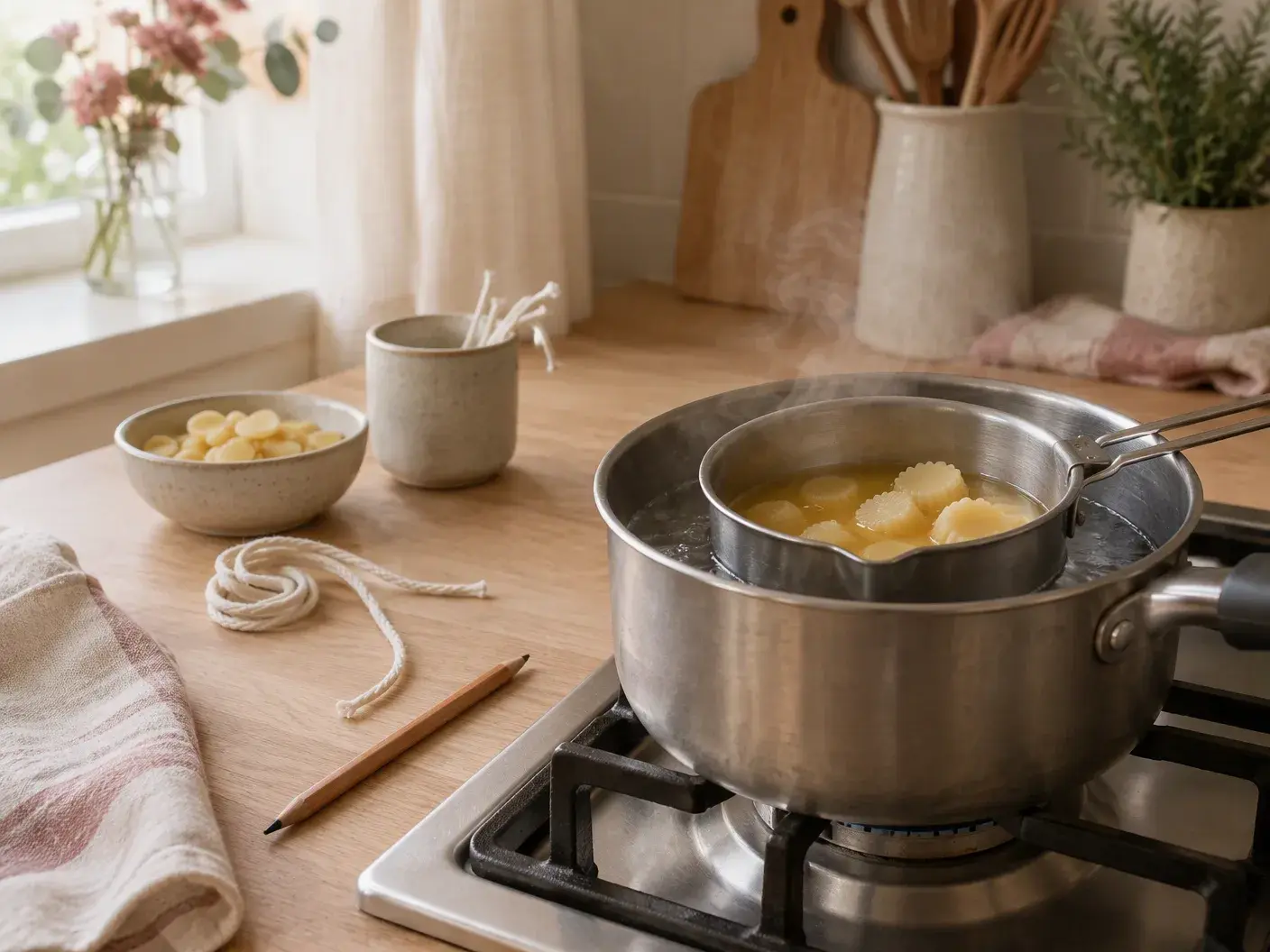
Pouring a candle asks for less patience than embroidery but the same quiet. Beeswax melts slowly; it cannot be hurried. As it melts the kitchen smells of honey. Then the wick in the centre of the jar, the wax poured slowly down the side, and the wait. One night. In the morning the jar has set, the surface smooth, the colour cream.
My first candle sank in the middle. My neighbour lit it anyway. Next time I learned to pour a second layer. The later ones came out even, but it is the sunken one I remember most.
A candle in autumn, flowers in summer
In summer a new mother gets flowers, gets fruit. In autumn, a candle. I think the season itself asks for it: the days shorten, life turns indoors, light becomes precious. A jar candle is a small warmth in the middle of a long evening — beside the tea glass, while the baby sleeps.
And there is the candle’s silence. Flowers talk; gift wrap talks. A candle doesn’t talk; it burns. In those days, what a woman who has just given birth most often wants is exactly that — something that doesn’t talk.
Pouring a candle at home
- Beeswax or soy wax. From a craft shop or a beekeeper. Beeswax smells and burns slowly; soy is cheaper and melts more easily. Don’t bring paraffin into a baby’s home.
- A jar. A jam jar, a tea glass, a small ceramic pot. Wide-mouthed, so the wick stays centred.
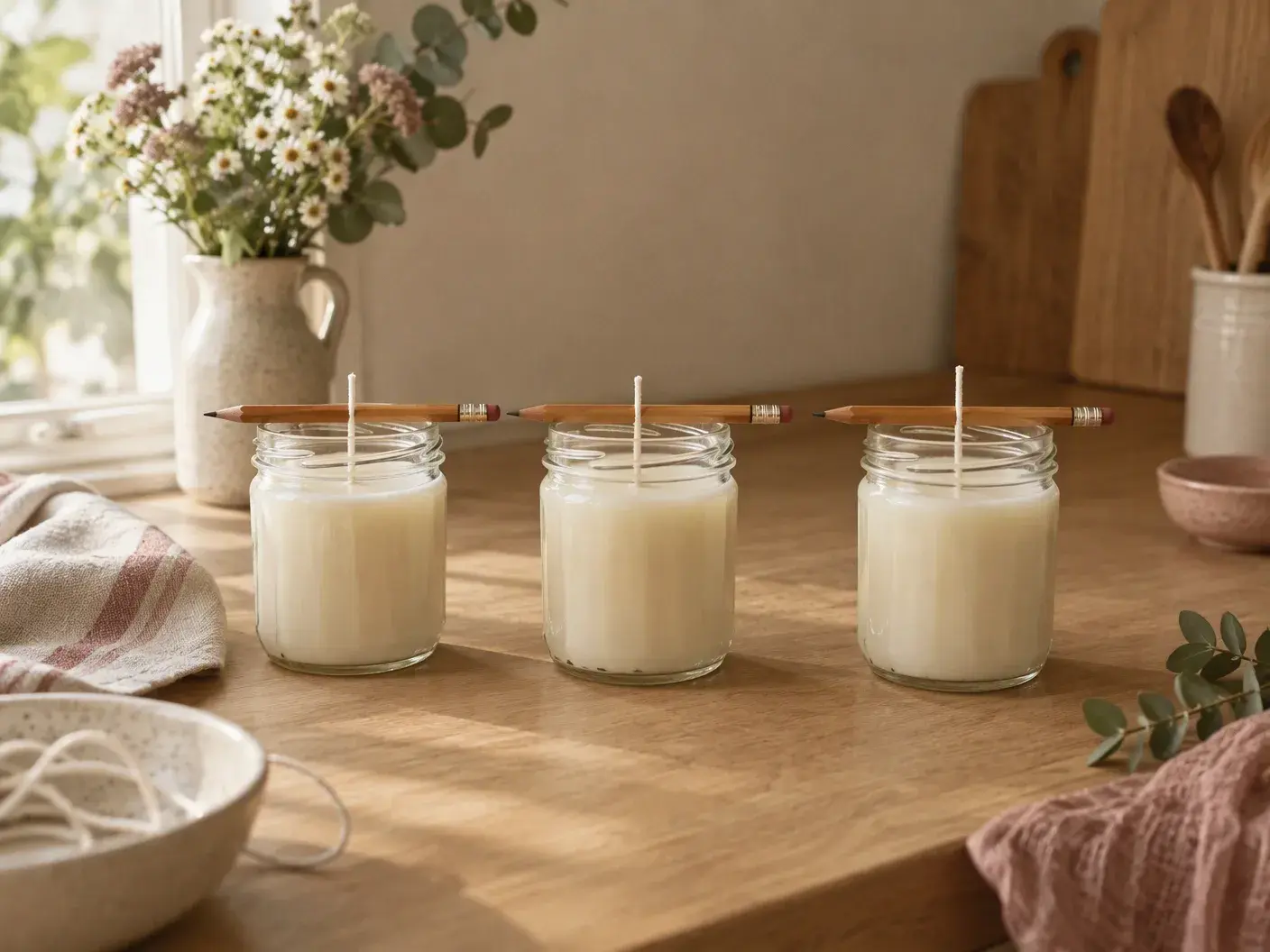
- A wick and a pencil. Stick the cotton wick to the bottom of the jar with a drop of wax; lay the top end over a pencil across the jar’s mouth so it stands straight.
- A bain-marie. Water in a saucepan, a small pot inside it, wax inside that. Don’t let it boil; let it melt. For scent, a few drops of lavender oil into the melted wax.
- Pour slowly, wait a night. If the centre sinks, pour a thin second layer the next day. Trim the wick to half a centimetre.
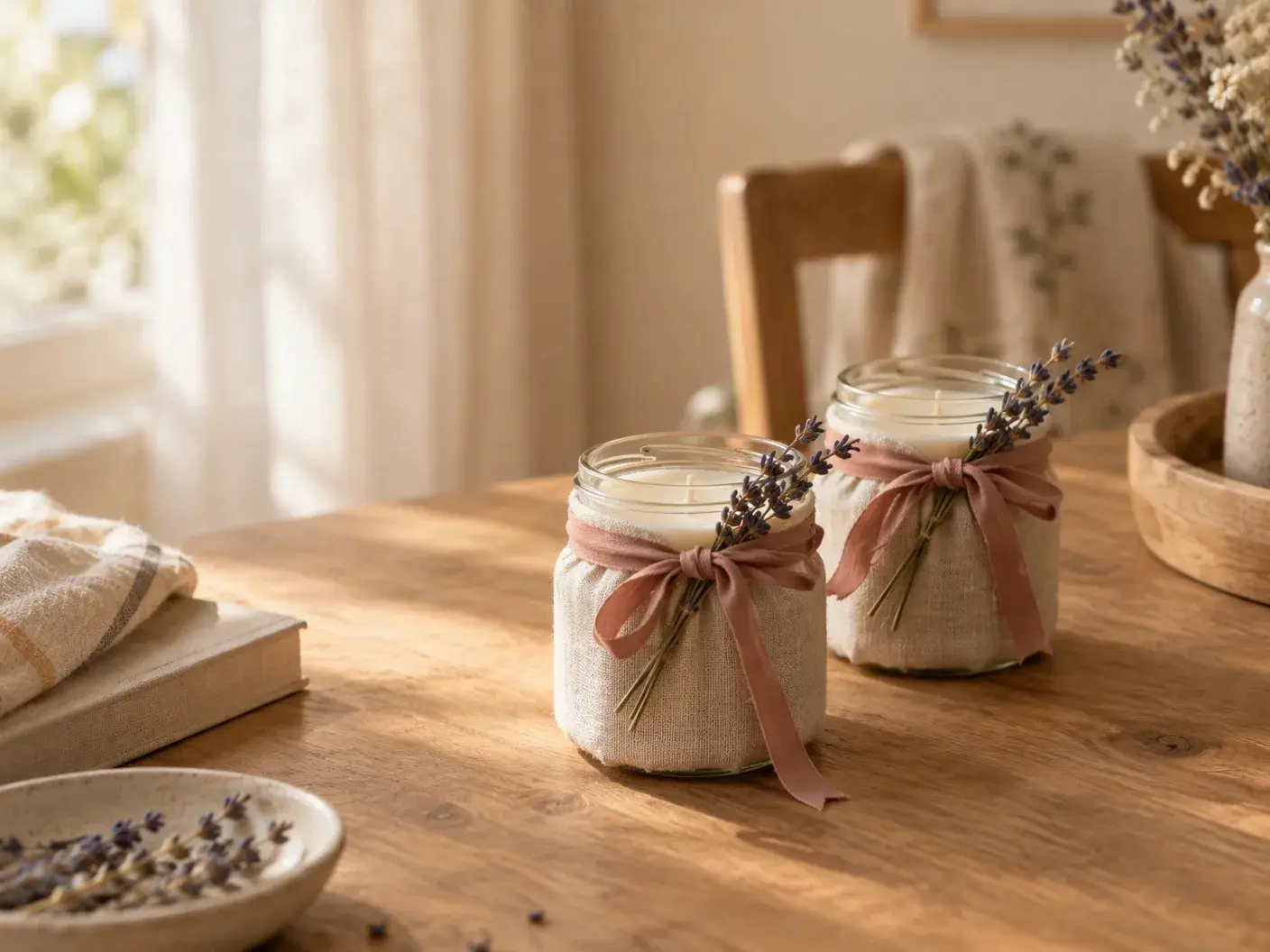
- A date under the jar. A small label: whose forty days, which autumn.
If there is no time to pour
A visit to a new mother is often sudden — the news comes, you go the next day. There is no night to let a candle set. Even then, you don’t go empty-handed.
A gift for a new mum
A named plush bunny and little shoes make a tender gift for a family welcoming a new baby.
The bottom of the jar
The jar from my mother’s candle is still on the kitchen shelf, a finger of cream wax in the bottom — what is left of forty days. Every October, when it gets dark early, I look at it. Then I take out the saucepan. I don’t know whose forty days it will be this autumn. But let the candle be ready.
— Merve Çokal Doğan
Questions from readers
Mothers ask, we answer — questions under this story that others may have too.
Ask your own question
Ask the author anything about this story. We send a one-time code to your WhatsApp so real mothers, not bots, get answered — your number is never shown.
Keep reading

Candles
Candlelight evenings: the small flame that turns a flat into a home
Our first winter in İstanbul, with the boxes still unpacked, I lit a candle and the flat felt like ours for the first time. Why candle-making has moved into everyone’s kitchen, and what one small flame does to an evening.
· 3 min read
Customs & Traditions
When the first milk tooth falls out: Turkish tooth customs, from the rooftop to a keepsake box
What did Turkish families do with a child’s first fallen milk tooth before the tooth fairy arrived — and what do they do now? The rooftop rhyme, the buried wish, and a small named box: what I learned from Süleyman Taha’s first tooth.
· 4 min read
Stone Painting
Stones from the autumn park: writing a name on a pebble
In October the park paths fill with leaves and gravel; children crouch to collect stones, mothers empty their pockets. A few of those stones come home, get washed, and a name is painted on them. From autumn afternoons with four boys: why a name written on stone outlives one written on paper.
· 3 min read