Stones from the autumn park: writing a name on a pebble
In October the park paths fill with leaves and gravel; children crouch to collect stones, mothers empty their pockets. A few of those stones come home, get washed, and a name is painted on them. From autumn afternoons with four boys: why a name written on stone outlives one written on paper.
By Merve Çokal Doğan · · 3 min read
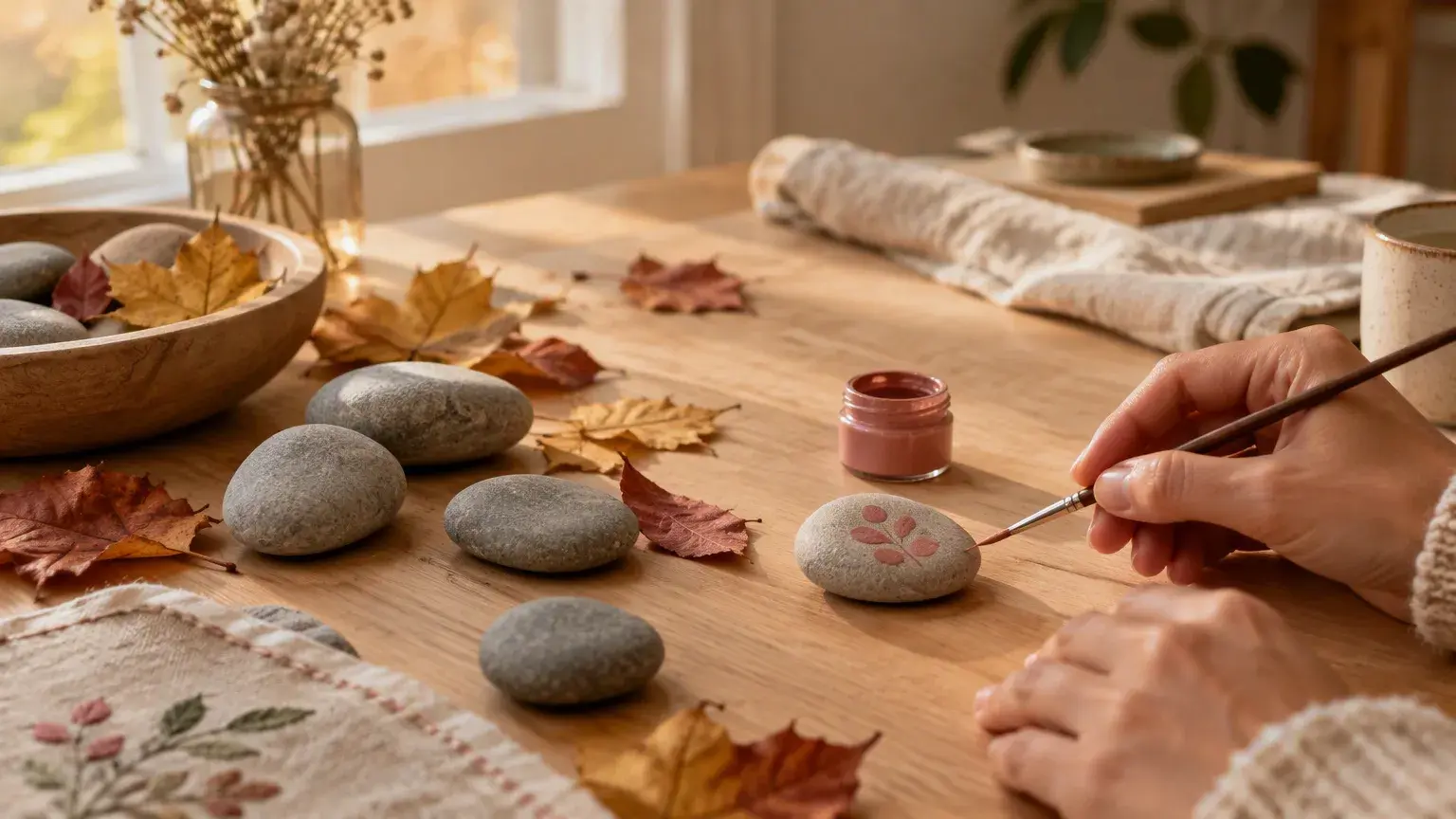
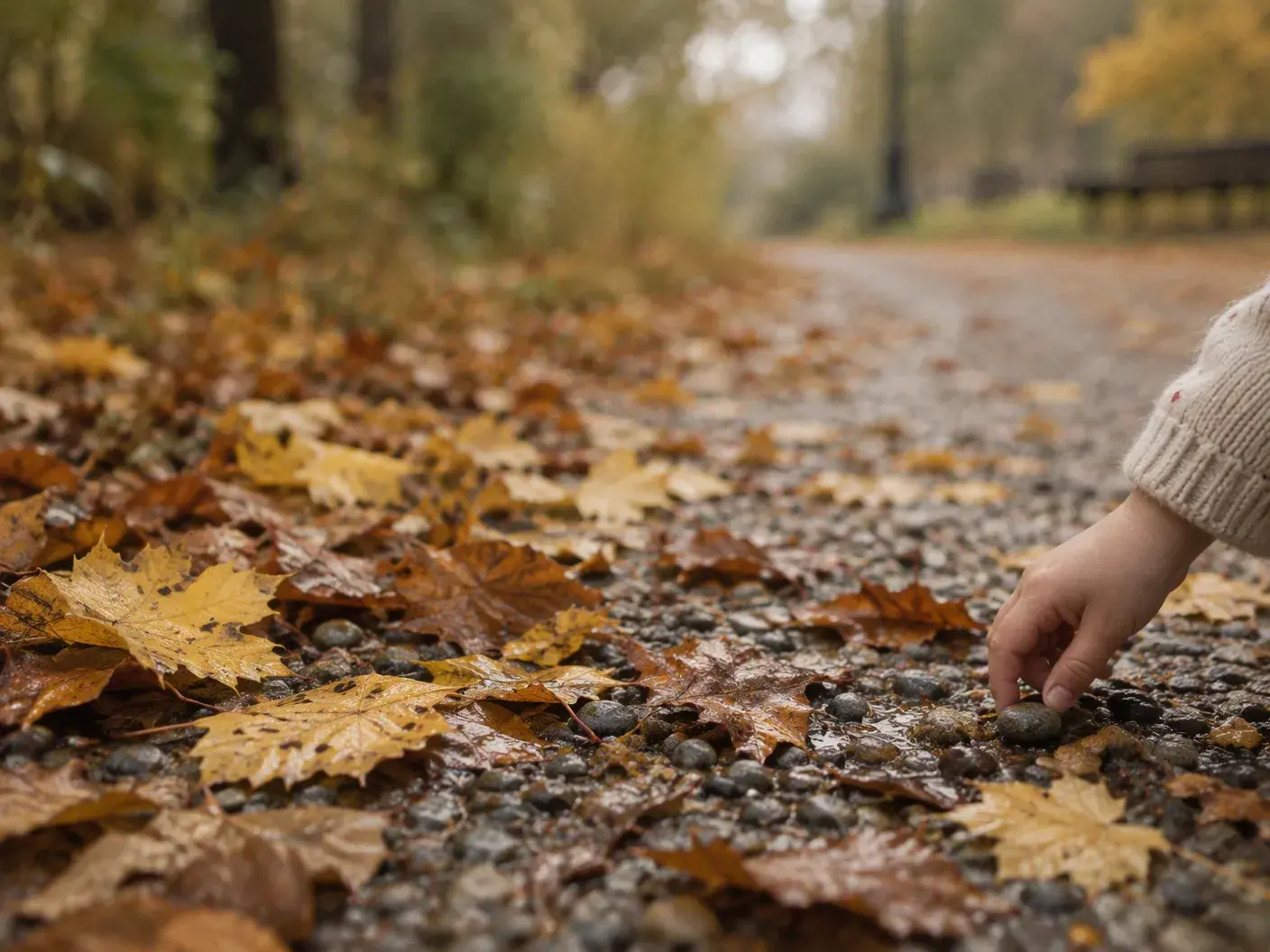
The second week of October, a park in İstanbul. Hamza Bera is crouched at the edge of the path, pulling stones out from under the leaves. Mehmet Emde is doing whatever he does. I am on the bench, and my jacket pockets are getting heavier: every stone found is handed to me, because “Mum, you keep it.”
On the way home there were twelve stones in my pockets. They were lined up on the kitchen table, washed and dried. Then Hamza Bera asked, “Which one is mine?” They were all the same. Grey, round, park stones. “Let’s write on them,” I said.
Why stone?
A child who grows up in Zonguldak knows stones; the shore is made of them, and we five sisters carried stones home from the beach every summer. But a beach stone is a summer stone. Autumn’s stone is the park’s: it comes out from under the leaves, wet, and dries in your hand.
The difference between writing on stone and writing on paper is this: paper tears, gets wet, creases. Nothing happens to a stone. The paint might wear off, once a decade. Then you paint it again. A stone is the first time a child holds something permanent in their hand.
And there is this: painting a stone takes no talent. A line, a dot, a letter. A child can do it alone. And what they make sits in their room for years.
Four stones, four names
That day we wrote names on four of the twelve stones. Hamza Bera wrote his own initial: big, slightly crooked, dusty rose. Mehmet Emde couldn’t write yet; he dipped his finger in the paint and pressed it onto the stone. That is a name too — the oldest kind.
Süleyman Taha and Muammer Esat were at school. I painted theirs; they found them on the table when they got home. Süleyman said, “I’m too old for these,” and took his stone to his room. It is still on the windowsill.
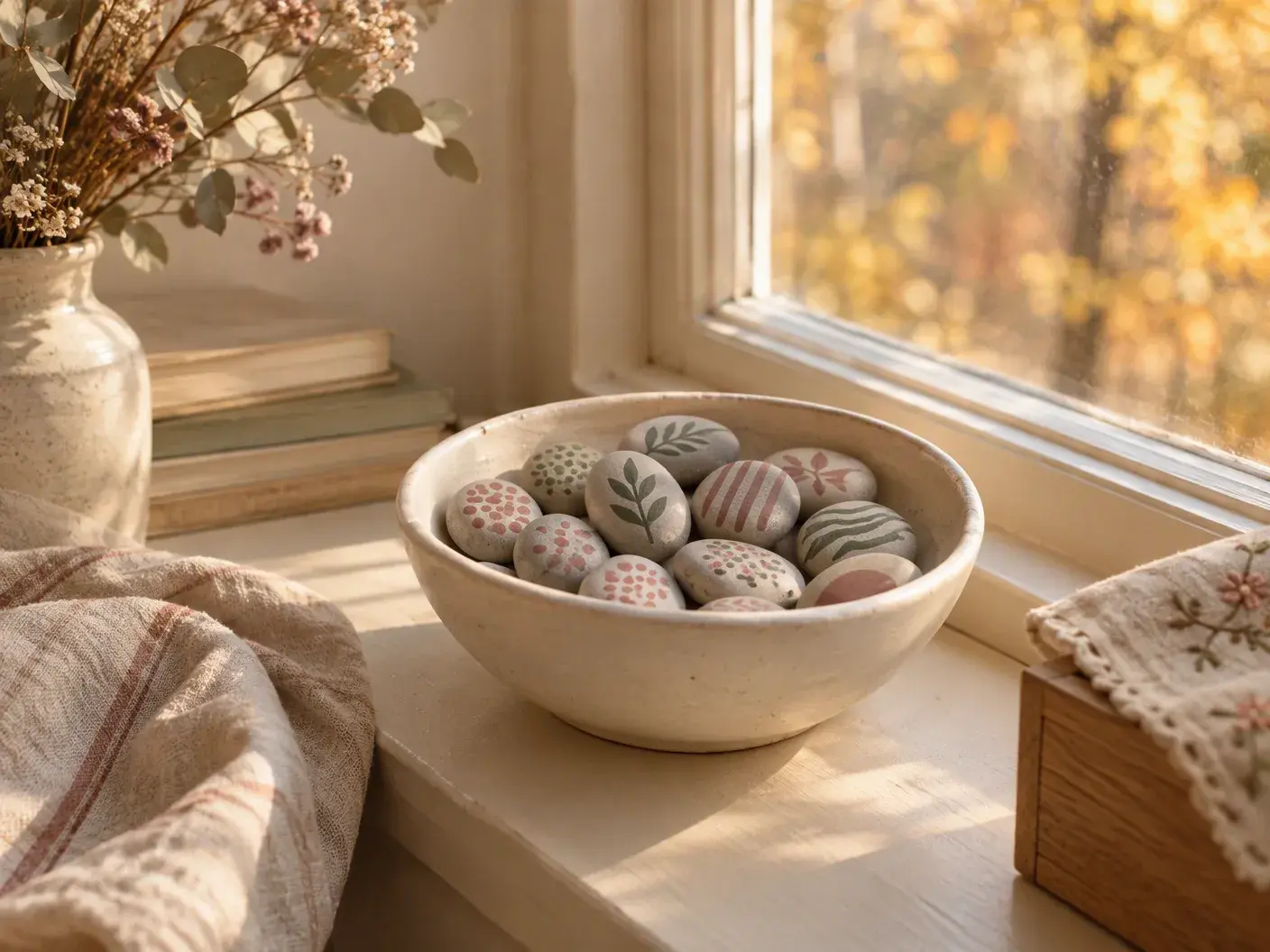
We didn’t know what to write on the other eight. We painted them, nameless. They sit in a bowl, and every autumn a few more join them.
What you need to paint stones
Very little, and all of it is already at home or at the nalbur.
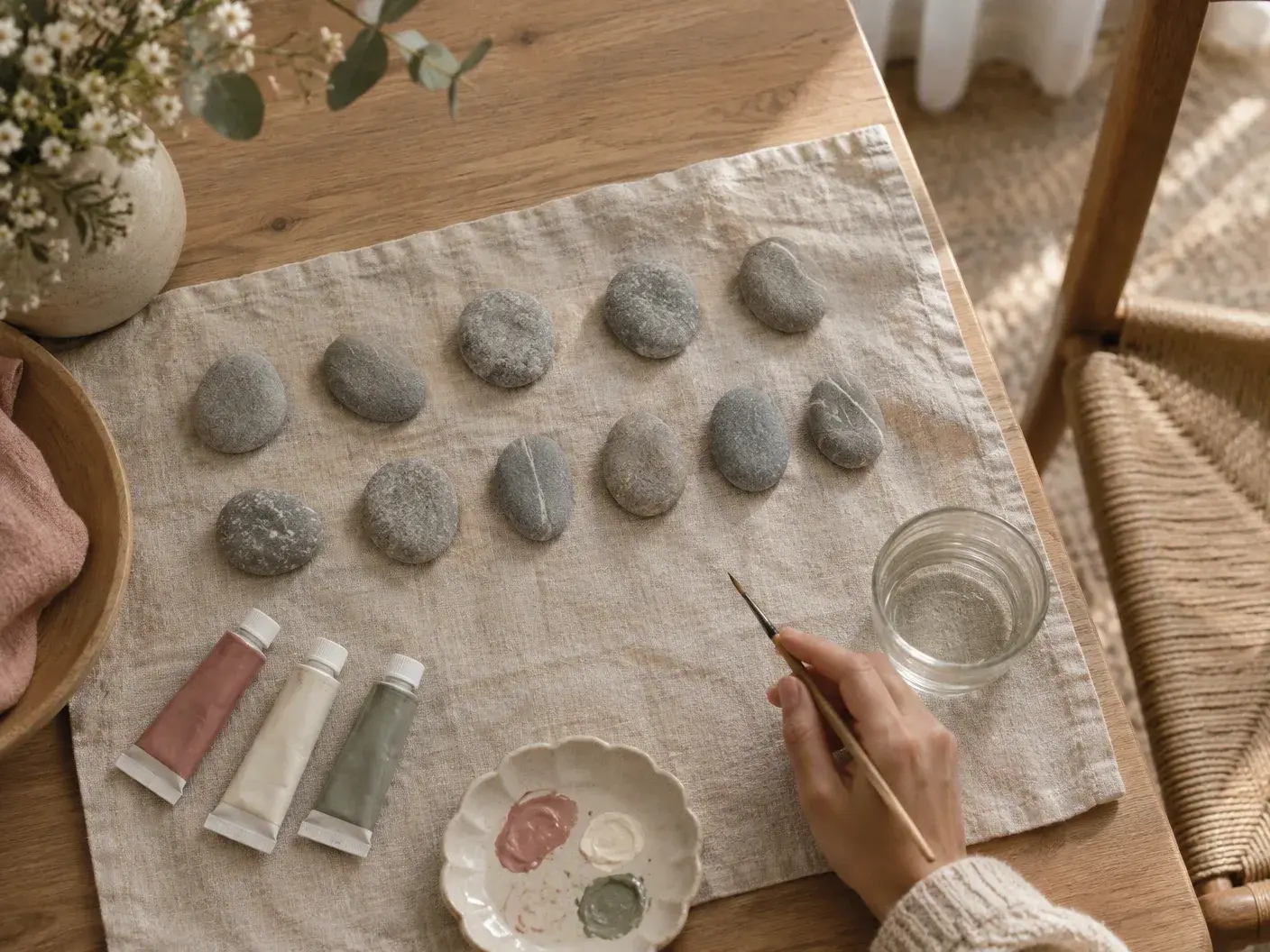
- Park stones, not beach stones. Smooth, flat-faced, palm-sized. Easy to find wet; look under the leaves.
- Wash, dry, wait a night. The inside of a stone stays damp; paint won’t take on a wet stone.
- Acrylic paint. Small tubes from a craft shop: dusty rose, cream, sage green, a dark brown. Water-based, washes off hands.
- A fine brush and a finger. A size-0 brush for letters; for small children, a fingerprint is enough.
- Dry overnight, then varnish. Water-based matt varnish from the craft shop. Not compulsory, but worthwhile if the stone is going to live on a windowsill.
- Write on the back too. The front is the child’s; the back is yours. Date, park, weather.
Beside the stone
The park stone is the keepsake a child makes themselves: the crooked letter, the fingerprint, that day’s weather. Beside it sits what the grown-ups made — the grandmothers who were holding the baby while the stones were being gathered, there from the very first day.
A gift for the grandmothers
A baby bodysuit and socks carry their name and your chosen news to the grandmothers who are close to your family.
Pockets
This autumn we will go to the park again. My pockets will grow heavy again. At home the stones will be lined up on the table and someone will ask, “Which one is mine?” They will all be the same. Then we will write on them.
— Merve Çokal Doğan
Questions from readers
Mothers ask, we answer — questions under this story that others may have too.
Ask your own question
Ask the author anything about this story. We send a one-time code to your WhatsApp so real mothers, not bots, get answered — your number is never shown.
Keep reading
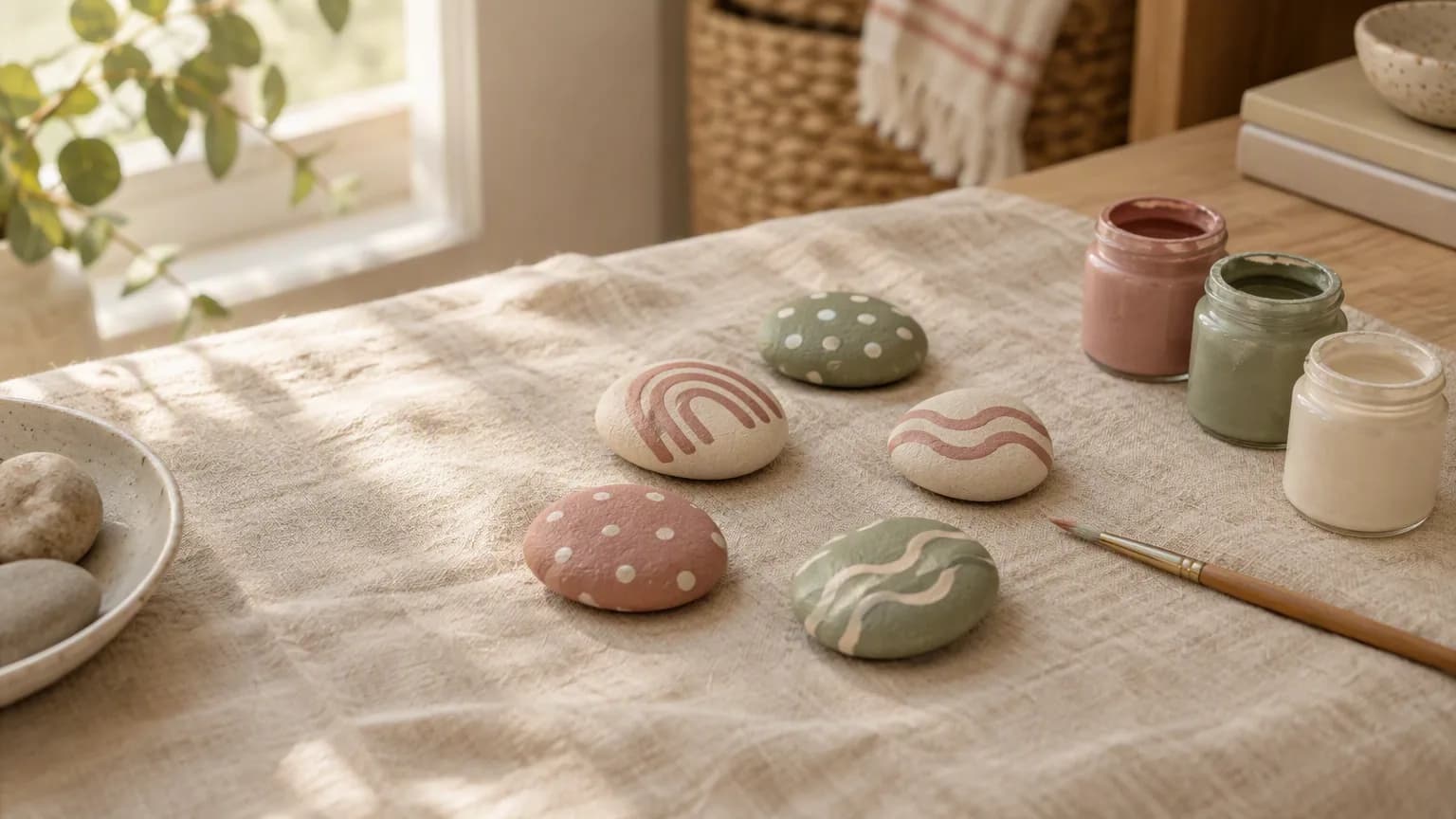
Stone Painting
Stones from the Black Sea: painting a memory of the shore
Five sisters growing up in Zonguldak always had pockets full of pebbles. Years later we paint those pebbles in İstanbul with four boys. Why stone painting has become so loved, how a stone the size of your palm turns into a keepsake, and how to begin at the kitchen table.
· 3 min read
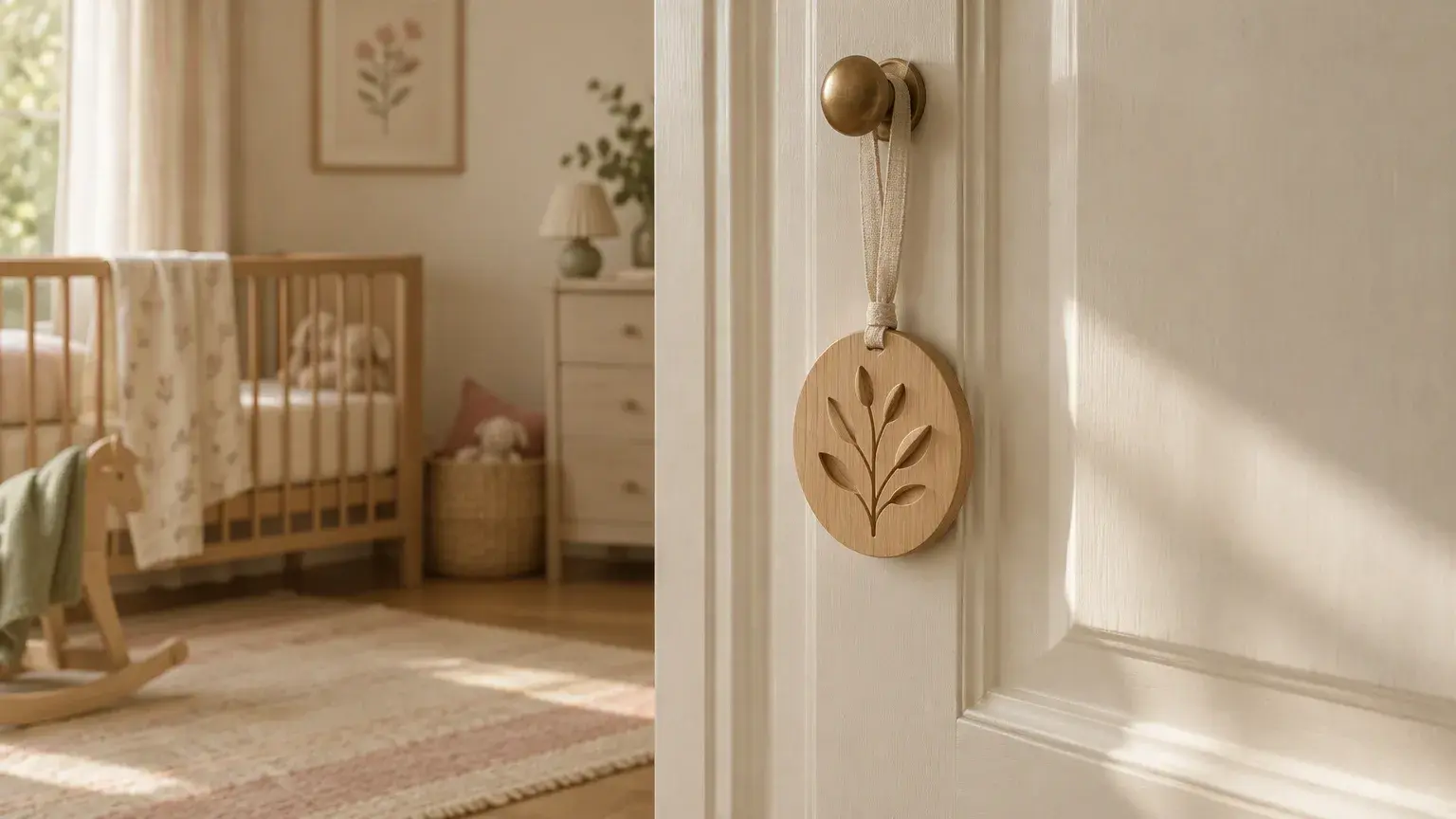
Woodwork
The name on the door: the warmth of wood, and whose room it is
Hanging a baby’s name on their bedroom door is a small thing; but for everyone who opens that door, the room becomes someone’s in that instant. From the scrap of wood my father nailed above our door in Zonguldak to four boys and four doors: why wood is still the material that belongs on a door.
· 3 min read
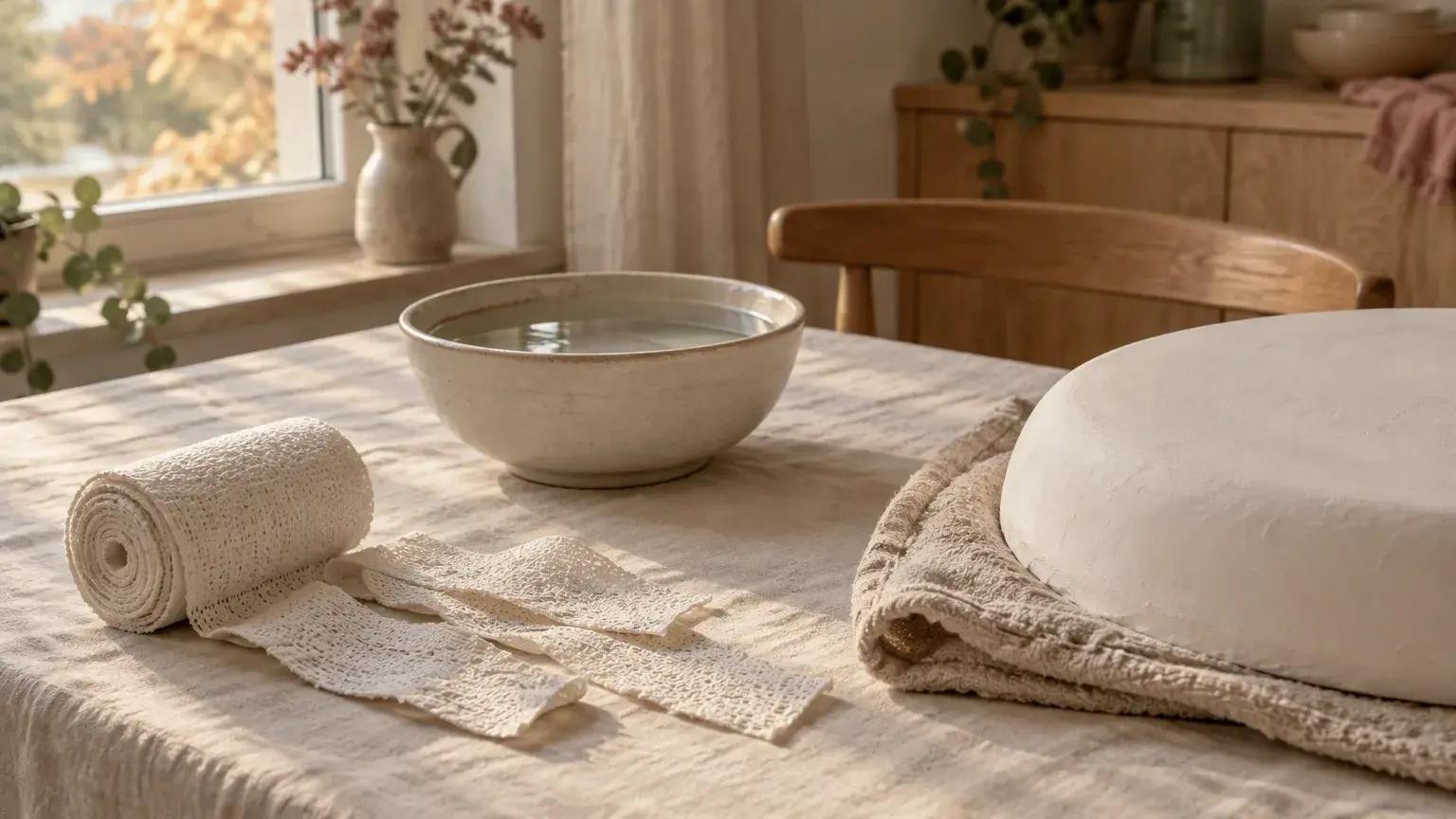
Plaster & Clay
A plaster belly cast: keeping the shape of nine months
When a baby arrives, everything turns towards them; the belly that carried them for nine months survives only in photographs. A plaster belly cast keeps that shape in three dimensions — an old craft mothers have rediscovered. The story of the cast we made in an İstanbul kitchen one Saturday morning while I was expecting Hamza Bera.
· 4 min read