Stones from the Black Sea: painting a memory of the shore
Five sisters growing up in Zonguldak always had pockets full of pebbles. Years later we paint those pebbles in İstanbul with four boys. Why stone painting has become so loved, how a stone the size of your palm turns into a keepsake, and how to begin at the kitchen table.
By Merve Doğan · · 3 min read
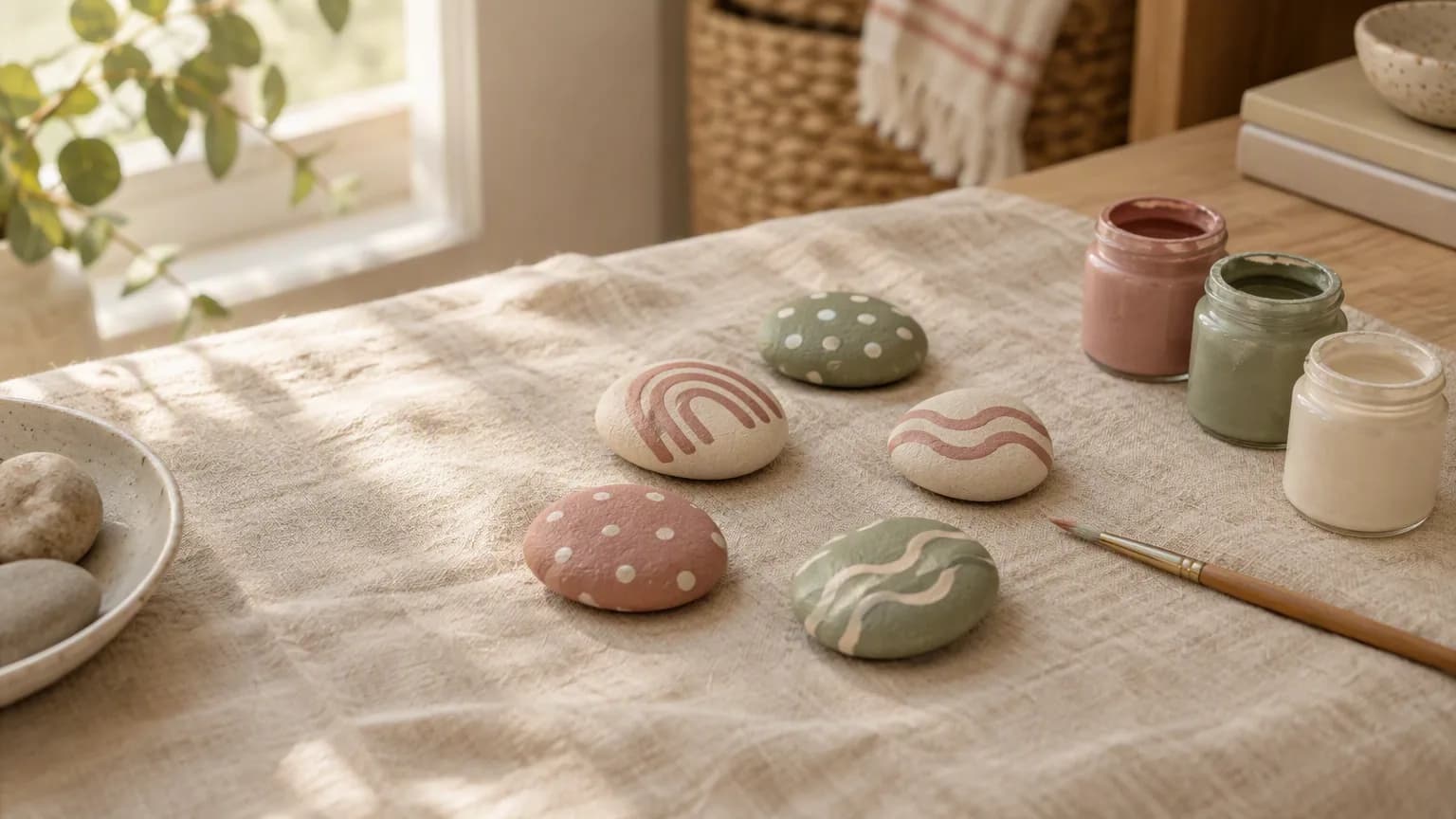
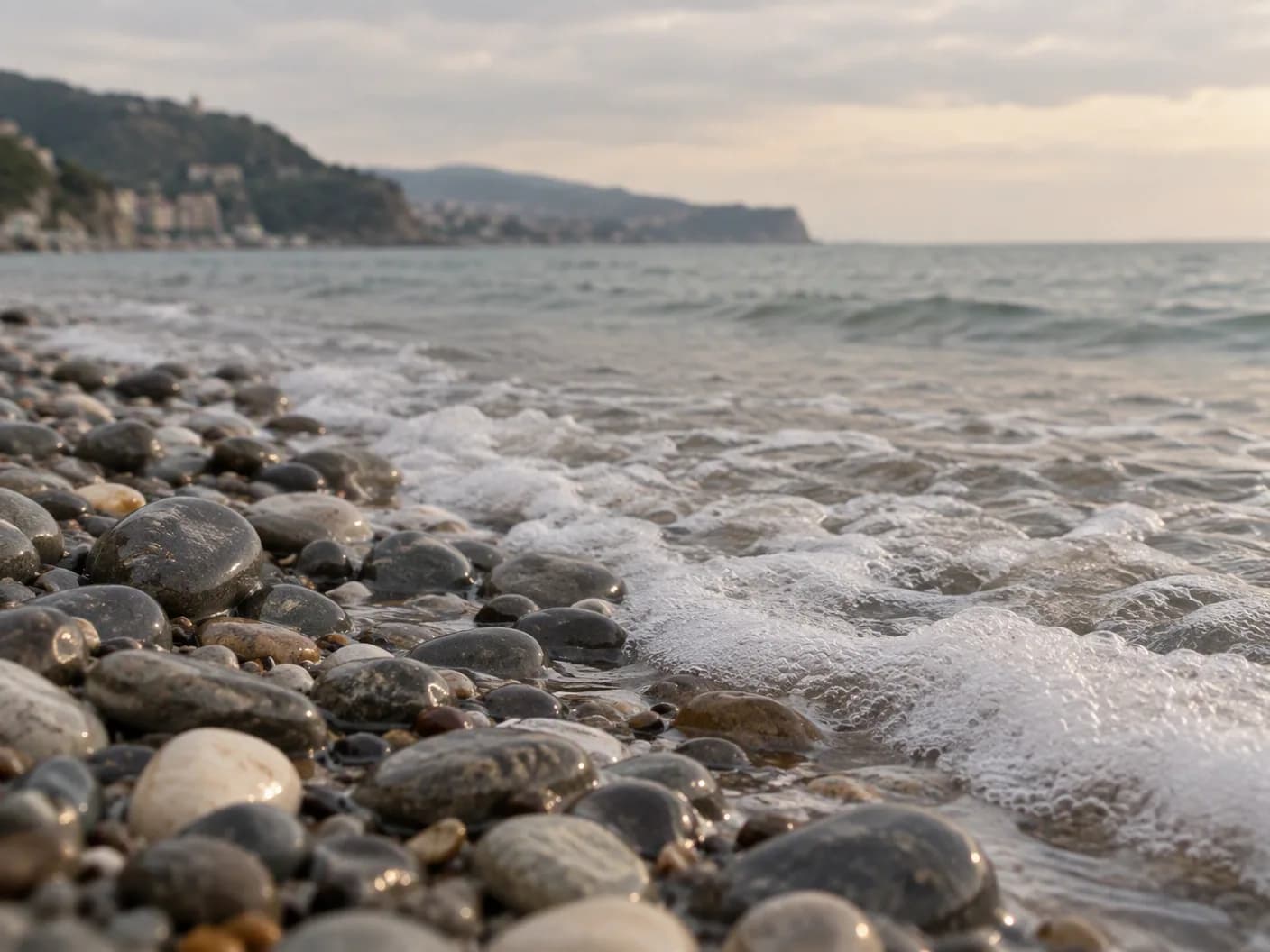
A child growing up in Zonguldak, on Türkiye’s Black Sea coast, always has pockets full of stones. The sea leaves fresh ones on the shore every day: grey, round, fitting the palm exactly. There were five of us sisters, and as the youngest I brought home the most. Emptying my pockets, my mother always asked the same thing: “What are you going to do with these?” I had no answer. They were simply beautiful.
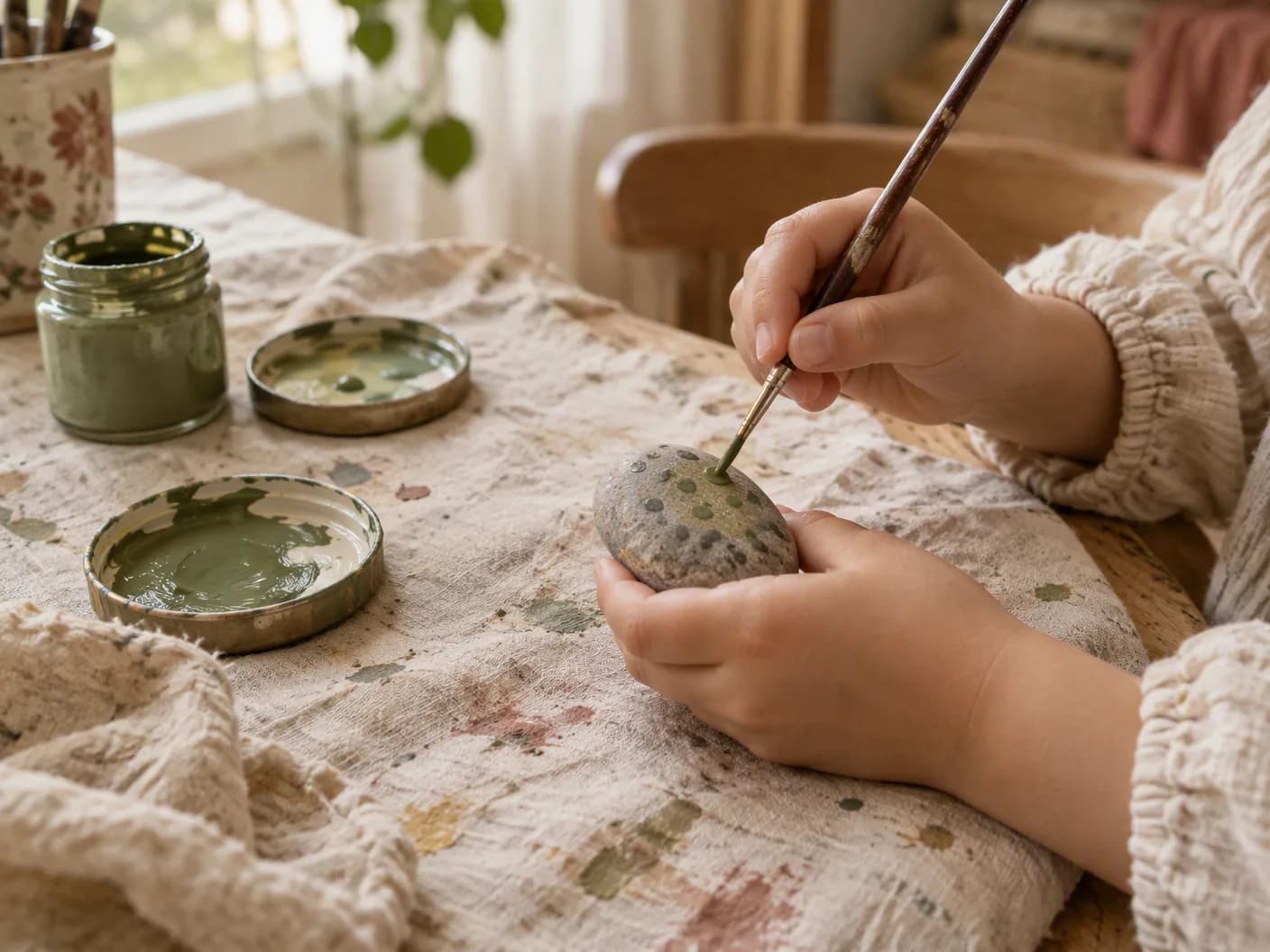
Years later I found the answer. When we go to Zonguldak in the summer, my four sons collect stones from the shore, and back in İstanbul we paint them at the kitchen table. That was the answer to my mother’s question: I’m going to make memories.
Why did stone painting catch on?
In the last few years painted stones have appeared everywhere — in parks, in school yards, all over social media. Hiding a painted stone for a stranger to find became a game played around the world. But I think the real reason is simpler: stone painting is the one craft you can start with zero skill.
Anyone who can hold a brush can do it. Nothing goes wrong, and if it does, you wash the stone. The material is free and lies on the nearest beach or in the nearest park. And when you’re done you hold something small, heavy and real — it doesn’t vanish the way a drawing stuck to the fridge does.
A keepsake the size of a palm
The beauty of a stone is that it remembers where it came from. Every stone in our kitchen belongs to a summer. I know which beach each one is from and which child’s hand it came out of. One has a sage-green wave on it; our youngest painted it and called it “the sea”. It doesn’t look like the sea. To me it is the sea.
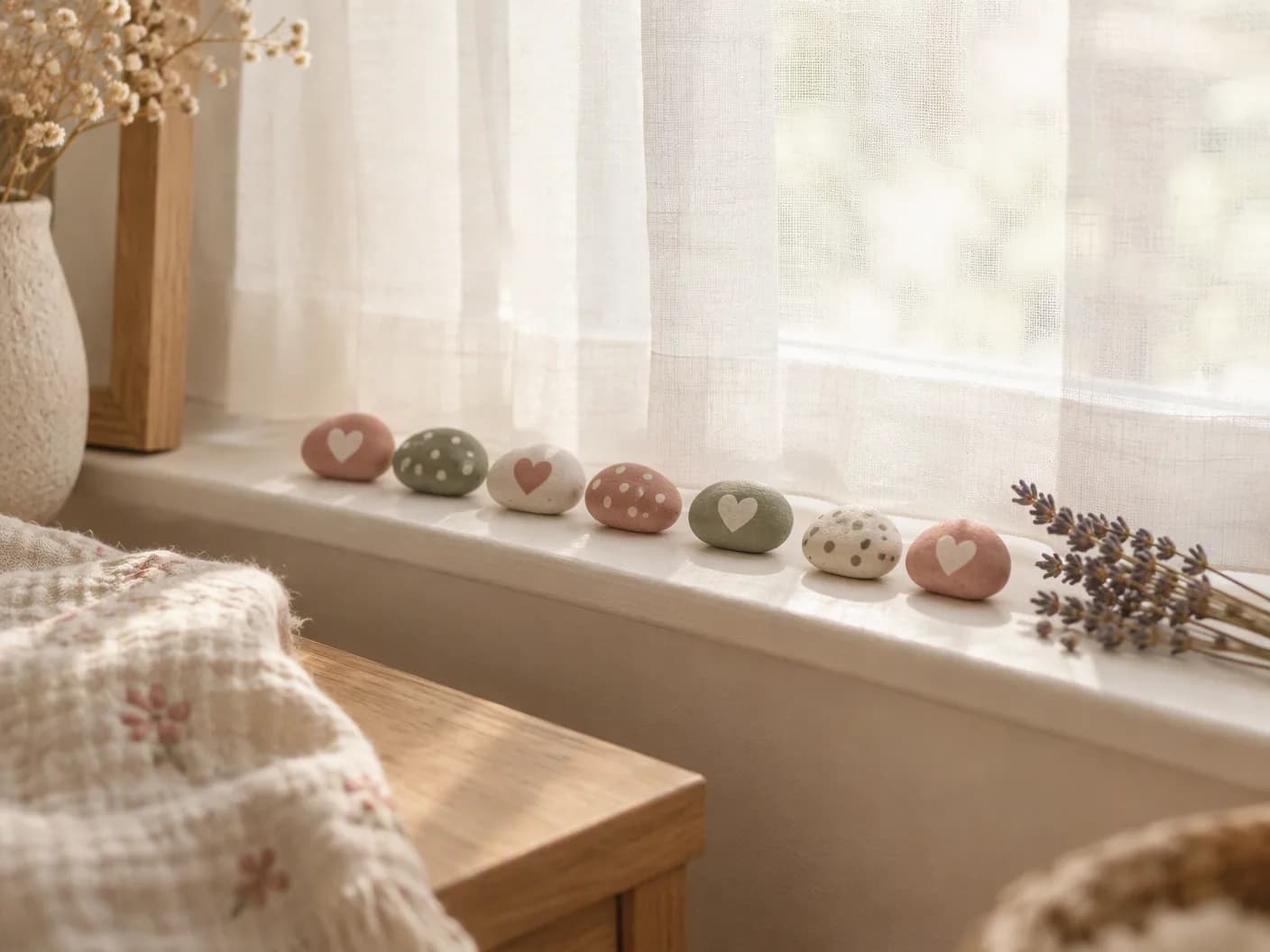
Stone painting has a special place in a house with a newborn. The first letter of the baby’s name goes onto a stone and the stone goes on the windowsill. A grandmother comes to visit and sees it. It doesn’t wilt like a bouquet or disappear into a drawer like a card. It stays there, for years.
Getting started in Türkiye
- Choose the right stone. Smooth, flat and pale sea pebbles are easiest. No beach nearby? Garden centres and landscaping suppliers sell them by the kilo for a few lira.
- Acrylics and two brushes. A small acrylic set from any kırtasiye (stationery shop), one fine brush and one broad. That’s all. Once the stone is dry, even clear nail varnish works as a sealant.
- Wash first, then wait. Wet stone won’t take paint. Let it dry overnight; paint in the morning.
- Give children dots. For small children the best start is dots made with the tip of the brush. A dotted ladybird, a dotted flower. A child’s first “real” picture is very often on a stone.
A stone for the grandparents
The best place for a painted stone is the windowsill of the baby’s grandmother. The first letter of the grandchild’s name, a tiny heart, the date of a summer. On the days she can’t hold the baby, she looks at the stone. It is the smallest of gifts and the longest-lasting.
For the ones who were there from day one
A small personalised keepsake with the baby’s name and birth date, for the grandparents who were there from the very first day.
Stones in the pocket
This summer, walking back from the shore in Zonguldak, I emptied our youngest’s pockets. Eight stones. “What are you going to do with these?” I asked, in my mother’s voice. He answered: “We’re going to paint them.”
Back then I had no answer. Now I do.
— Merve Doğan