The smell of wood: a carpenter’s shop in Zonguldak and four boys’ first sandpaper
The best smell of my childhood was the sawdust drifting out of the carpenter’s shop at the top of our street. Years later I found it again at our kitchen table in İstanbul, in the hands of four boys holding sandpaper for the first time. Why wood is the most patient craft of all.
By Merve Doğan · · 3 min read
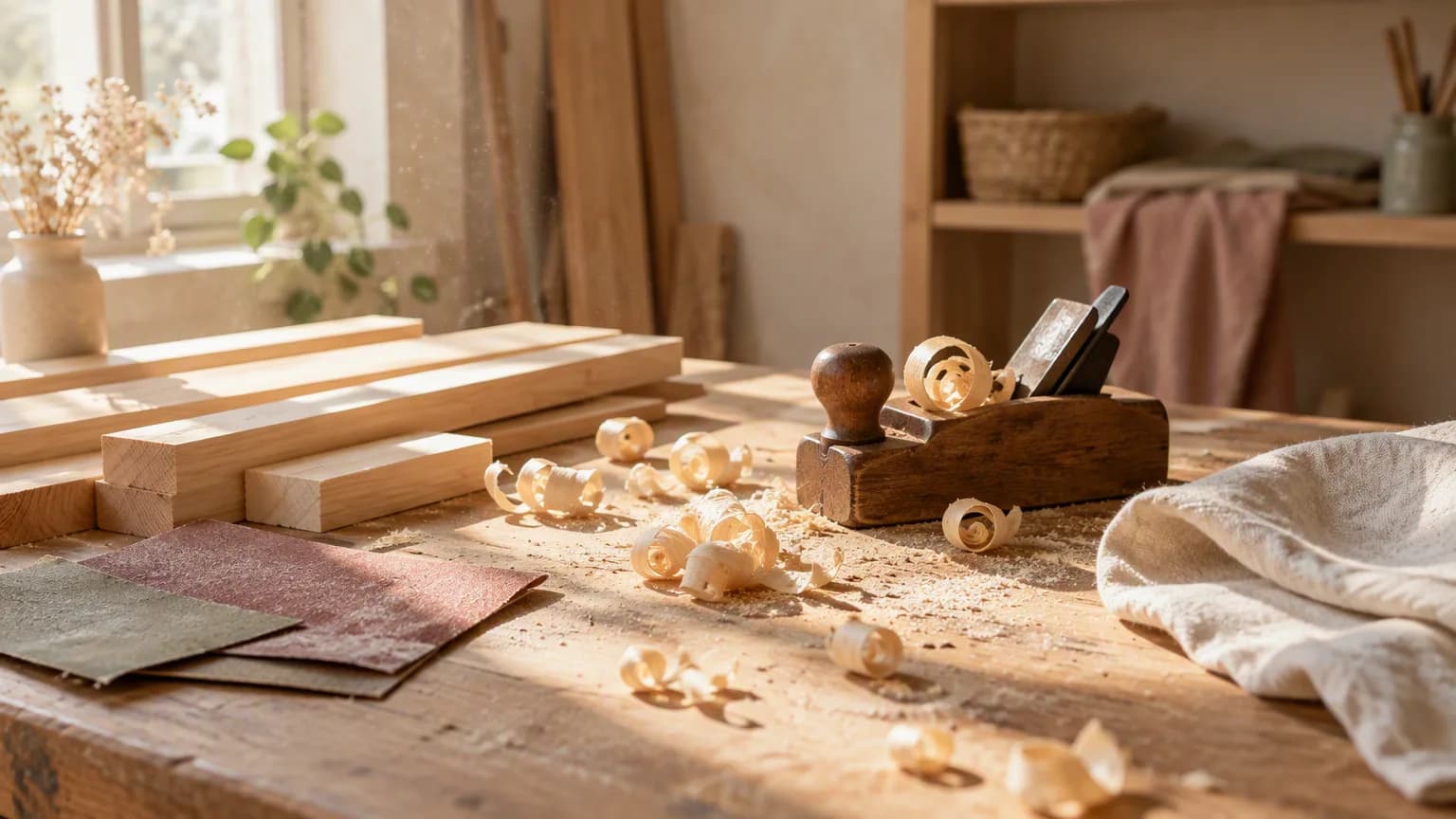
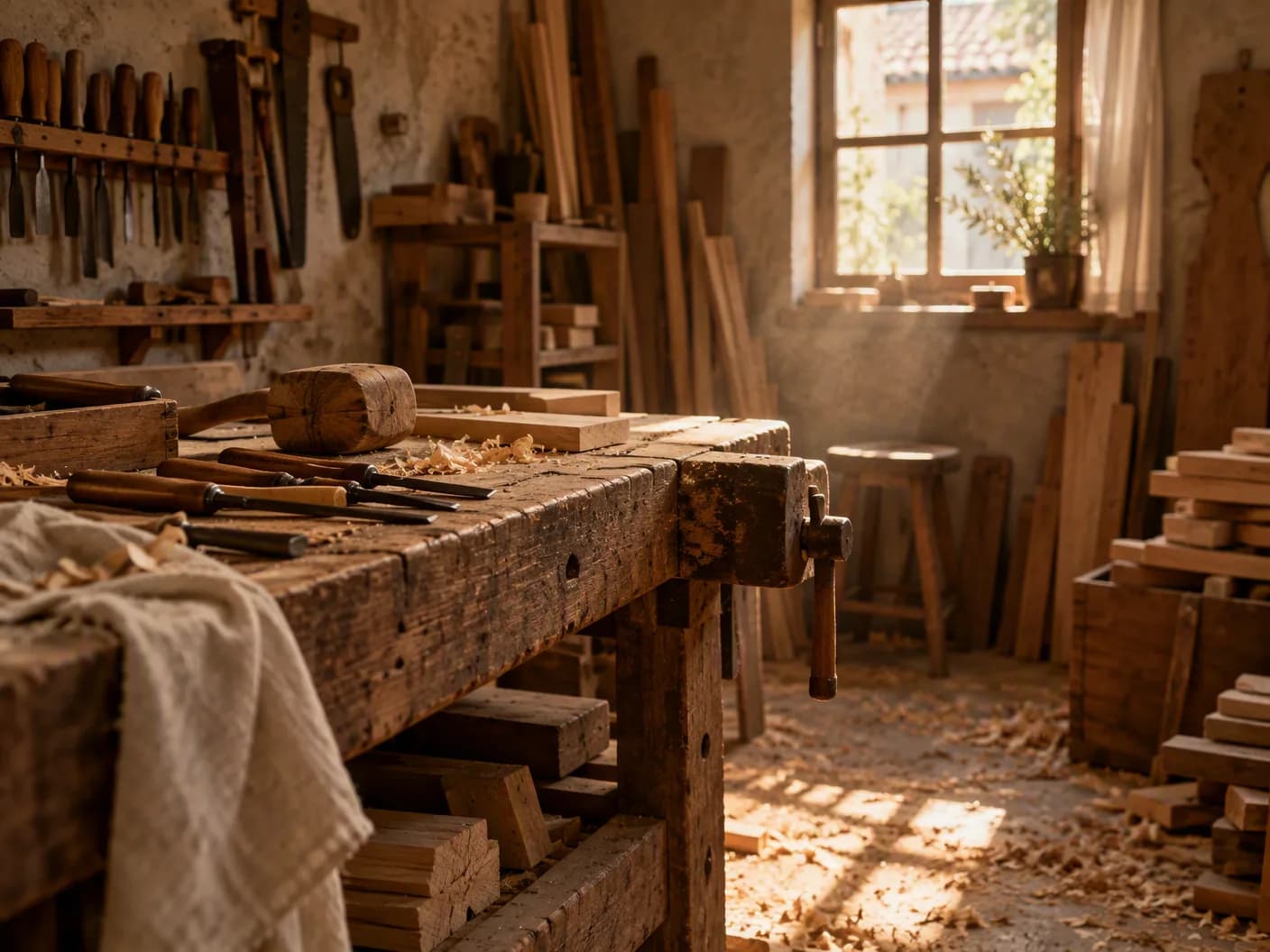
At the top of the street where I grew up in Zonguldak there was a carpenter’s shop — a marangoz. We had to pass it on the way home from school and I always slowed down. The smell of sawdust came out of it: sweet, dry, a little resinous. As the youngest of five sisters, everything at home was fabric, thread and needles. Wood was not my world. But that smell was mine.
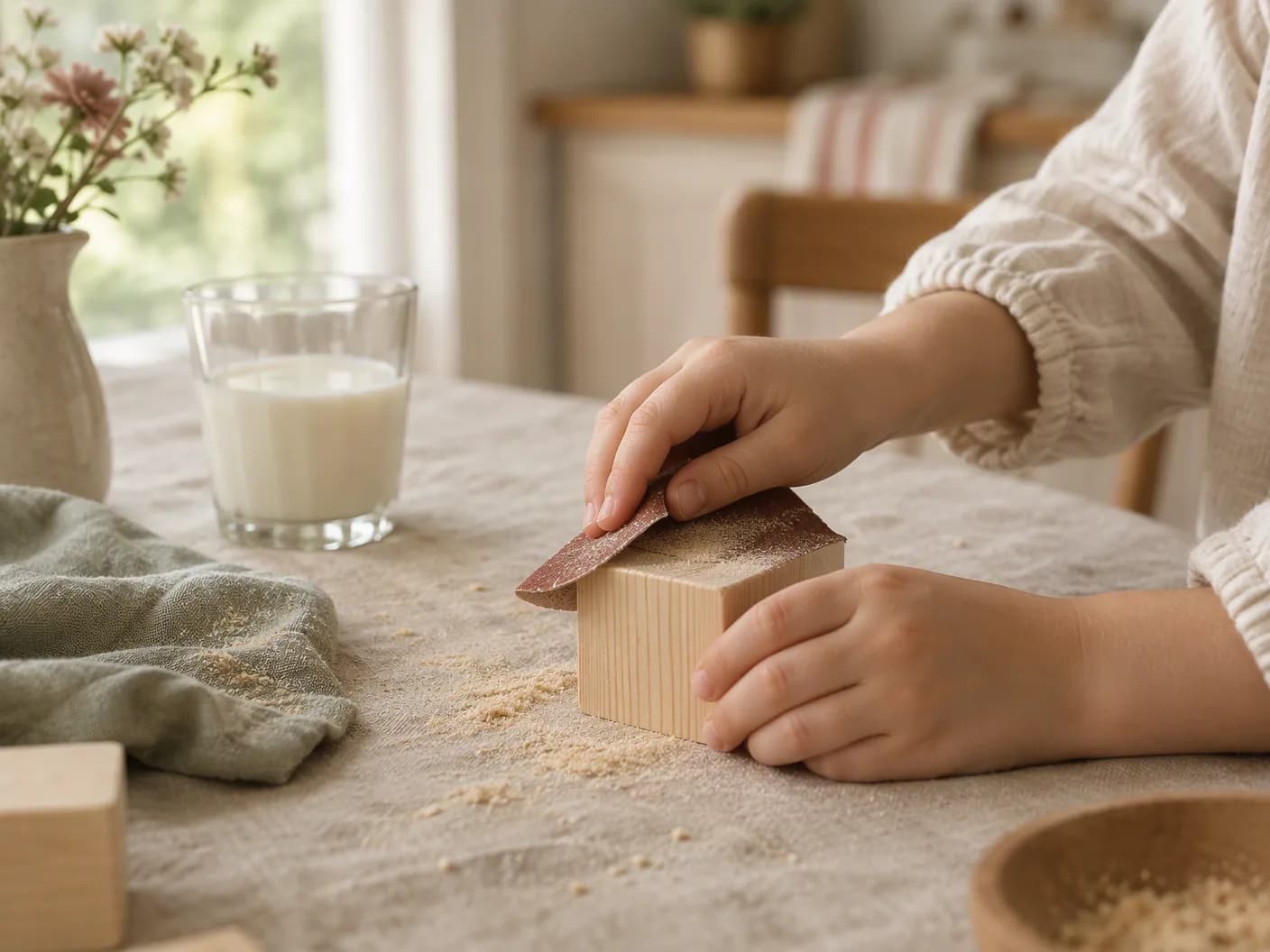
Years later, at our kitchen table in İstanbul, my four sons picked up sandpaper for the first time and the smell came back. They were taking turns on a small block of wood; the youngest was holding the paper upside down. And for a moment the kitchen was the top of that street.
Why wood is so patient
Of all the crafts, wood is the slowest. Thread forgives, clay forgives; wood doesn’t forgive — but it waits. A wrong cut can’t be undone, yet you can take as long as you like to sand a surface. Wood tells you don’t rush. And under your hand something slowly turns smooth — a satisfaction screens simply don’t give.
It’s no accident that woodwork studios have multiplied in Turkish cities over the last few years. People gathering at weekends to make a cutting board, a spoon or a small shelf are all after the same thing: to make something with their hands and carry it home. To say, when it’s done, “I made this.”
Four boys and a block of wood
Mothers raising boys know something: the energy has to flow somewhere. Wood is made for it. Sandpaper, hammer, timber — all of it takes strength, but it takes more attention. A boy sanding a block for half an hour and then testing the surface with his fingertip is one of the quietest moments I know.
In our house wood became a father-to-son thing. One weekend Abdullah put an old offcut on the table with a sheet of sandpaper. Nobody made a plan. An hour later we had a smooth block of wood that was good for absolutely nothing and that everyone adored. It stands by the door now. Nobody knows what it is. Nobody throws it out either.
Getting started in Türkiye
- Start with sanding, not cutting. Cut nothing on your first project. Buy a piece of pine from the nalbur — the hardware shop on every corner — and just sand it, coarse paper to fine. That’s how you learn the language of wood.
- Visit your neighbourhood marangoz. Almost every mahalle still has one, and most will sell offcuts. A handful of scraps for a few lira, and the conversation comes free.
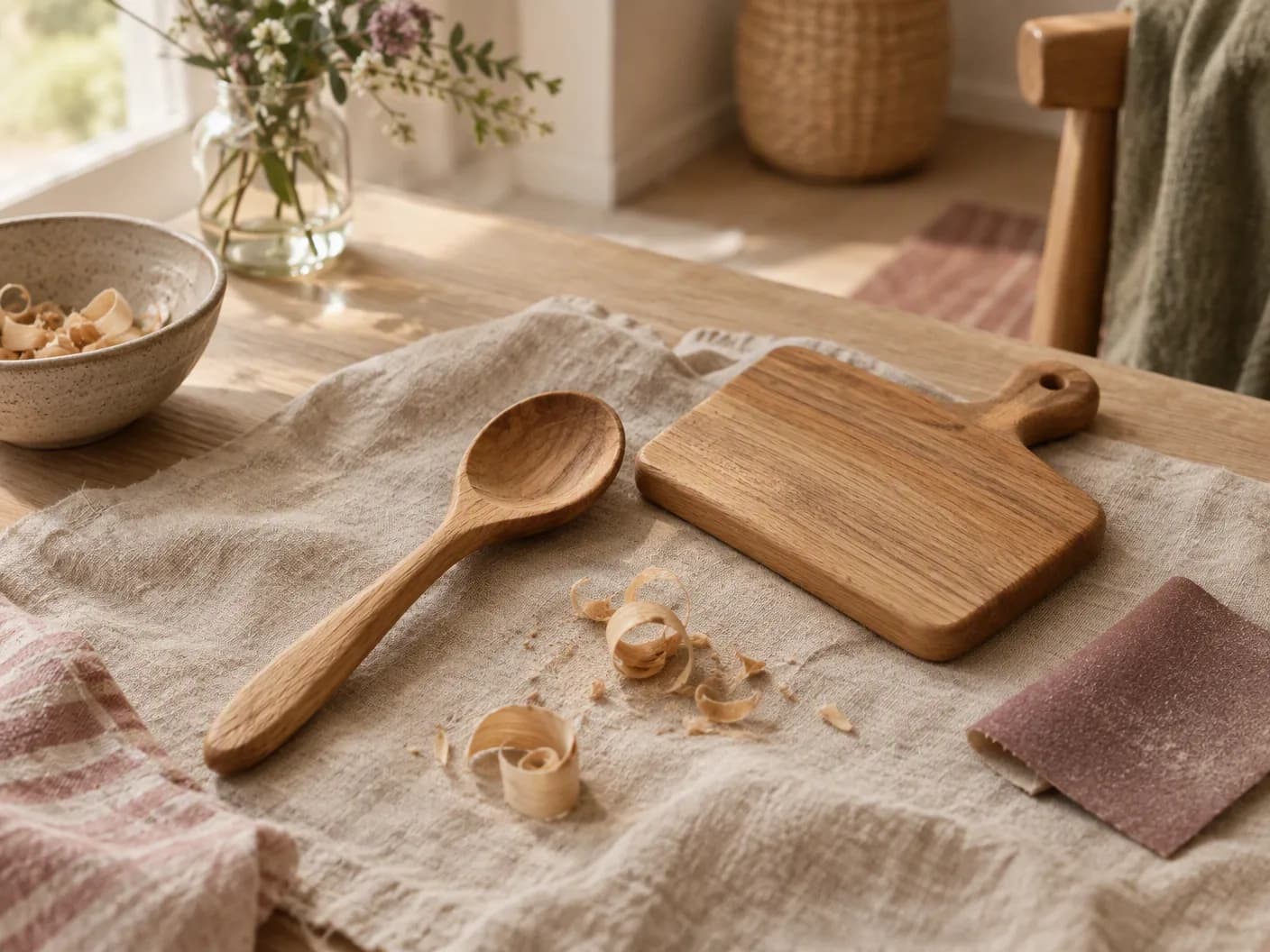
- Sign up for a workshop. The big cities have weekend woodwork studios; a spoon or a cutting board in a day. They supply the tools, you take something home — and many happily run in English.
- With children: sandpaper only. No blades, no drill. Sandpaper, a block with rounded corners, and a glass of milk. That’s all.
Their name on the door
The nursery door is the most opened and closed door in the house. A name on the door of a room that took months to prepare, paint and furnish turns it from the nursery into their room.
Their name, on their door
Their name in gentle script, hung on the door of the room you spent months getting ready.
The top of the street
I think that carpenter’s shop closed long ago. When we go back to Zonguldak I still pass it, and I still slow down. But I don’t need to go there for the smell any more. It lives in that useless block of wood by our kitchen door.
Four boys, one block, one sheet of sandpaper. And the top of a street.
— Merve Doğan