Mevlit şekeri and tulle pouches: hosting a baby’s mevlit at home
Sugared almonds in tulle pouches, a tray of lokum, rose sherbet and a name on the nursery door. How my mother and Hamza Bera’s grandmother prepared his mevlit, who tied two hundred ribbons, and what I would tell a mother hosting one for the first time.
By Merve Çokal Doğan · · 4 min read
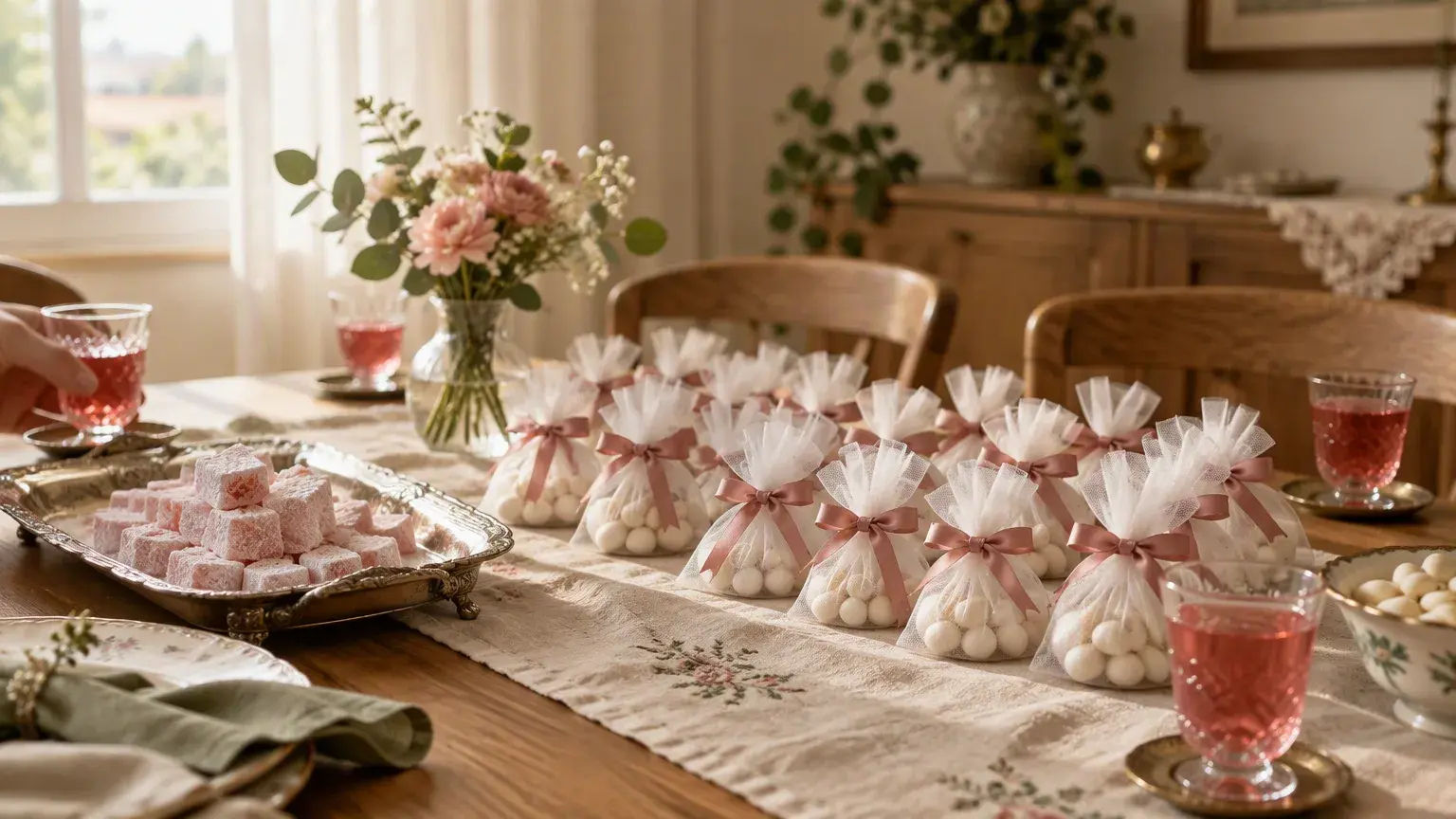
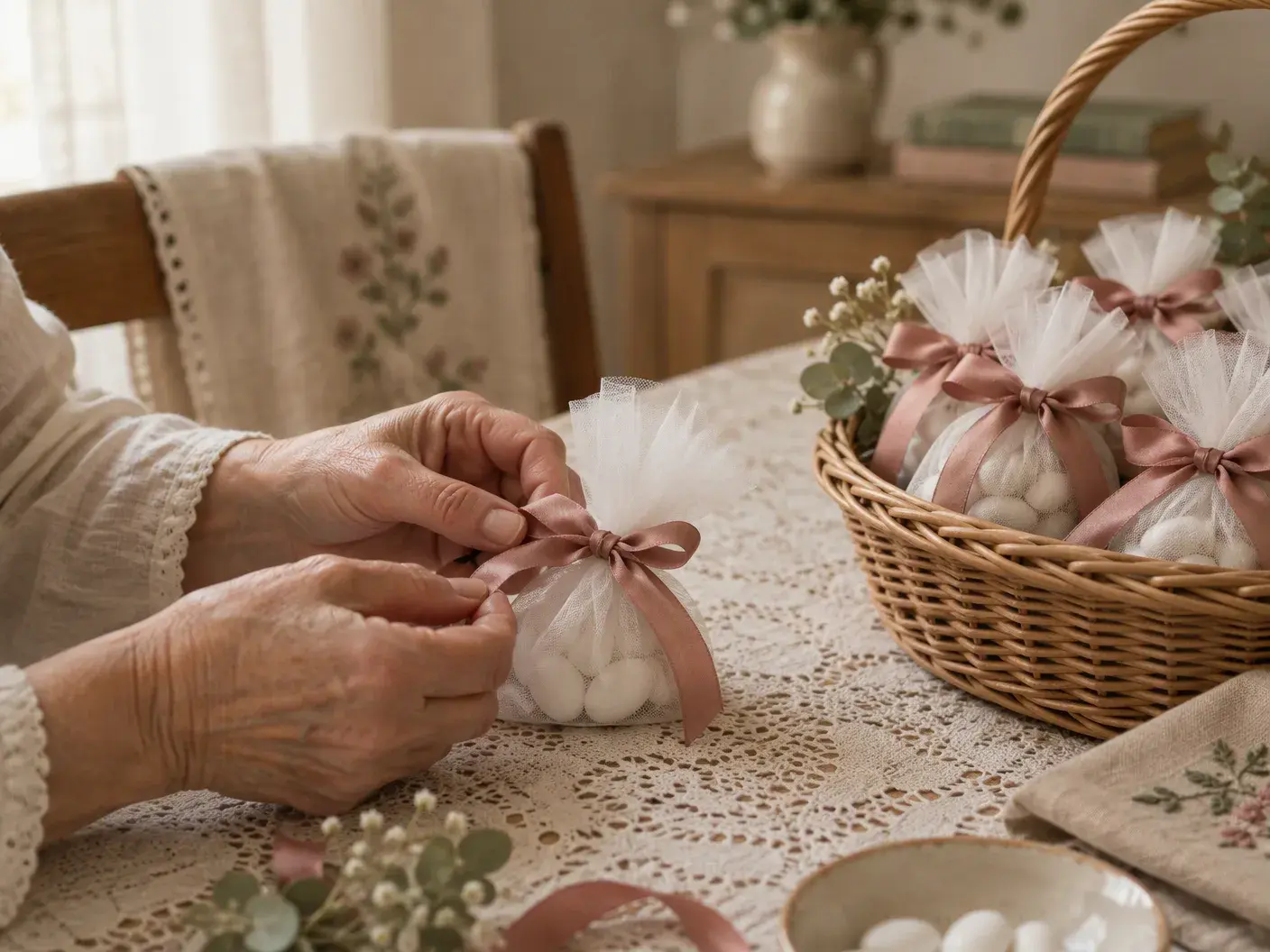
The first thing I remember from Hamza Bera’s mevlit is not the table. It is a bedsheet spread across the living-room floor with two hundred small tulle pouches on it. His grandmother had come from Konya, my mother from Zonguldak, and the two of them took over the kitchen the day before: she adjusted the sugar in the sherbet, my mother chose the lokum. I was feeding the baby and falling asleep. The pouches were tied by two of my four sisters — two hundred ribbons, every one the same length.
I wrote this for mothers who want to sit down at that bedsheet and tie pouches but don’t know where to begin — and for anyone in Türkiye who has just been invited to a mevlit and would like to understand what they are walking into.
What a mevlit is, and why babies get one
Mevlid literally means “birth”, and in Turkish it names the long poems that tell the story of the Prophet’s birth — the best known is Süleyman Çelebi’s Vesîletü’n-Necât, written in the fifteenth century. The gathering where the poem is recited is also called a mevlit. A baby mevlit is that same recitation held in thanksgiving for a newborn: a hafız recites, prayers are said for the child, guests are served sherbet and lokum, and everyone leaves with a small pouch of mevlit şekeri — mevlit sweets.
There is no single rule about timing. Around us it is common to hold it after the baby’s first forty days; some families do it earlier, some months later. The mother’s recovery and the baby’s rhythm come before the calendar. We held Hamza Bera’s a week after his forty were complete — a Saturday afternoon, two hours.
The pouches: what goes in, how many
The classic mevlit sweet is the sugared almond — white, pink, sometimes blue. Small pieces of lokum or individually wrapped chocolates go alongside. The pouches are tulle or organza, tied with a ribbon, and a small card with the baby’s name is threaded onto the ribbon.
Count per person rather than per household, then add ten percent: there is always a neighbour who comes without warning. About twenty of our two hundred pouches were left over; they sat in a drawer for months and every visitor got one. Remember that almonds are an allergen — preparing a few pouches with chocolate only is a kind touch.
What is on the table
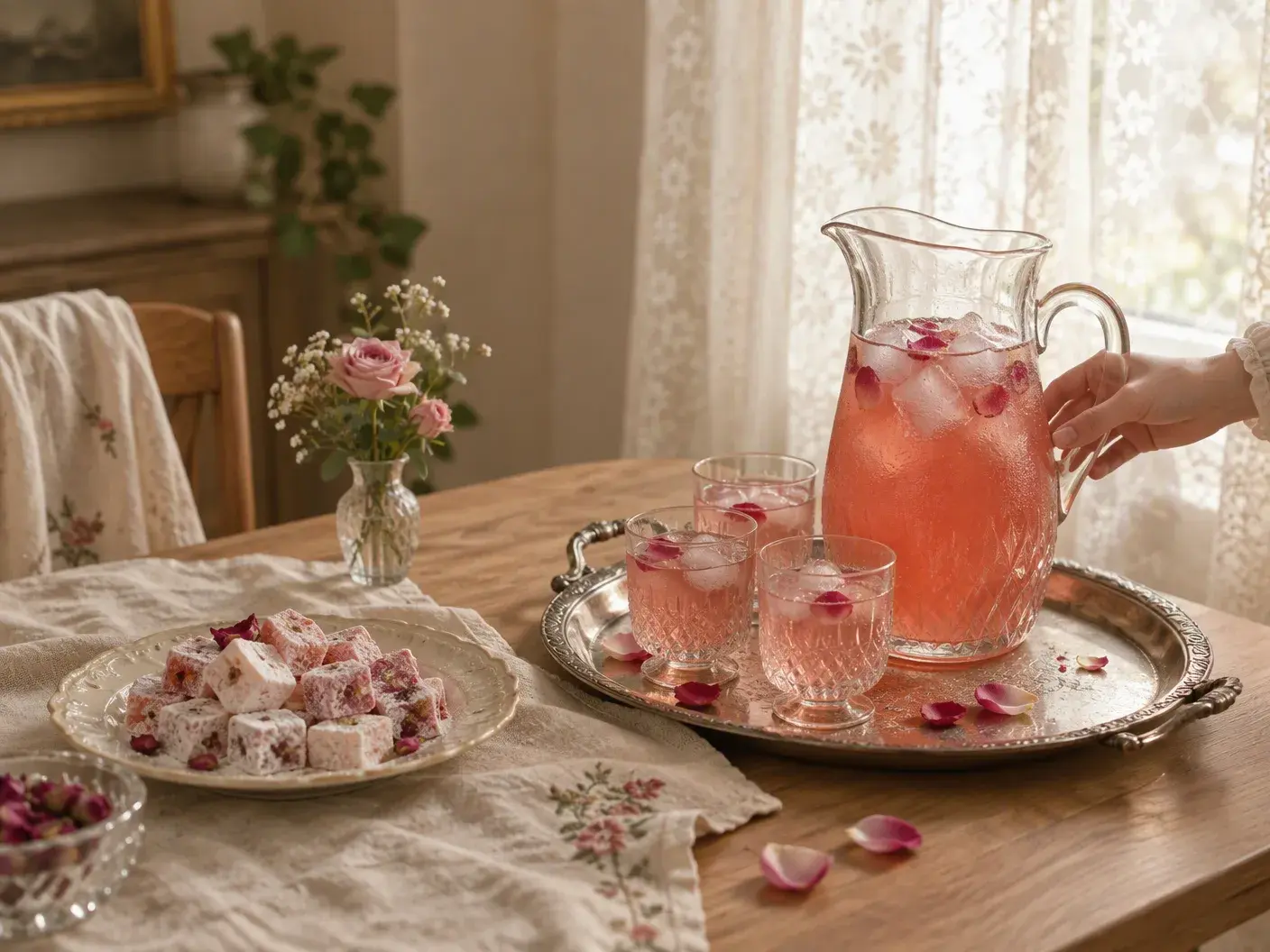
Sherbet is the signature of a mevlit. Rose sherbet is the most common, and its red also dresses the table. Beside it: lokum, biscuits, water. There is no need to overdo it — a mevlit is a prayer gathering, not a dinner party. Guests sit, the hafız recites, prayers are said, sherbet is passed round, and within an hour everyone is at the door.
Speaking of the door: a name sign hung on the nursery door on the day lets guests learn the baby’s name before they have even seen the baby. Ours was a wooden sign reading “Hamza Bera”; it stayed on that door for years after the mevlit.
A few words to the mother
- Accept help. Grandmothers love organising a mevlit; let them. Your job that day is to be with your baby.
- Keep a quiet corner for the baby. In a crowd everyone wants to hold the newborn; “he’s sleeping right now” is the most natural sentence in the world.
- State the time and the nature of the day. Guests know a mevlit is a religious gathering and dress modestly; women usually cover their hair or keep a scarf handy.
- Talk the programme through with the hafız beforehand. What will be recited, how long, when the prayer comes — knowing this lets the day flow.
- Check the name on the cards twice. One wrong letter on two hundred cards catches the eye two hundred times.
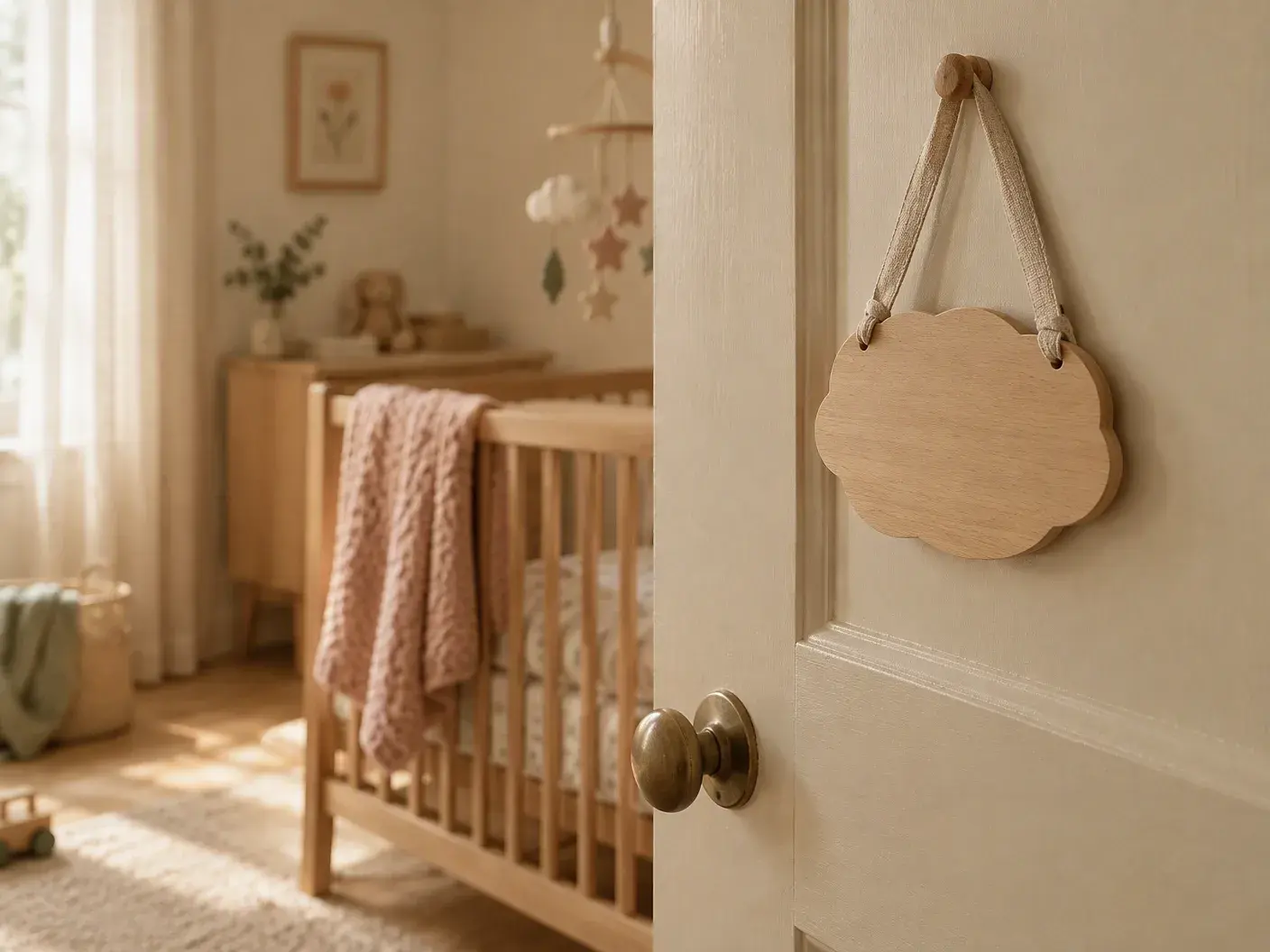
Guess what was photographed most after the mevlit. Not the sherbet, not the pouches — the name on the door. Everyone read it once more on their way out; some took a picture. A mevlit is the day a baby’s name is first spoken aloud by a crowd, and the sign on the door is that day’s quiet witness.
A name to welcome loved ones
When loved ones come to visit, a bunny with your baby’s name brings a sweet touch to their room.
One of the sisters who tied those two hundred ribbons held her own son’s mevlit last year. This time I tied the pouches. Trying to make every ribbon the same length, I found myself back in my mother’s kitchen, at the edge of that bedsheet. Perhaps that is what a meşgale — a hand-kept pastime — really is: sitting down to the same knot one generation later.
— Merve Çokal Doğan
Questions from readers
Mothers ask, we answer — questions under this story that others may have too.
Ask your own question
Ask the author anything about this story. We send a one-time code to your WhatsApp so real mothers, not bots, get answered — your number is never shown.
Keep reading
Customs & Traditions
When the first milk tooth falls out: Turkish tooth customs, from the rooftop to a keepsake box
What did Turkish families do with a child’s first fallen milk tooth before the tooth fairy arrived — and what do they do now? The rooftop rhyme, the buried wish, and a small named box: what I learned from Süleyman Taha’s first tooth.
· 4 min read
Customs & Traditions
Diş buğdayı: the Turkish first-tooth celebration, and a handful of wheat
In Anatolia a baby’s first tooth is celebrated with boiled wheat: neighbours are called, wheat is sprinkled over the baby’s head, and a row of objects is set out for them to reach for. At Muammer Esat’s diş buğdayı I found myself wondering where the custom comes from and what it still says to a mother today.
· 4 min read
Customs & Traditions
The first forty days: Türkiye’s oldest newborn customs, explained gently
A red ribbon on the door handle, a crimson sherbet for visitors, forty pebbles counted into a basin of water. In Anatolia a baby’s first forty days have always run on their own calendar. Where these customs come from, why families still keep them, and what a new mother — from here or elsewhere — can take from them.
· 4 min read