All storiesCustoms & Traditions
The first forty days: Türkiye’s oldest newborn customs, explained gently
A red ribbon on the door handle, a crimson sherbet for visitors, forty pebbles counted into a basin of water. In Anatolia a baby’s first forty days have always run on their own calendar. Where these customs come from, why families still keep them, and what a new mother — from here or elsewhere — can take from them.
By Merve Doğan · · 4 min read
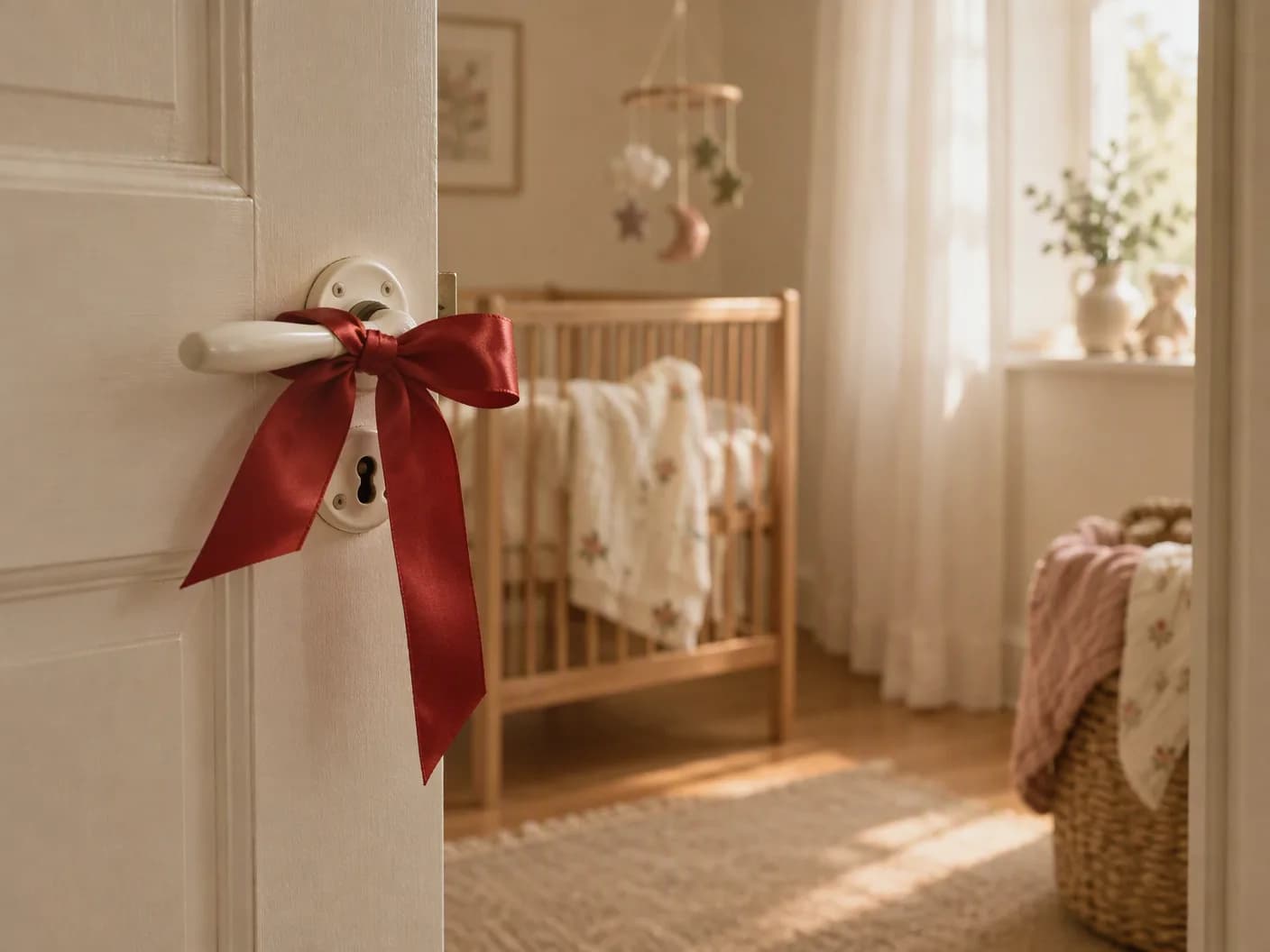
When my first son was born in Konya, the first person to call was my mother. The second person to call was also my mother, two minutes later: “Have you tied a red ribbon on the door?” I hadn’t. I was a young mother and ribbons were the last thing on my mind. That evening my mother-in-law arrived, took a red ribbon out of her handbag and, without a word, tied it to the handle of the hospital-room door.
I didn’t fully understand it. But I didn’t object either. Because I felt something: someone had protected me and my baby before she did. With the same ribbon.
Why forty days are a time apart
In Anatolia a newborn’s first forty days have always been counted on a different calendar. The mother is loğusa, the baby is kırklı — “within the forty” — and the home draws a soft curtain between itself and the outside world. Visitors keep it short, the door rarely opens after the evening prayer, and the mother stays in if she can.
Most doctors now say the same thing in different words: the first weeks are for resting, meeting each other and recovering. Our grandmothers simply called it kırk, forty — because in this part of the world forty is the number that means something is complete. Forty days, forty nights, forty stitches, forty doors.
The red ribbon and the crimson sherbet
The red ribbon — tied to the door handle, the cradle or the mother’s hair — is the most common custom of all. The old belief was that it shielded the mother from albasması, a feared post-birth spirit, and that red keeps harm away. Most mothers today don’t believe that. They tie it anyway. Because the ribbon is no longer a belief; it’s a hand held out: “You rest. We’re here.”
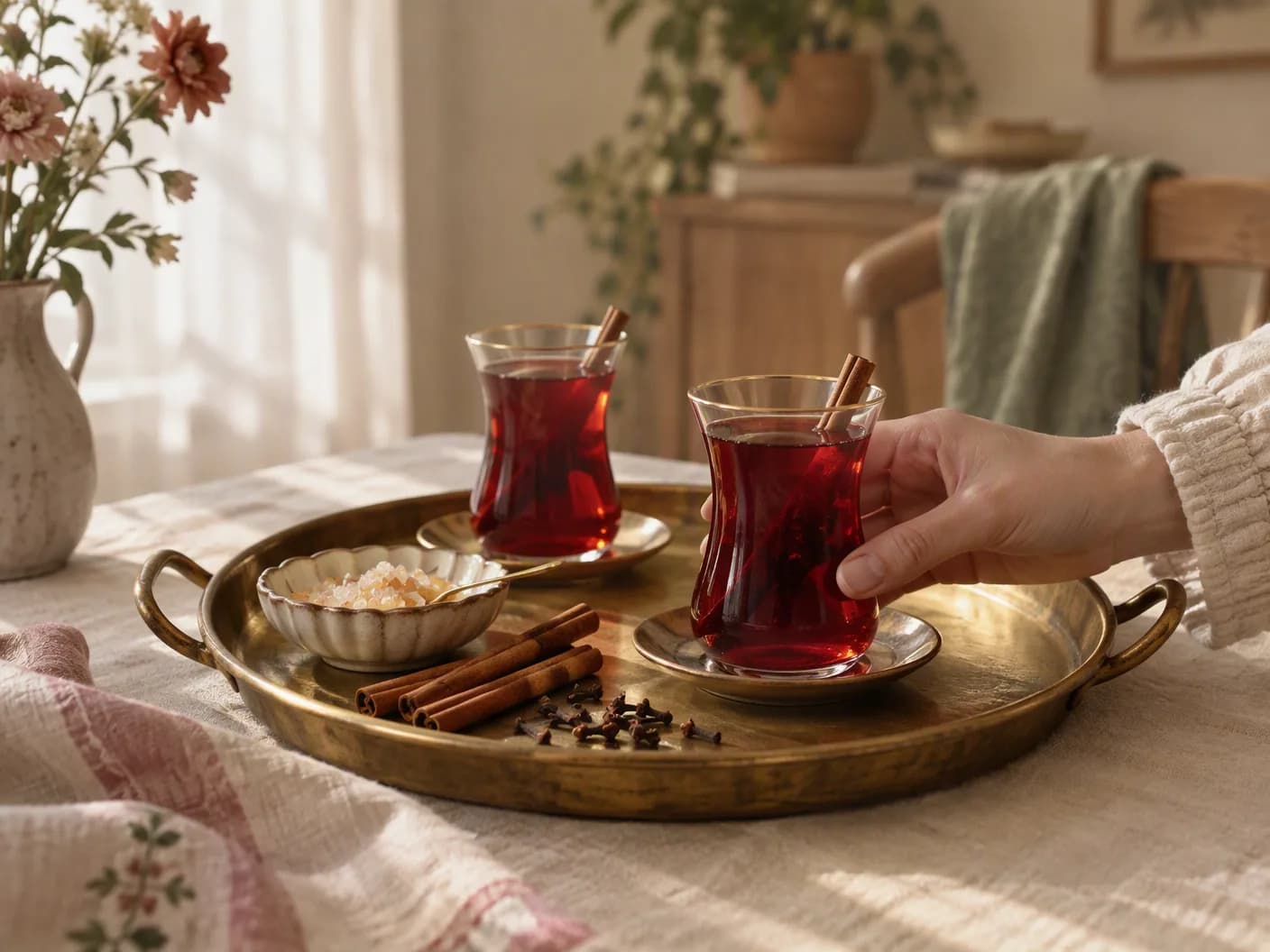
Loğusa şerbeti works the same way. It’s the deep-red drink, simmered with cloves and cinnamon, served to everyone who comes to see the baby; poured into a glass, it fills the room with its scent. In some families the pot arrives from a neighbour, in others the mother-in-law brews it herself. But it always comes from somewhere. It is one of the rare things a new mother is firmly told not to make herself.
Forty-day water and the first outing
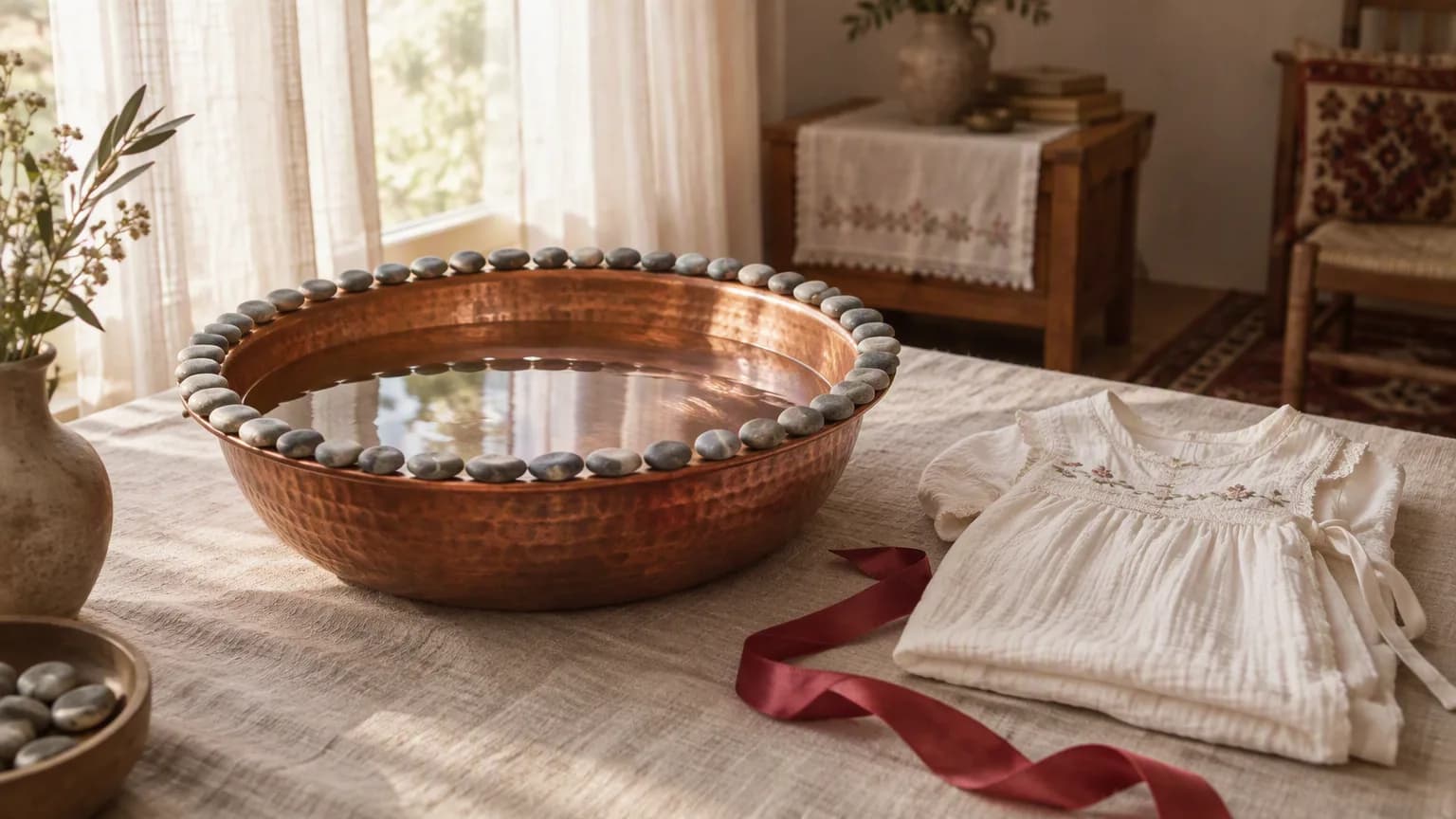
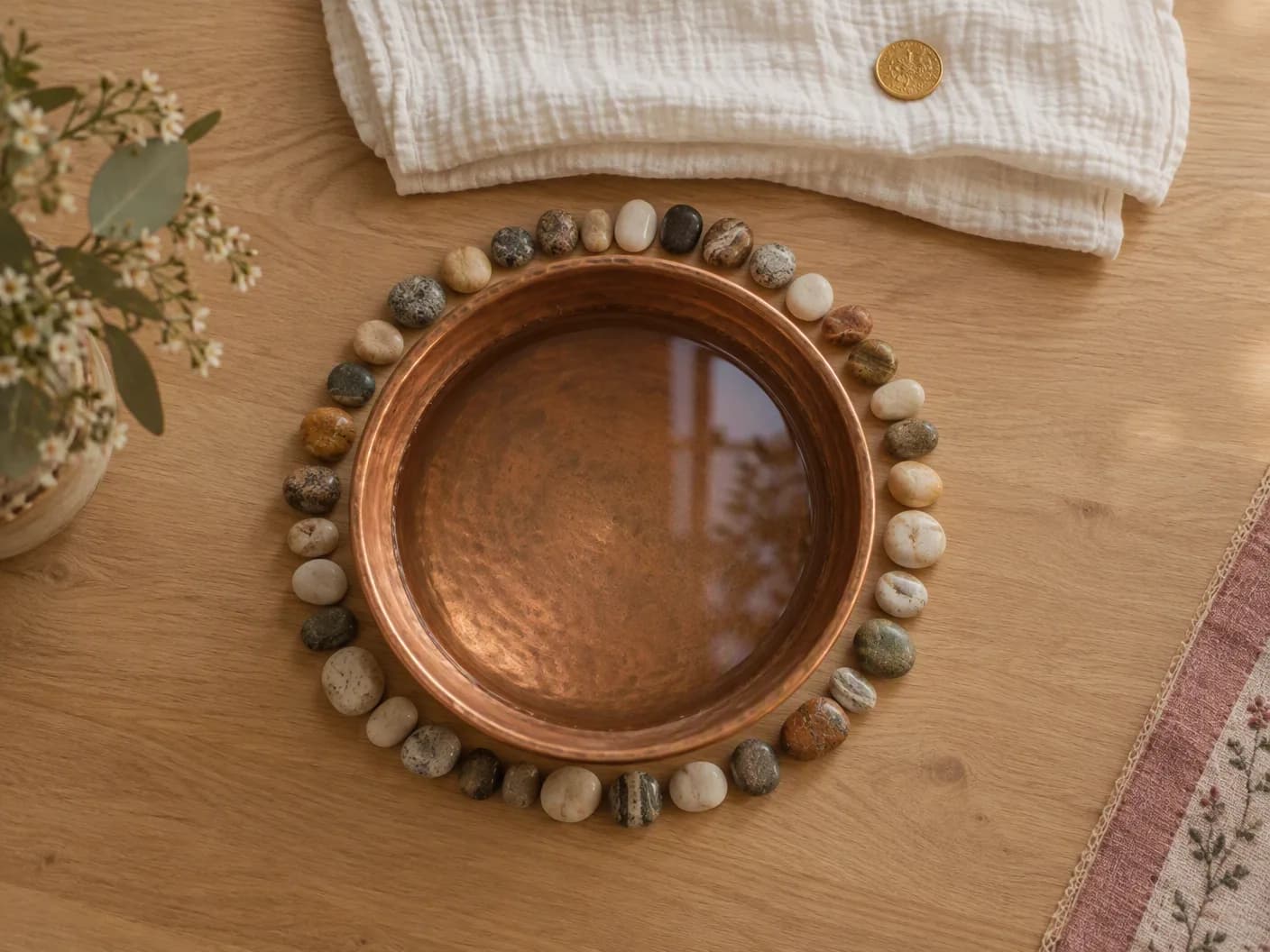
When day forty arrives, the baby’s kırk is “brought out”. Details vary from region to region, but the heart of it is the same: water is poured into a basin and forty small pebbles — or forty spoonfuls of water — are counted into it; some add a gold coin or a pinch of salt. The baby is bathed in this water, and so is the mother. From that day the baby may leave the house and make the first visits. This is kırk uçurma or kırk gezmesi — the forty-day outing — the first trip to the grandmothers’ homes and the neighbours’.
What’s lovely about it is that it makes a threshold visible. For forty days the house has been the centre of the world; on the fortieth day the door opens and the baby is presented to it. Some families take the first photograph that day; others keep the outfit. All of them are saying the same thing: something has ended, something has begun.
What a modern mother can take from it
You don’t have to keep every custom to the letter — nobody expects you to count pebbles. But the ideas underneath still hold, wherever you’re from:
- The forty days are yours. There is no better excuse than tradition for turning visitors away, switching the phone off and saying “not now.”
- Let things come to you. Don’t brew the sherbet. Let the neighbour bring the soup. Most of these customs are, underneath, polite ways of helping a new mother.
- Mark the threshold. Spend day forty on a small ritual of your own: a first walk, a first photograph, a first visit to a grandmother. Let the day leave a trace.
- Ask. If you’ve married into a Turkish family or your neighbours are curious about your baby, ask what their forty-day custom is. The Black Sea tells it one way, the Aegean another, the south-east another. The answer usually comes wrapped in a good story.
A record of the forty days
Forty days go quickly. The birth weight, the length, the hour they arrived, the day the name was chosen — these get jotted down somewhere, and then the notes get lost. The old generation wrote them inside the family Qur’an; we write them in the notes app. Neither stays put.
Let the first facts stay somewhere
Name, birth date, weight and length — the first four facts of a new life, kept for good on a plaque that fits in the palm of your hand.
The ribbon on the door
The ribbon my mother-in-law tied is still here. Each of my four sons got one, and all four now live in a drawer in our flat in İstanbul. One day I’ll tell them: on the day you were born, a red ribbon was tied to the door, because the people who loved you wanted to keep you safe. You don’t have to believe it. But know it.
— Merve Doğan