One stitch, one breath: why knitting is the calmest thing we do
In hospital waiting rooms, on bus seats, in front of the evening news — women in Türkiye were always knitting something. Now the needles are back in young hands, and doctors are saying what grandmothers already knew: knitting calms you down.
By Merve Doğan · · 4 min read
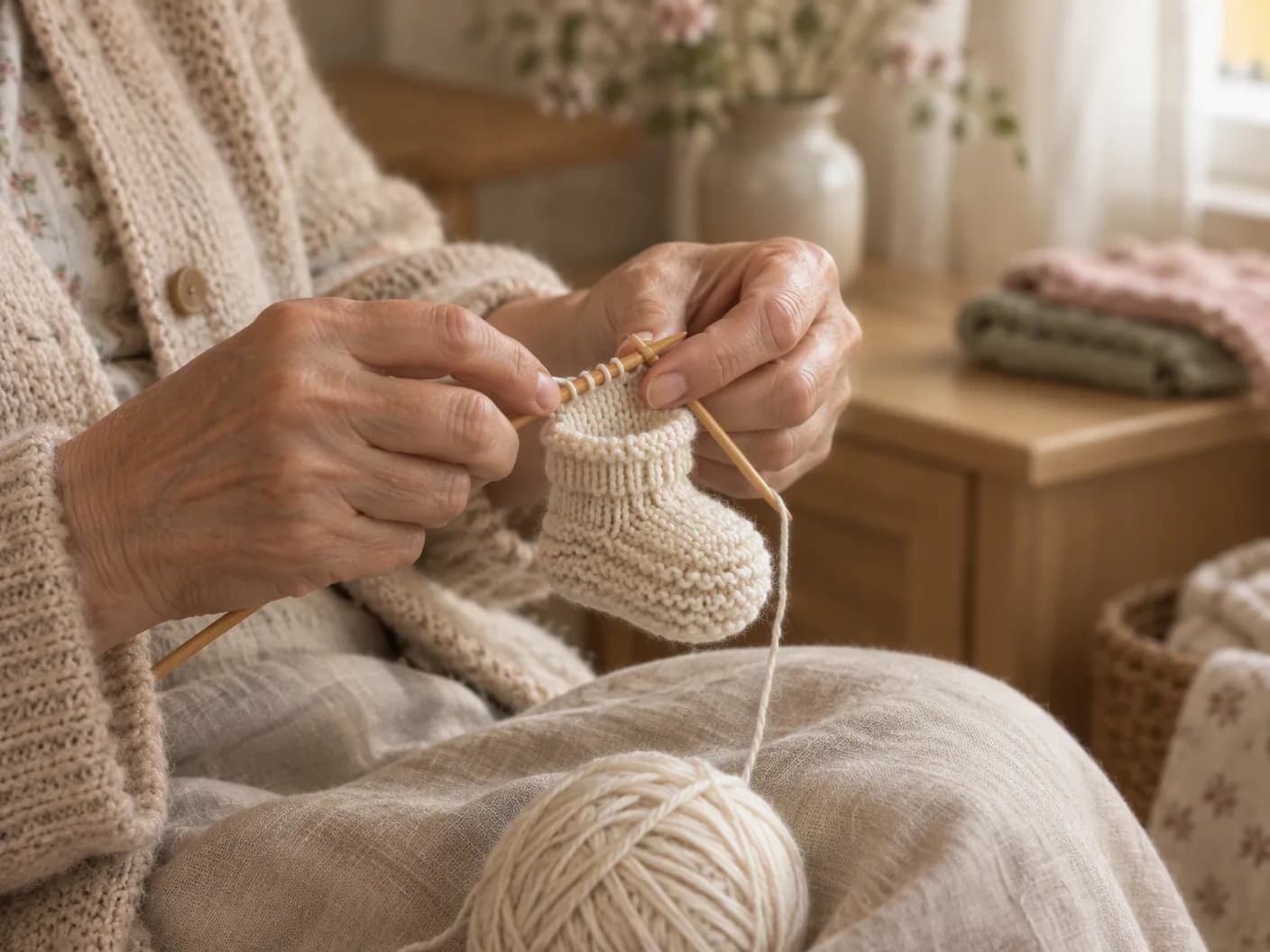
In the waiting room of the hospital where I would give birth, a woman in her seventies sat across from me. A powder-pink ball of yarn in her lap, two needles in her hands. I don’t know who she was waiting for — a grandchild, some news. But her fingers never stopped. For two hours she was the calmest person in that room.
Then I saw what she was making: a bootee. Almost certainly for someone about to be born there.
Everyone was knitting something
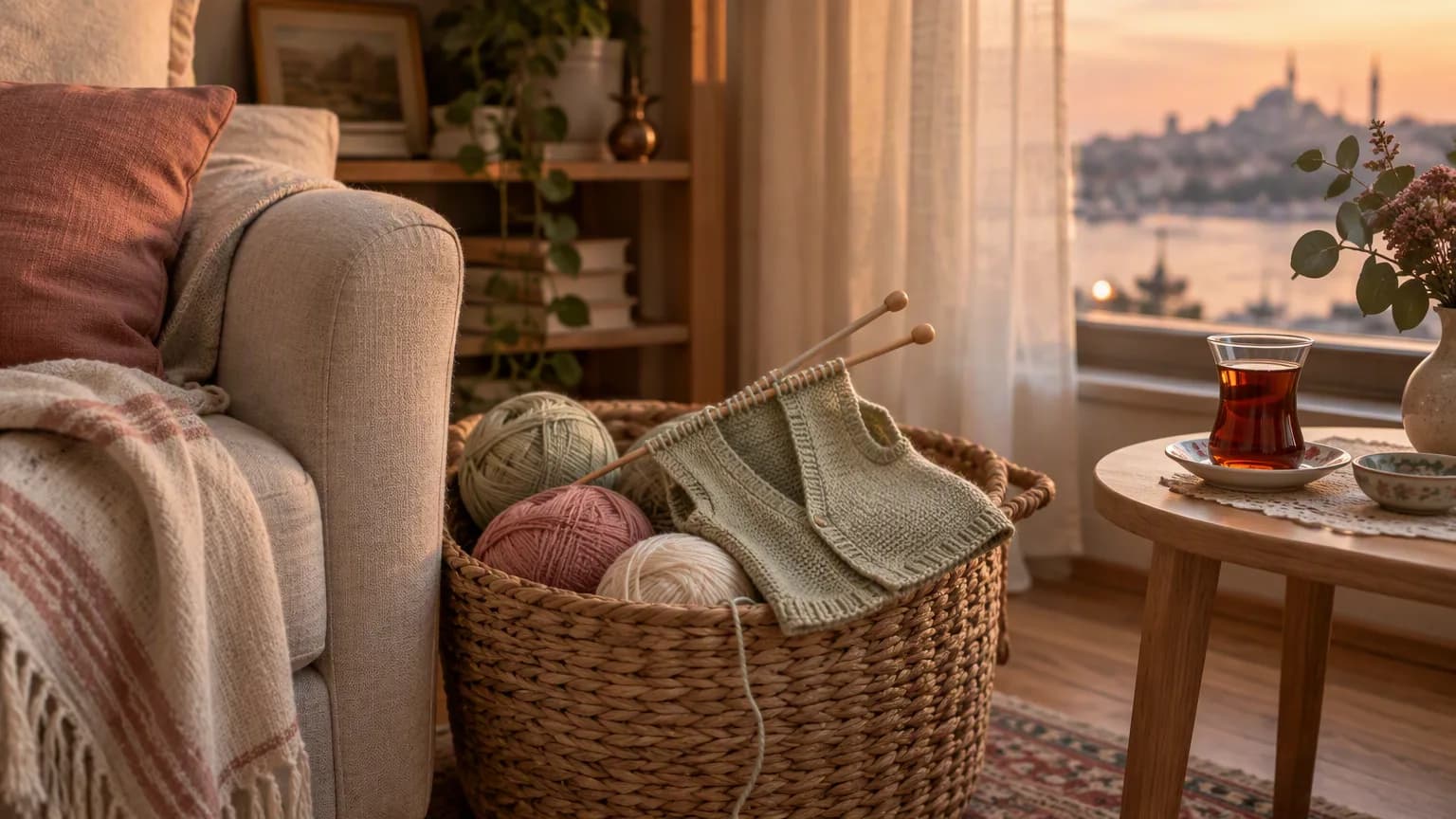
Anyone who grew up in Türkiye carries the same picture. The evening news on, a basket beside the tea tray, yarn in the basket. Grandmothers, aunts, neighbours — all of them knitting. A winter vest, a school scarf, a blanket for the new grandchild next door. They knitted while talking, knitted while listening, knitted while grieving.
For a while that picture seemed to fade. Ready-made jumpers got cheap; evenings were handed over to screens. But in the last few years the needles have come back — in young hands this time. Knitting videos with millions of views, knitting circles in İstanbul cafés, twenty-five-year-old engineers making their own jumpers. It’s the same story everywhere in the world.
Why knitting?
Because knitting has a rhythm. Take a stitch, give a stitch. When the hands are busy the mind empties and the breath slows. Doctors explain this at length now, but for our grandmothers it wasn’t a discovery, it was a fact. Elim boş durmasın — “let my hands not sit idle,” they said. We call the same thing by a newer name.
There’s something else: knitting is work you can see. At the end of the day there is one more row. An hour in front of a screen leaves nothing behind; an hour with the needles leaves a vest that looks a little more like a vest.
And most of all, knitting is done for someone. Few people knit themselves a jumper. Everyone knits for someone else. The bootee, the hat, the blanket — each is the long way of saying “I was thinking of you.”
The first bootee, the first hat
Things knitted while waiting for a baby have a place of their own. In the last months of pregnancy many women quietly buy a ball of yarn. They may never have knitted before. But they want to make that bootee themselves — so that when the baby is finally in their arms they can say, “I made this.”
The bootee is worn, outgrown, put in a drawer. Years later it comes out of a box and fits in the palm of a child whose feet are now enormous. At that moment it isn’t a sock any more. It’s proof of a time.
Getting started in Türkiye
Knitting may be the easiest craft to learn here, because every family has at least one teacher.
- Ask your grandmother. Or an aunt, or the neighbour who knits on the balcony. Sit with her one evening. It’s still the best knitting lesson there is — and if your Turkish is limited, hands need very few words.
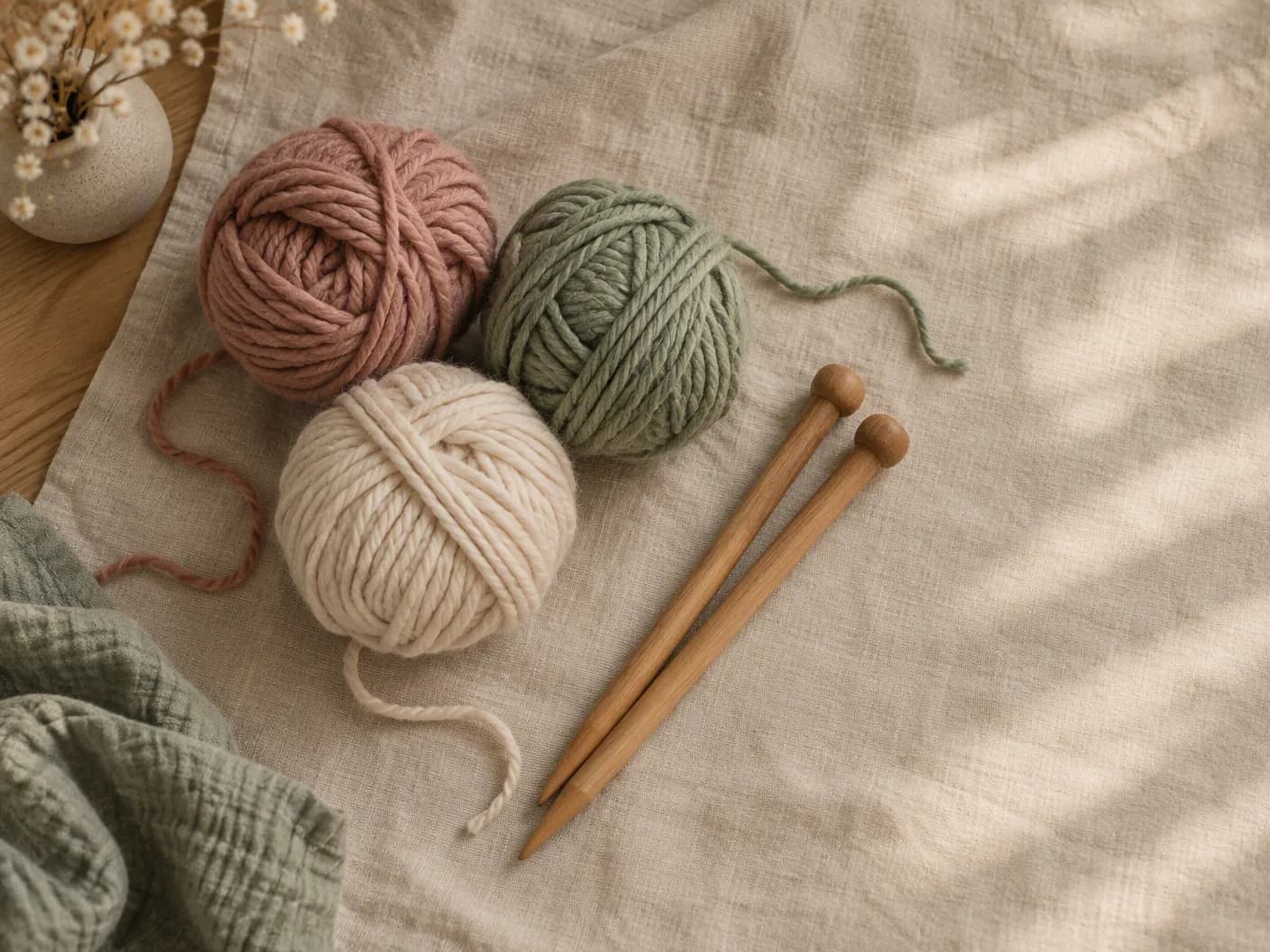
- Thick yarn, thick needles. Don’t fight thin yarn on your first project. A chunky ball and fat needles give you a baby-blanket square in an evening.
- Halk Eğitim and municipal courses. Almost every district runs free knitting and handicraft classes; learning in a group is easier and a lot more fun than alone.
- Search “garter stitch” or düz örgü. Hundreds of channels in English and Turkish. The first ten minutes are the hardest; after that your hands remember.
Somewhere to keep that bootee
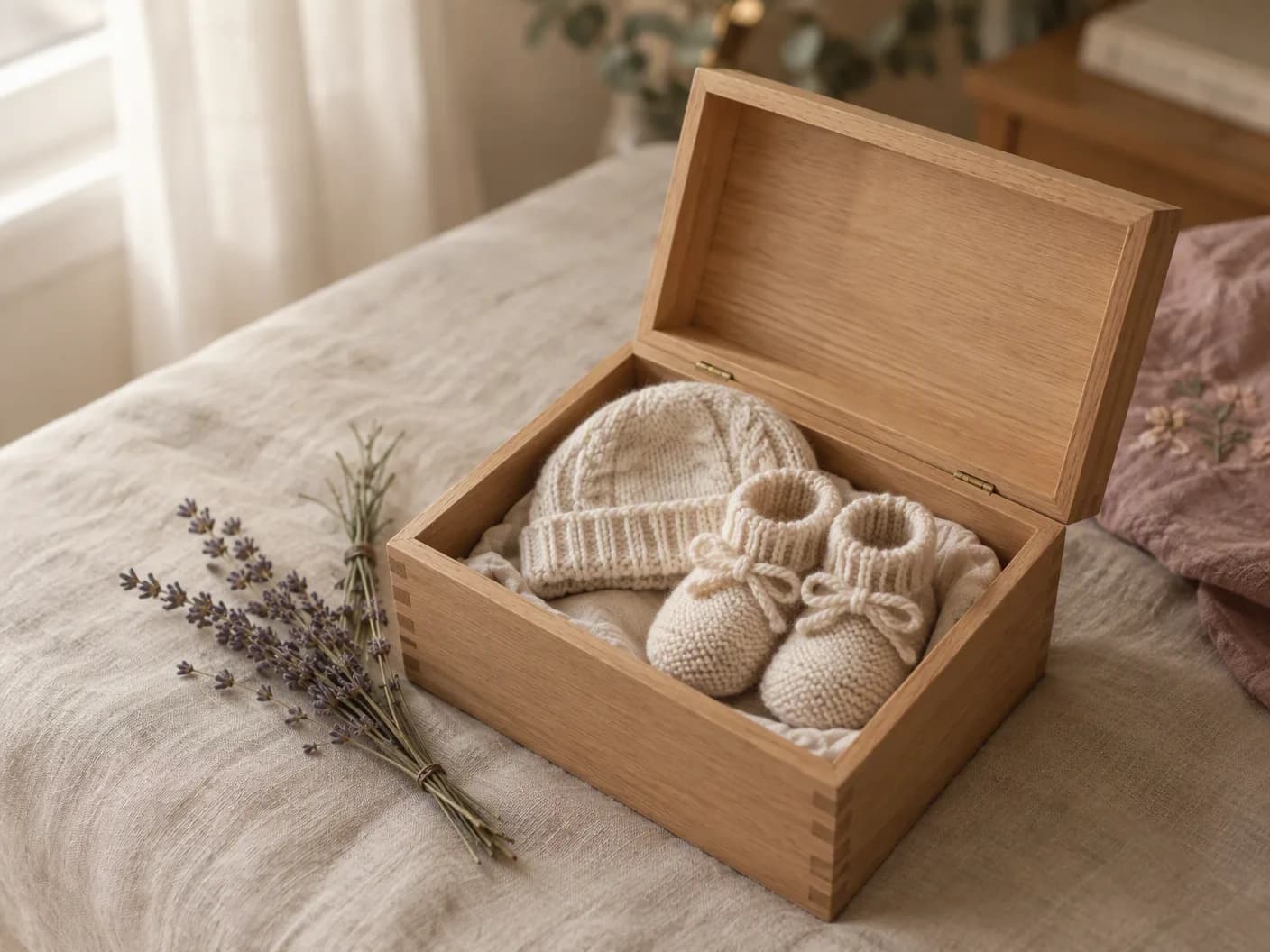
Some knitted things get worn; some get kept. The first bootee, the first hat, the vest they wore home from the hospital. So they don’t vanish at the bottom of a drawer, they go into a small box with their name on the lid.
A box for the first bootee
A small keepsake box with their name on the lid — for the first bootee, the first curl and the tiny things you can’t bear to lose.
While the hands are busy
I never saw the woman from that waiting room again. But I’ve always wondered who the bootee was for. Perhaps that child is twenty now, and somewhere at the bottom of a box sits a tiny pink pair of bootees.
Take a stitch, give a stitch. While the hands are busy, the heart gets to rest.
— Merve Doğan