Embroidery and remembering: what happens when a name is written in thread
Every cloth in my grandmother’s dowry chest had two letters stitched into the corner, and they can still be read today. Why embroidery is back in twenty-somethings’ handbags, and why a baby’s name written with a needle lands so differently from one typed on a screen.
By Merve Doğan · · 3 min read
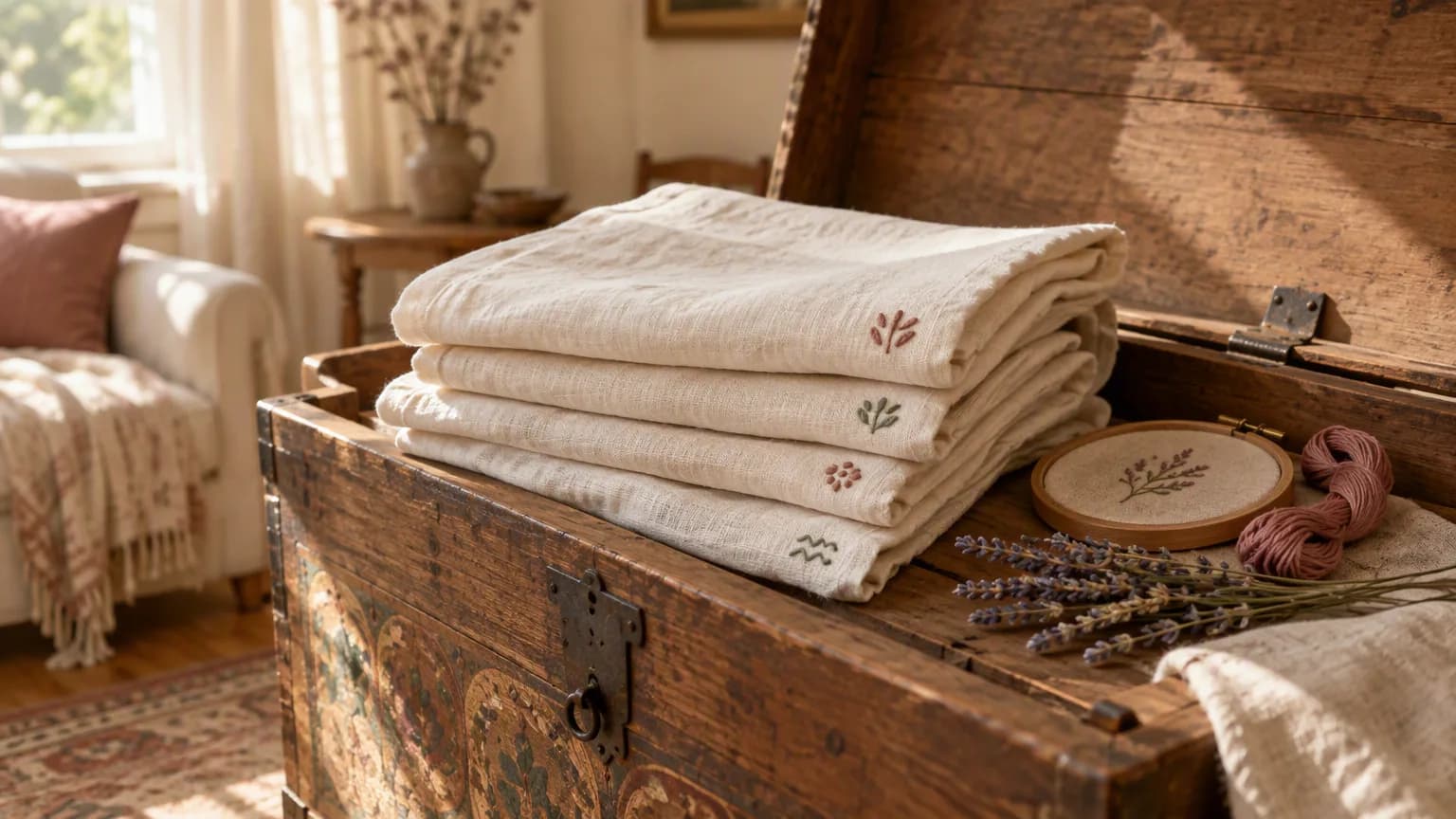
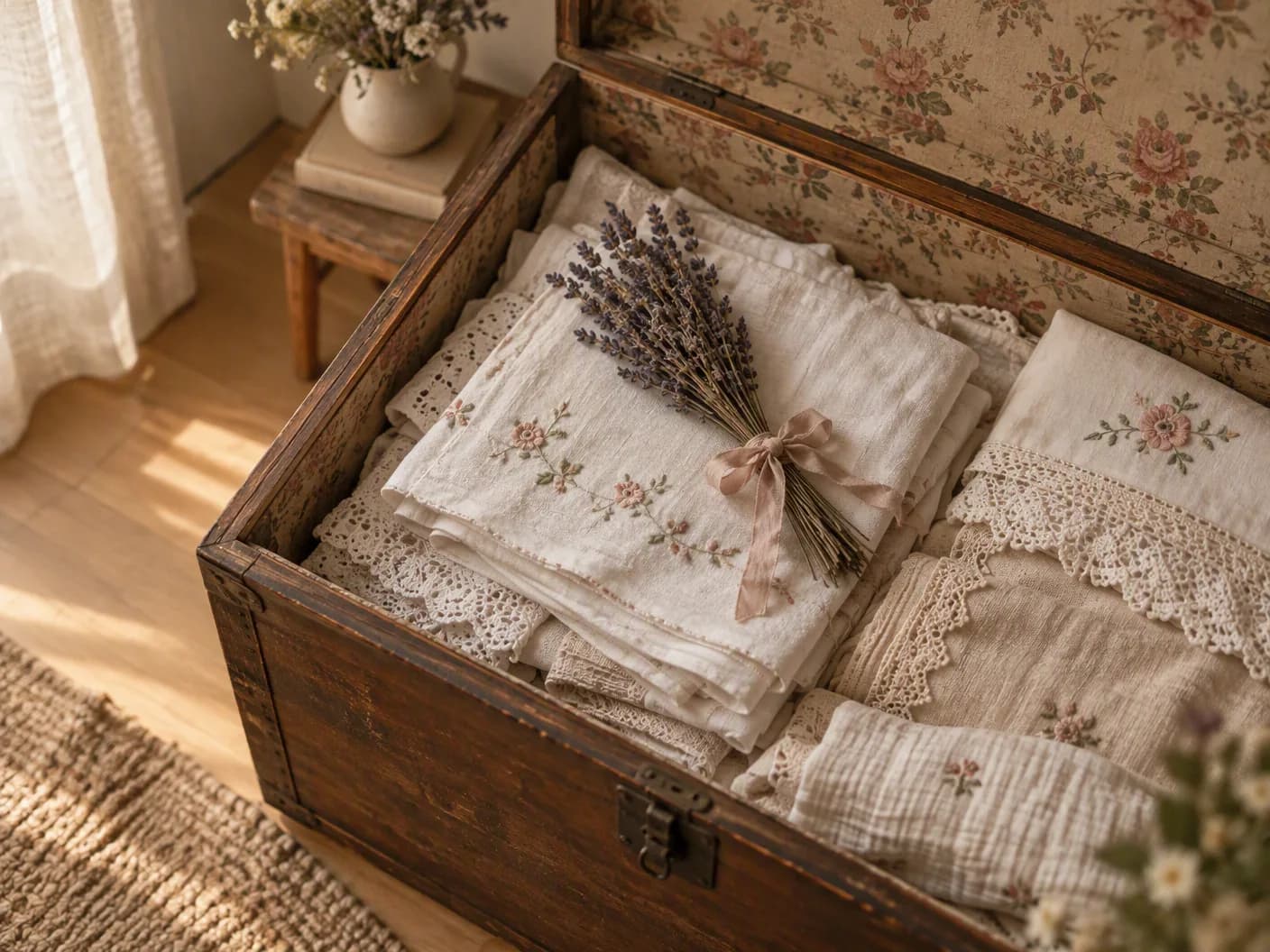
When we opened my grandmother’s dowry chest in her house in Zonguldak — the çeyiz sandığı that every Turkish bride once brought to her marriage — the first thing to come out was the smell: mint sweets and lavender. Then the cloths. Pillowcases, wrapping bundles, a tablecloth. In the corner of each one, two letters in the same coloured thread. Hers and my grandfather’s initials. Stitched forty years ago, probably on a winter evening, probably with the radio on.
Closing that chest, I understood that embroidery had never been decoration. It was remembering.
The needle comes back
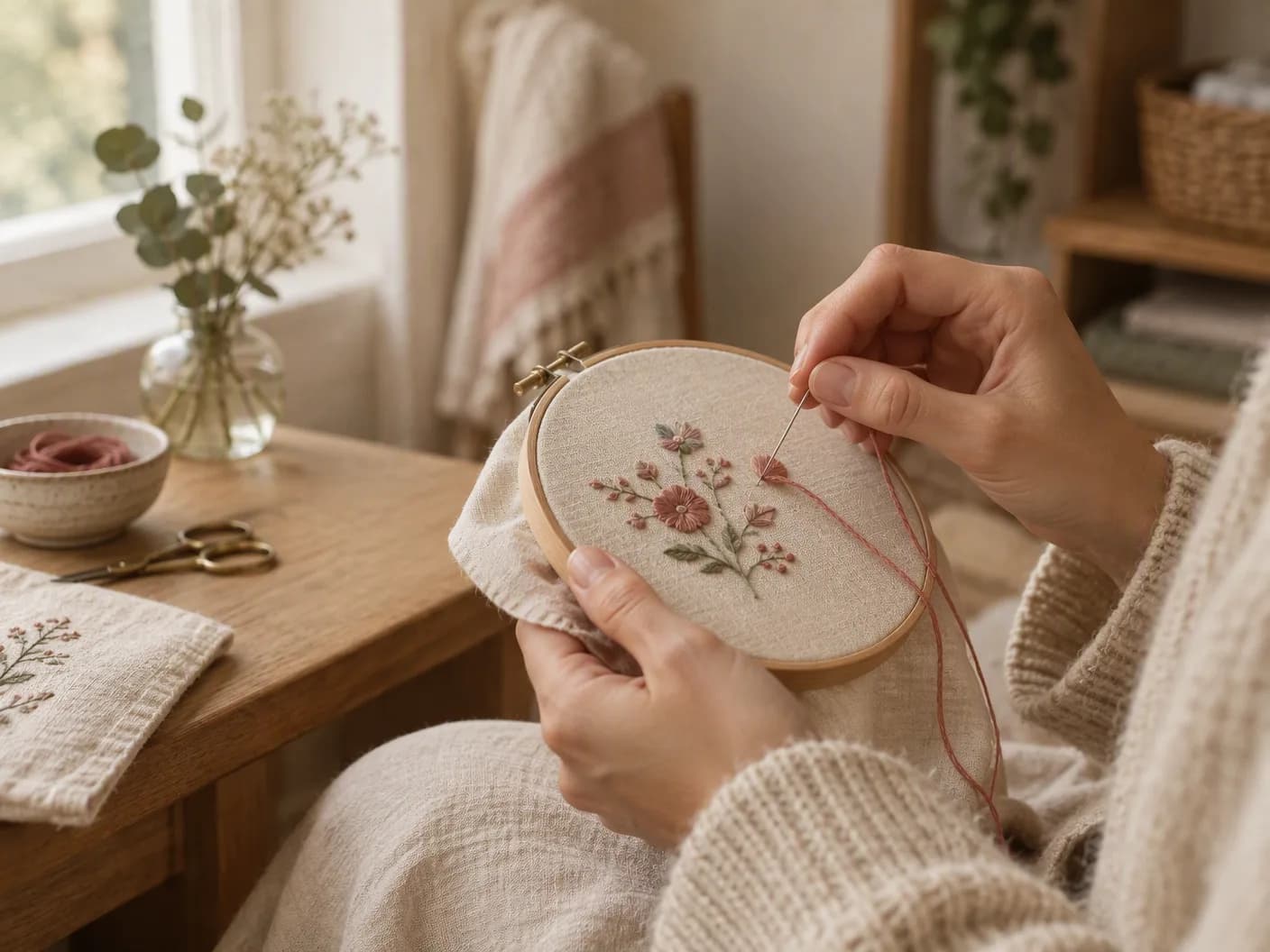
Embroidery is everywhere again — only this time it isn’t in a dowry chest, it’s in the handbags of women in their twenties. On the İstanbul metro you’ll spot someone holding a hoop; people stitch their own name onto a denim jacket, or a tiny flower onto the collar of a partner’s shirt. Around the world it goes by the name slow stitching: doing something not to finish it quickly, but because finishing was never the point.
That is embroidery’s secret. As the needle goes in and out of the cloth, the mind goes quiet. One stitch, then another. The phone is somewhere else. The day is done, the flat is silent, and in your hands there’s a small hoop and one colour of thread. Our grandmothers called it kafa dinlemek — letting the head rest. Magazines now call it mindfulness. Same thing.
When a name is written in thread
A name written on paper fades. A name typed on a screen scrolls away. But a name stitched into the corner of a blanket is still there when the blanket itself is worn to threads.
Watch a mother see her baby’s name embroidered for the first time and she almost always does the same thing: she runs a finger over it. She feels the letters standing up from the cloth. Because that name is no longer a sound or a line of text; it’s something you can touch. The name that was debated for months, decided one night, then printed on an ID card, has for the first time become something you can hold.
The baby grows. The blanket shrinks. But that corner gets kept. Years later it surfaces from a chest or the back of a wardrobe, and a mother says to her daughter, “Look — this was yours.”
Getting started in Türkiye
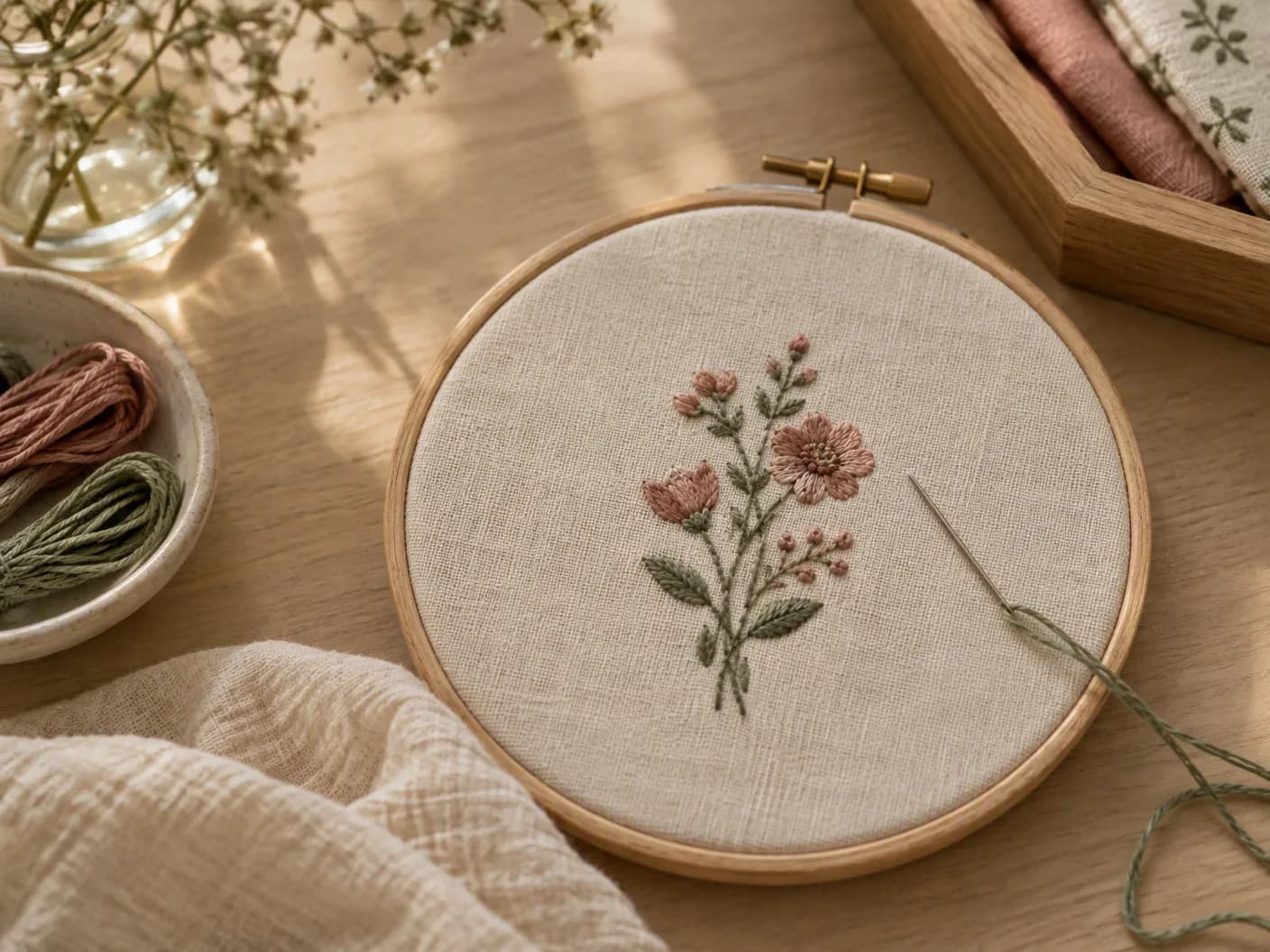
Embroidery is the craft with the smallest shopping list: a hoop, a few colours of thread, a needle, a scrap of cotton. A single trip to any tuhafiye — the neighbourhood haberdashery — covers all of it.
- Start with counted cross-stitch (kanaviçe). You count squares on gridded fabric, which makes it hard to go wrong. It’s where Turkish grandmothers began, and not by accident.
- Stitch one letter. Your first project shouldn’t be a bouquet; make it a single initial in the corner of a napkin. Half an hour, and you get to say “I made that.”
- Look up your local course. Halk Eğitim Merkezleri — the state adult-education centres in nearly every district — run free hand-embroidery classes in Turkish. You learn alongside neighbours, and the conversation is usually the best part.
- Show no one. First pieces come out wobbly. That is how they should be. Your grandmother’s first letter was wobbly too.
No time? Let the name be written anyway
Finding time to hold a hoop in a house with a newborn is hard — we know. The embroidery you keep postponing between sleepless nights can wait. Their name being written somewhere in thread shouldn’t have to.
Their name, stitched onto their blanket
A name label embroidered in soft thread, ready to sew into the corner of the blanket that goes everywhere with them.
Who will open your chest?
One day someone will open your chest too. What they find is being decided now. Perhaps your wobbly first letter; perhaps a tiny label with your baby’s name on it. Size doesn’t matter. Things written in thread stay.
The two letters in my grandmother’s chest can still be read. It has been forty years.
— Merve Doğan