The first letter on the blanket: where a baby’s name gets written first
After the hospital wristband, most Turkish homes write a baby’s name in one place first: the corner of the blanket. Why there? A mother-in-law with an embroidery hoop, a needle that refuses to hurry, and a single lopsided letter found in a cupboard years later.
By Merve Çokal Doğan · · 3 min read
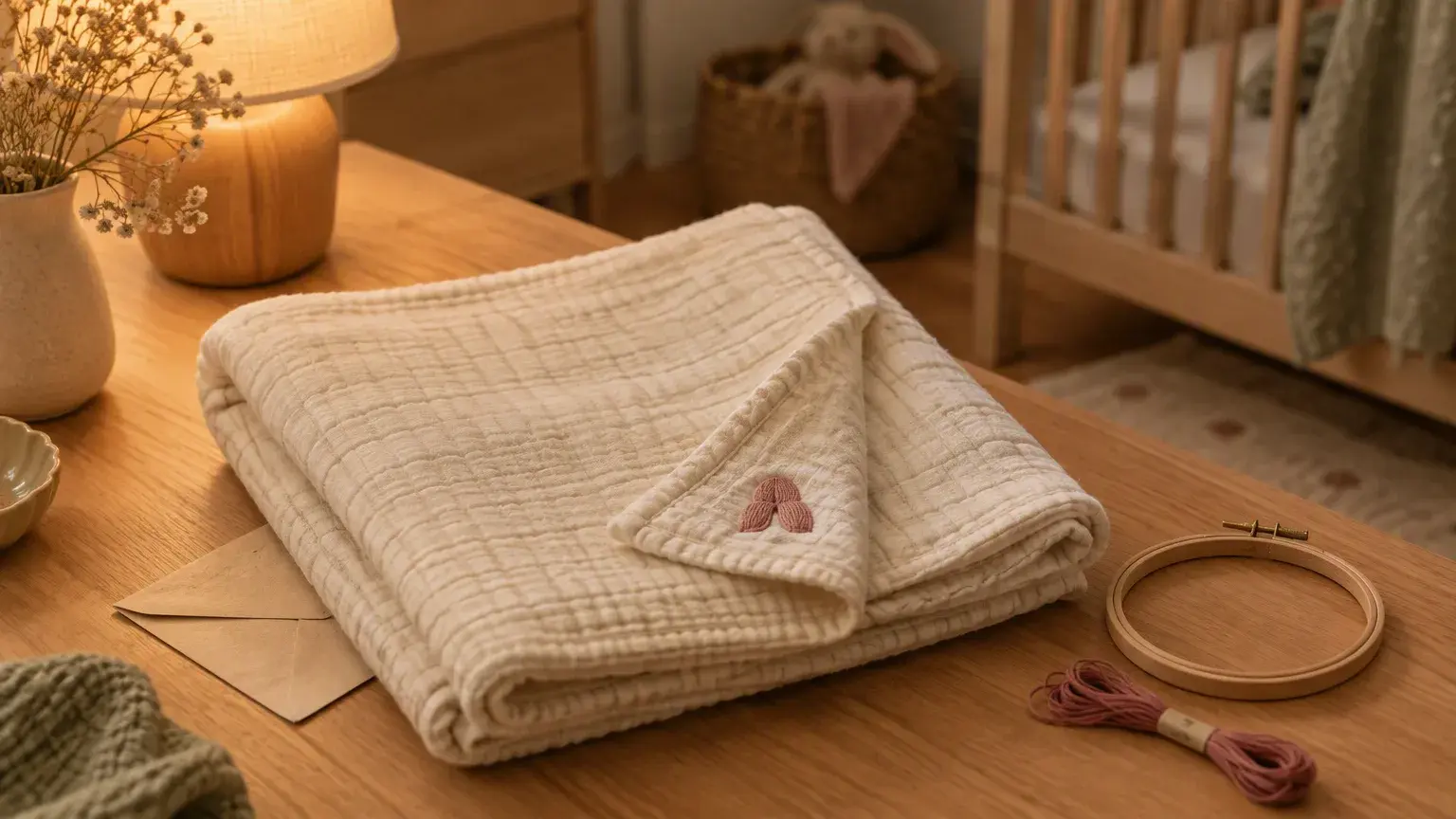
When Süleyman Taha was born we were living in Konya and it was the middle of October. He left the hospital with a plastic band on his wrist: his name, the hour of his birth, his weight. At home we slipped it off and put it in an envelope. That night, while he slept, it struck me as odd that the only place his name existed was inside an envelope.
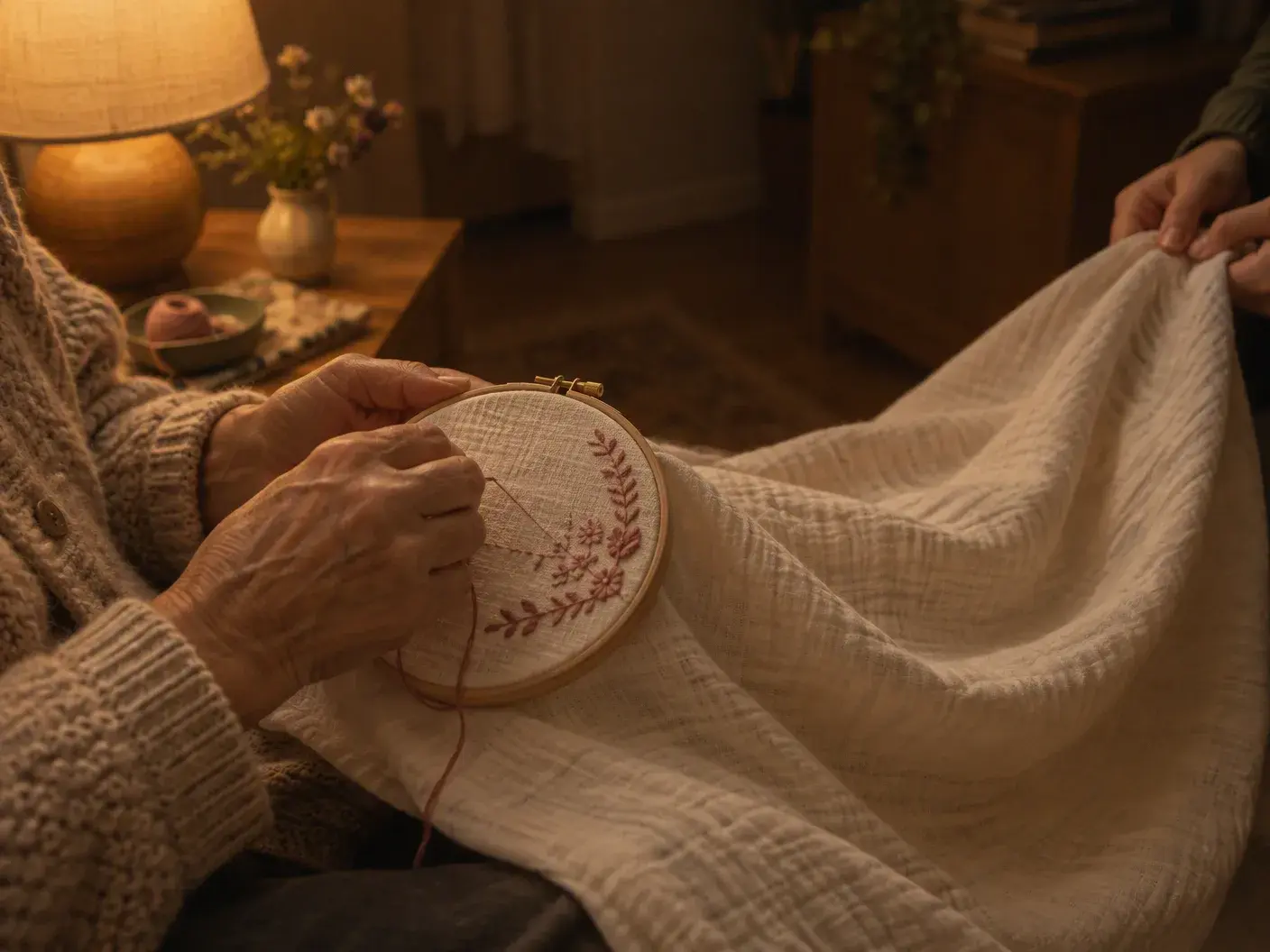
My mother-in-law arrived the next day. Out of her bag came an embroidery hoop, a skein of dusty-rose thread, and the corner of his blanket. “Let’s write his name,” she said. We did. She stitched, I held. One letter, then the next. Süleyman is a long name; it took two evenings.
Why the blanket?
In most Turkish homes a baby’s name is written on the blanket before anywhere else. I only noticed this later — at neighbours’, at relatives’, in the hospital corridor — but it was always the same. Not a frame, not a wall. The blanket.
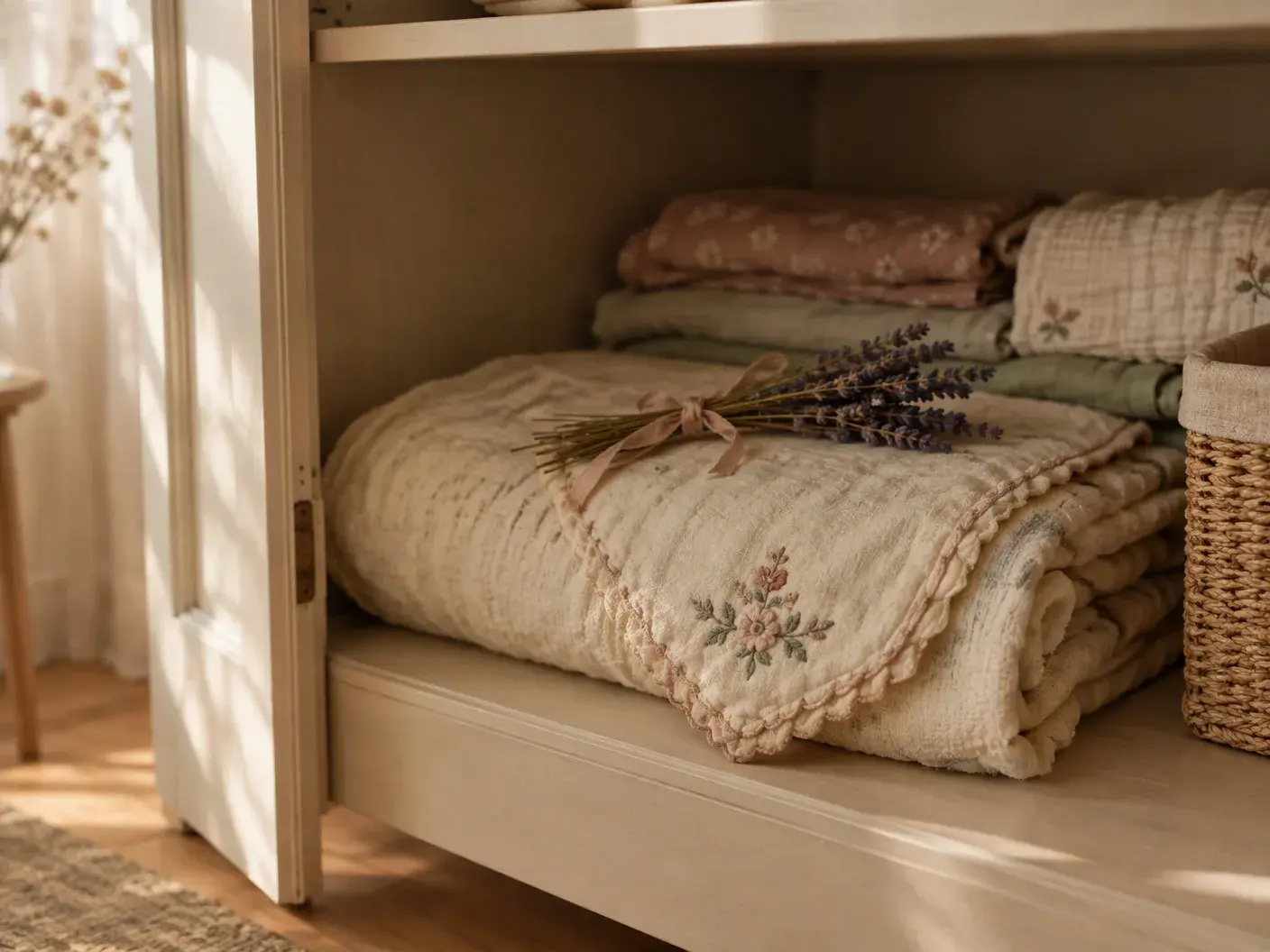
I think the reason is this: in the first weeks the blanket is everywhere the baby is. In your arms, in the car, at the grandmother’s house, on the paediatrician’s table. Wherever the baby goes, so does the blanket, and so does the name. And there is this too: a blanket becomes too small, but it is never thrown away. Years later it surfaces from the bottom of a cupboard and the letter in the corner is still there.
A needle will not be hurried
What I learned in those two evenings was not embroidery — I didn’t do the stitching. What I learned was how it feels to do one thing slowly.
In a house with a newborn everything happens in a rush. Nappies, feeds, sleep, the phone, visitors. A needle does not rush. One stitch, then another. My mother-in-law worked without talking; I held the far end of the blanket under the lamp with Süleyman asleep in my lap. Two hours passed like that. Looking back, they were the two calmest hours of those first weeks.
That was also when I understood why so many young people have picked up a hoop again. Not to make something beautiful. To make something slowly.
One letter is enough
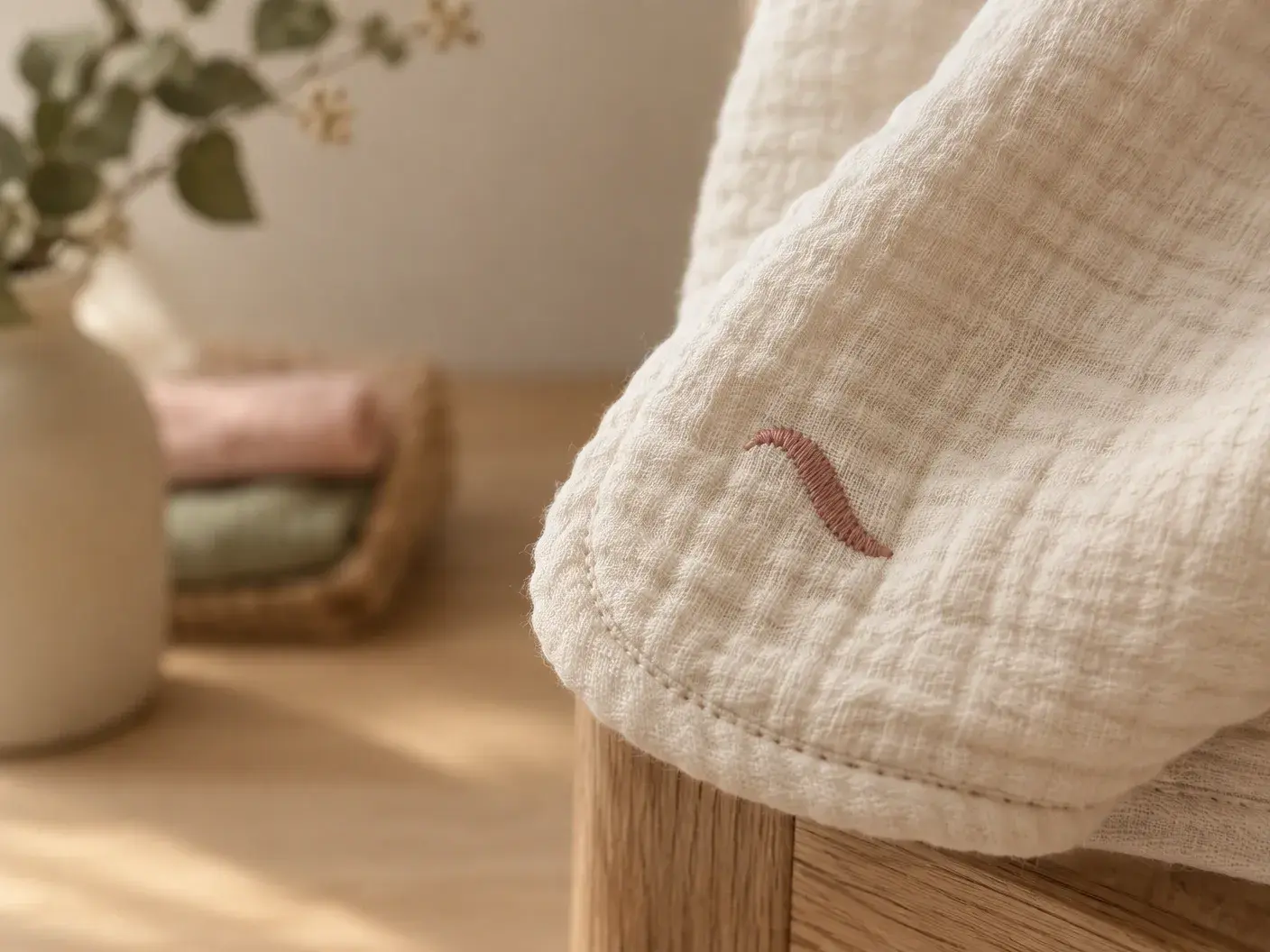
You don’t have to stitch the whole name. A single initial often lands harder: small, tucked in a corner, looking like a motif from across the room. Whoever looks closely knows.
Nor do you need to be skilled. Plain cotton rather than counted canvas; the hoop goes on, the letter is pencilled lightly, and you go over it in stem stitch. Stem stitch is one movement and takes half an hour to learn. It will come out crooked. Let it. The S my mother-in-law stitched leans a little to one side, and that is exactly how I know it is hers.
Where to start in Türkiye
- The tuhafiye. Your neighbourhood haberdashery has the hoop, a skein of muline (stranded cotton) and a packet of needles on one shelf. Muline sits best on blanket cotton.
- Pick a corner. Washed and pressed. The baby will hold that corner for years, so knot the thread ends on the inside.
- Ask a grandmother. If someone older in your family embroiders, ask them for the first letter. It isn’t a shortcut; it makes the keepsake belong to two people.
- Halk Eğitim. The state adult-education centres run free hand-embroidery courses; enrolment is usually September–October — right about now.
If there is no time for a hoop
Not every newborn household has two spare hours and a mother-in-law with a hoop; ours wouldn’t have managed without her. If those hours can’t be found, let the name still sit on the corner of the blanket.
Their name, stitched for the blanket
A name label in soft thread, sewn to the blanket’s corner with a few stitches so it travels everywhere they do.
The envelope and the blanket
The hospital band is still in its envelope. But the first place Süleyman’s name was written wasn’t that envelope; it was the slightly slanted S my mother-in-law stitched over two evenings. The blanket is far too small for him now. The corner still reads.
— Merve Çokal Doğan
Questions from readers
Mothers ask, we answer — questions under this story that others may have too.
Ask your own question
Ask the author anything about this story. We send a one-time code to your WhatsApp so real mothers, not bots, get answered — your number is never shown.
Keep reading
Embroidery
Embroidery and remembering: what happens when a name is written in thread
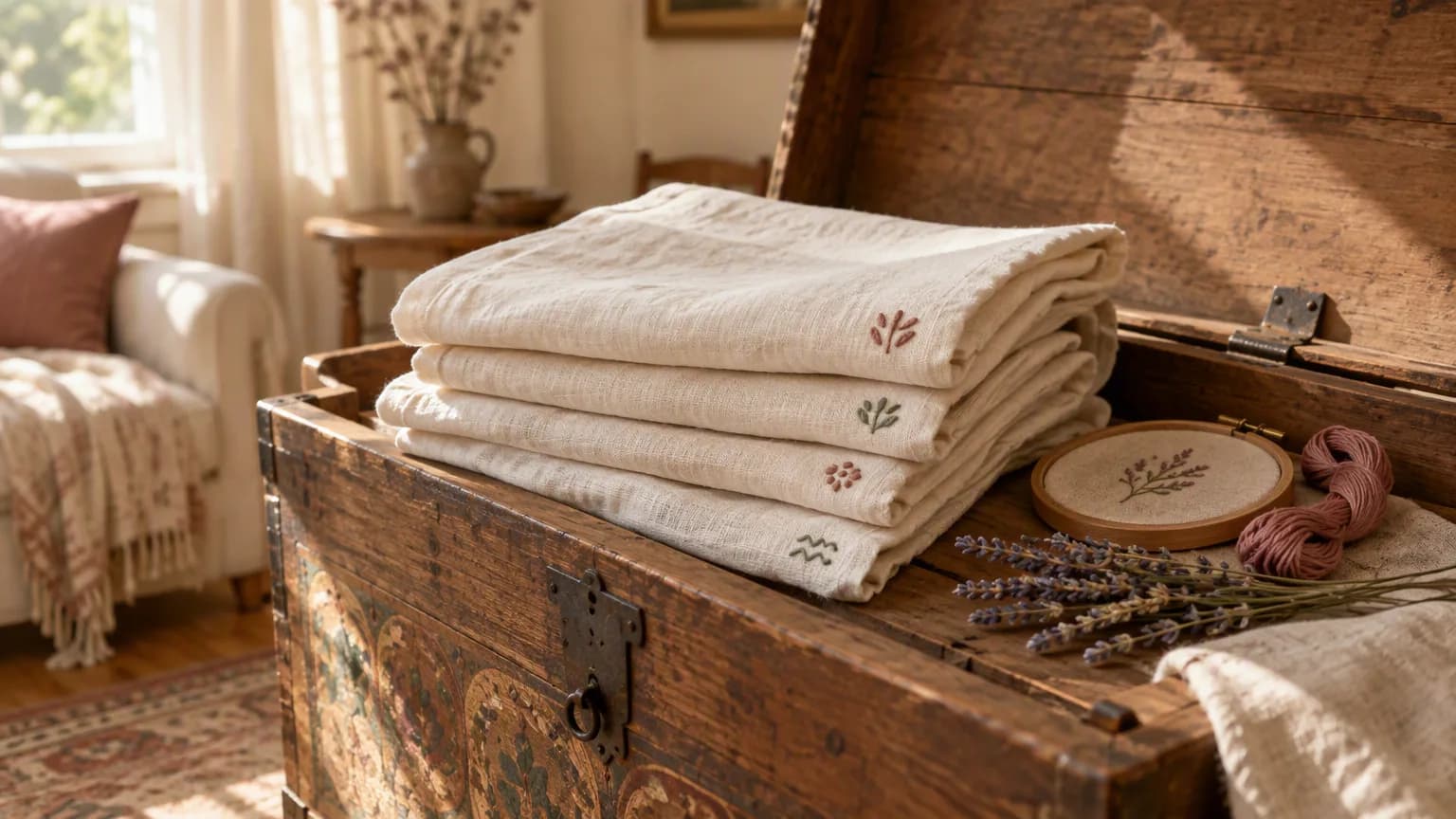
Every cloth in my grandmother’s dowry chest had two letters stitched into the corner, and they can still be read today. Why embroidery is back in twenty-somethings’ handbags, and why a baby’s name written with a needle lands so differently from one typed on a screen.
· 3 min read
Sewing
The sewing machine is back — and it was never just a hobby
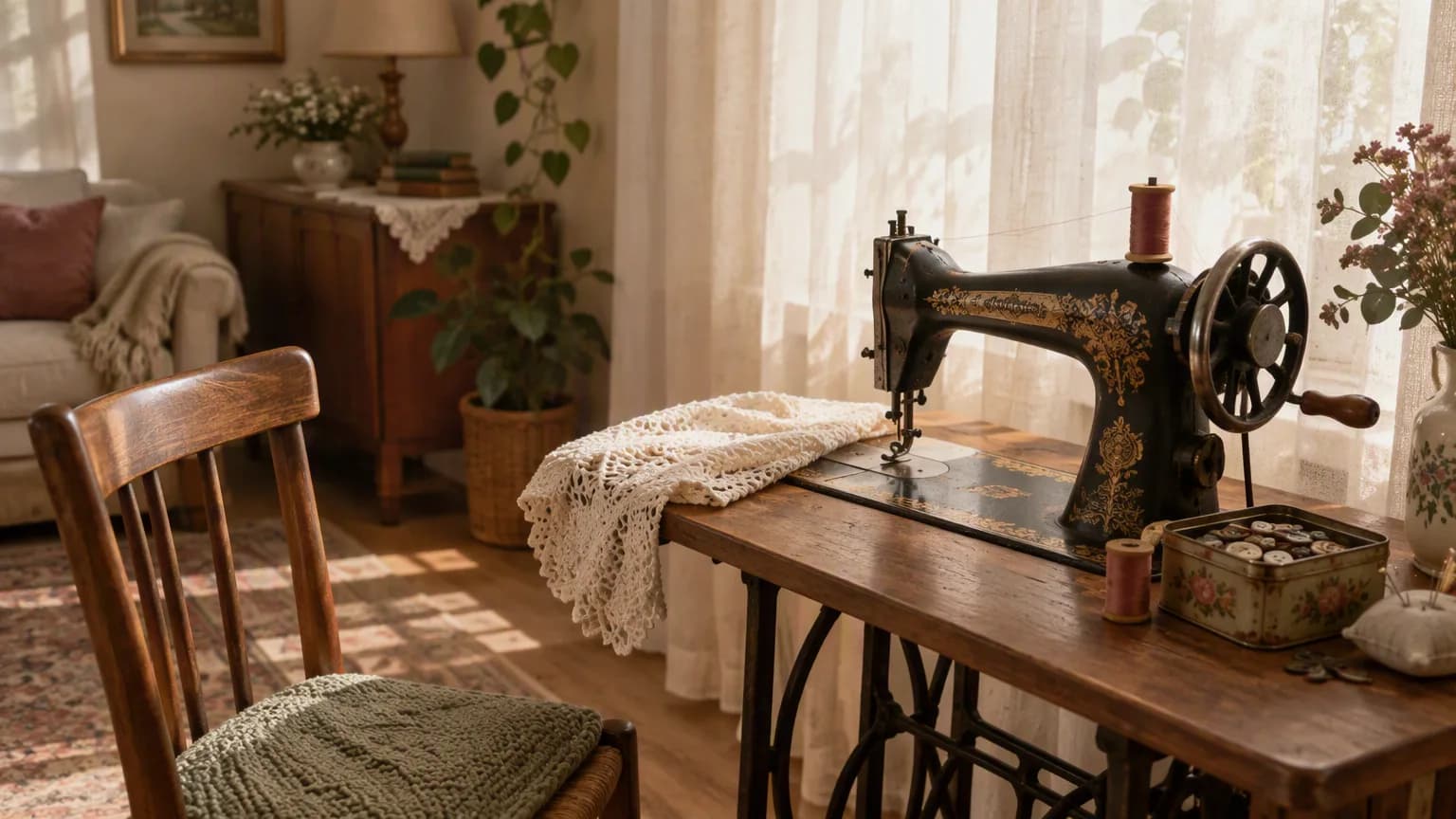
Sewing classes in Dublin sell out months ahead, New York declares sewing “cool again”, and across Türkiye the old Singers are coming down from the attic. What’s behind the quiet comeback — and where does a new mother find room for it?
· 5 min read
Mother & Baby
Choosing a name four times: how we learnt to love a name
Süleyman Taha, Muammer Esat, Hamza Bera, Mehmet Emde. We chose a name for four boys and learnt the same lesson each time: a name isn’t found on a list, it’s found by calling it out loud. On the quiet side of naming a baby — with a note on why Turkish children so often carry two names.
· 3 min read