The handprint in plaster: they’ll never be this small again
When my third son was a week old we pressed his palm into a handful of plaster. That hand is bigger than mine now — but the print is still a week old. Why plaster and clay make such tender keepsakes, and how to start at home.
By Merve Doğan · · 3 min read
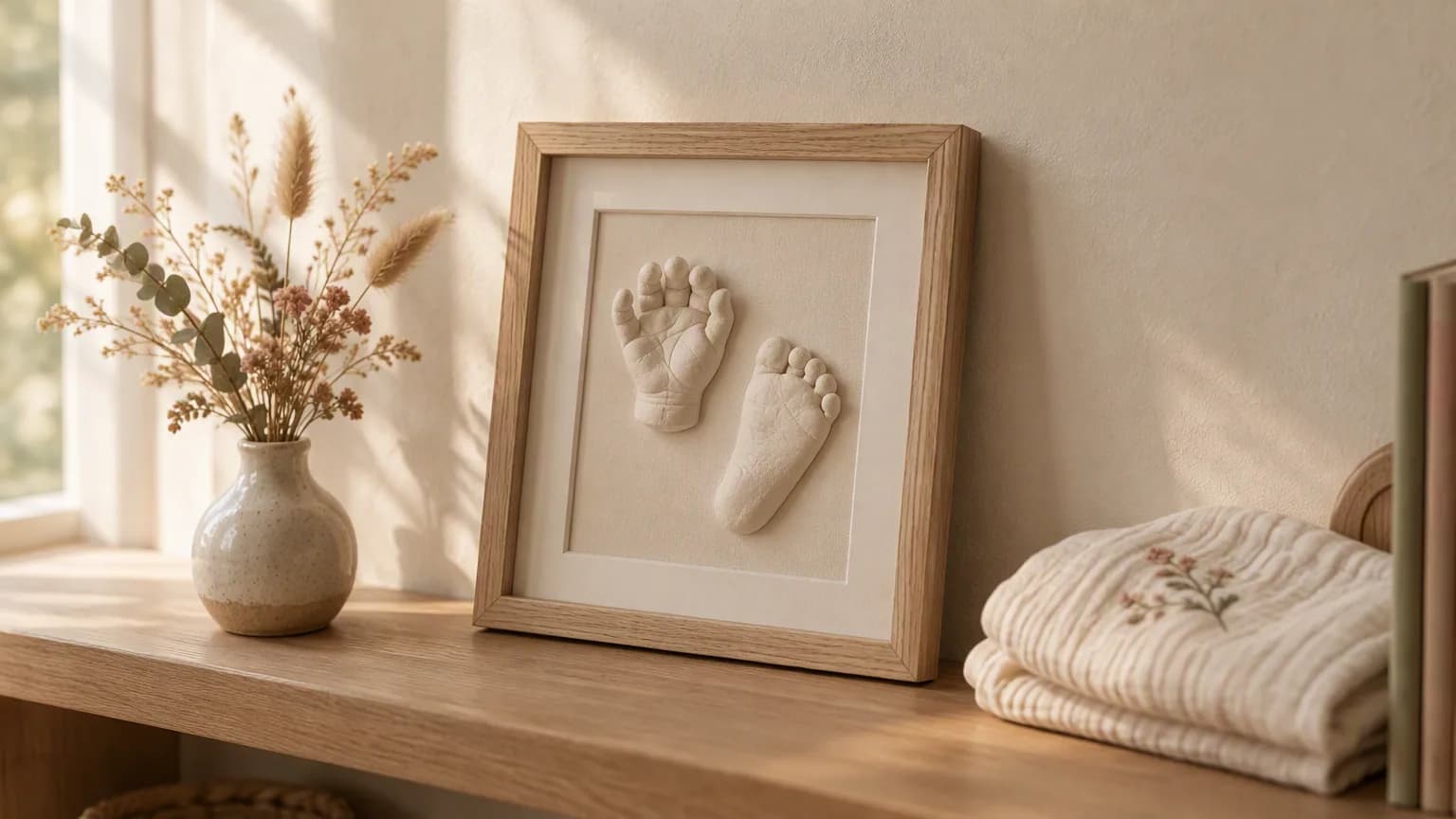
Hamza Bera was born in 2014, our first son to arrive in İstanbul. When he was a week old we coaxed open his soft little fist and pressed his palm into a handful of plaster. He cried, of course — the plaster was cold. Whether I was laughing or crying, I honestly couldn’t tell you.
That plaster sits on a shelf in our living room now. Hamza’s hand is bigger than mine. But the print is still one week old. Every time I look at it I think the same thing: he will never be this small again.
Why plaster, why clay?
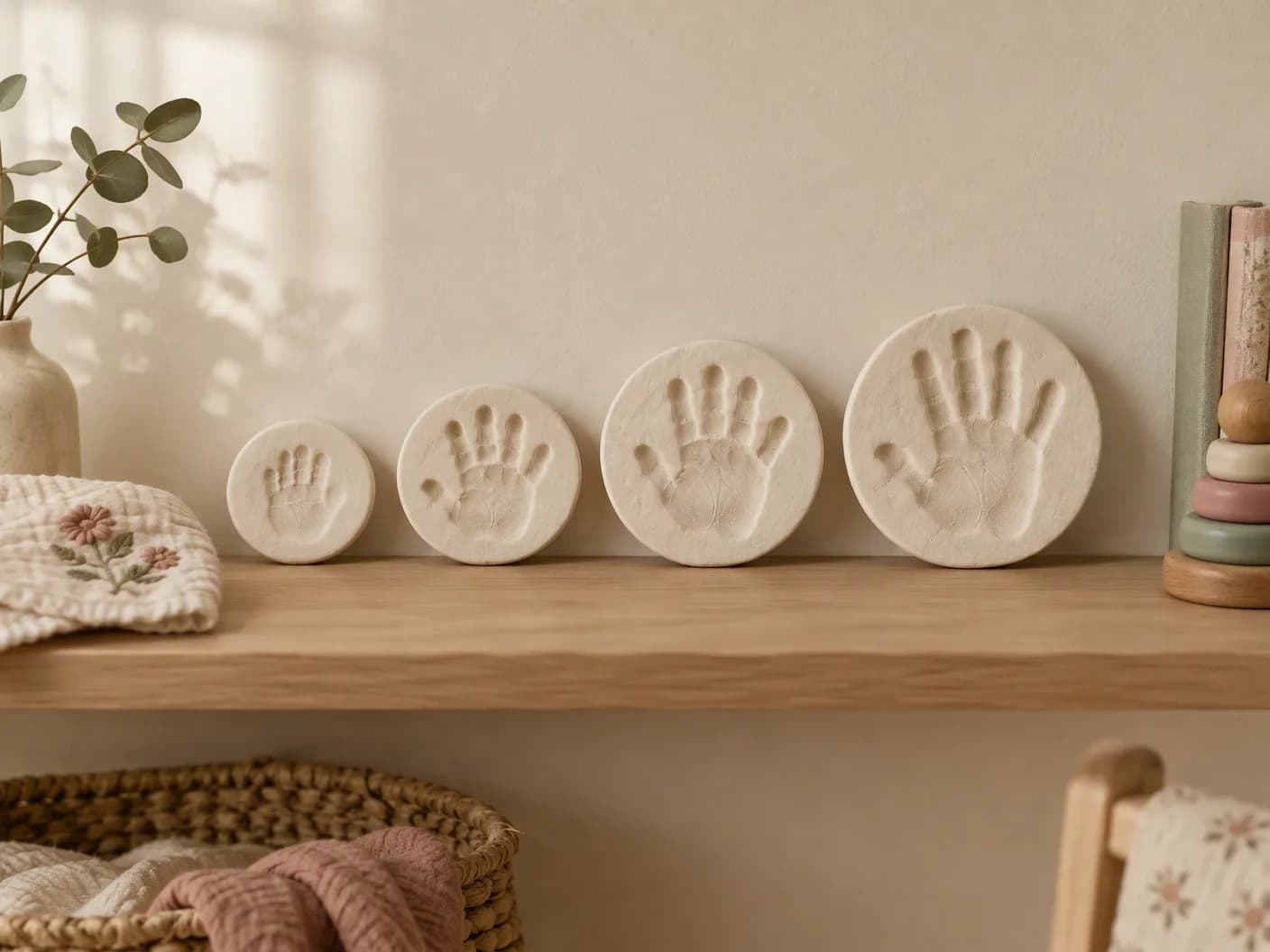
A photograph keeps a great deal, but there’s one thing it can’t keep: size. On a screen every baby is the same size. A handprint in plaster is true to scale; years later you put your own palm over it and feel that smallness again. That’s why hand- and footprints are among the first things new parents make, everywhere in the world.
And there’s this: plaster and clay love imperfection. A finger curled, a palm that didn’t quite press, a cracked edge. None of it is a flaw; all of it is the record of that morning. A perfect cast says nothing. A crooked one tells you about the day.
Small hands, big hands
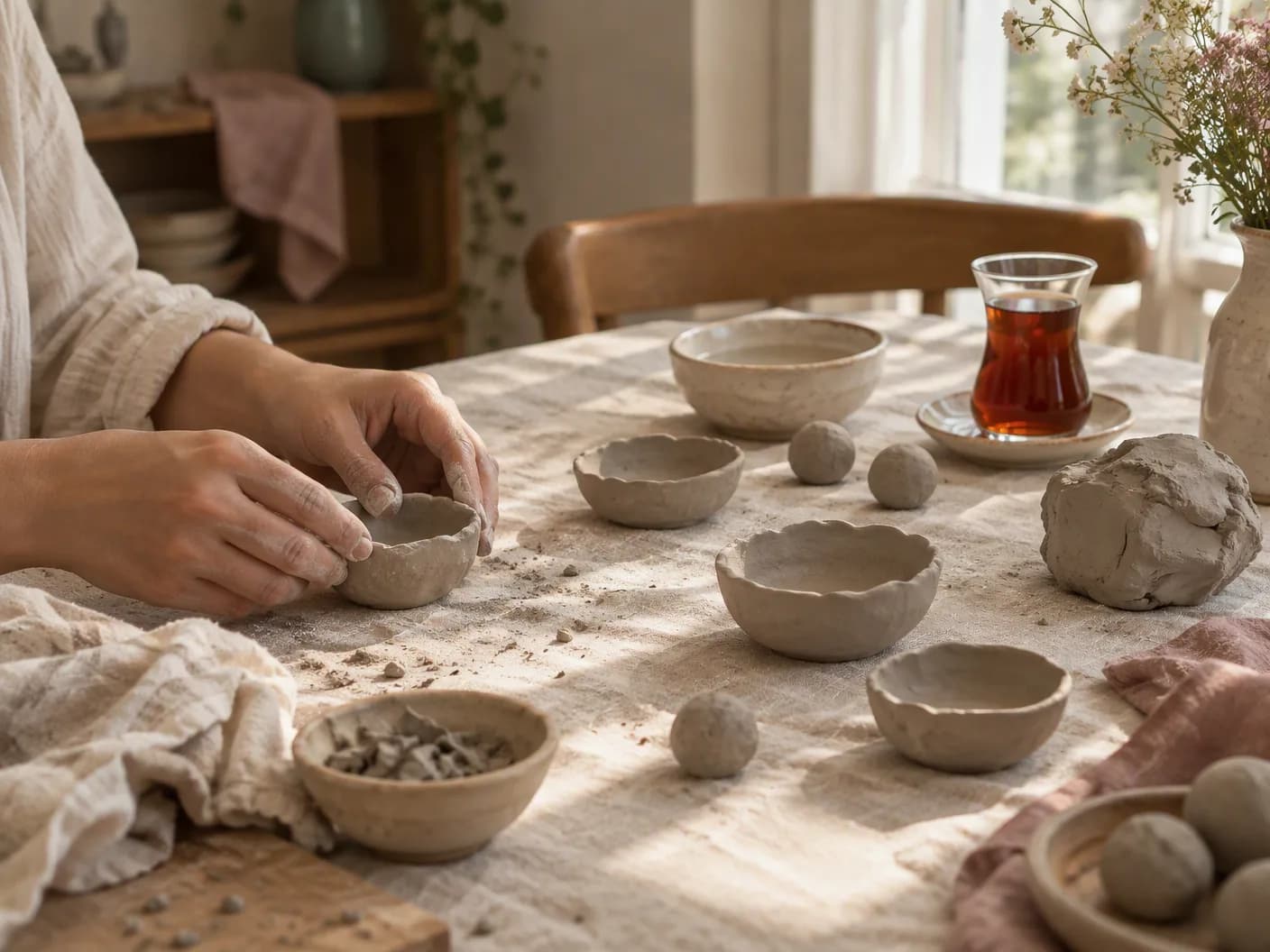
This isn’t only for babies. Clay has become one of the favourite calming crafts for adults too — pottery workshops, little bowls shaped at the kitchen table, jewellery dishes made from air-dry clay. Shaping a material with your hands slows the mind the way knitting or embroidery does. Clay is cool and soft and asks you to look at what your hands are doing. So you look.
In a house with four boys, clay is also one of the rare activities that gets everyone to the same table. The big ones make bowls, the small ones make balls, and someone always asks whether clay can be eaten. The result doesn’t matter. The table does.
Starting at home
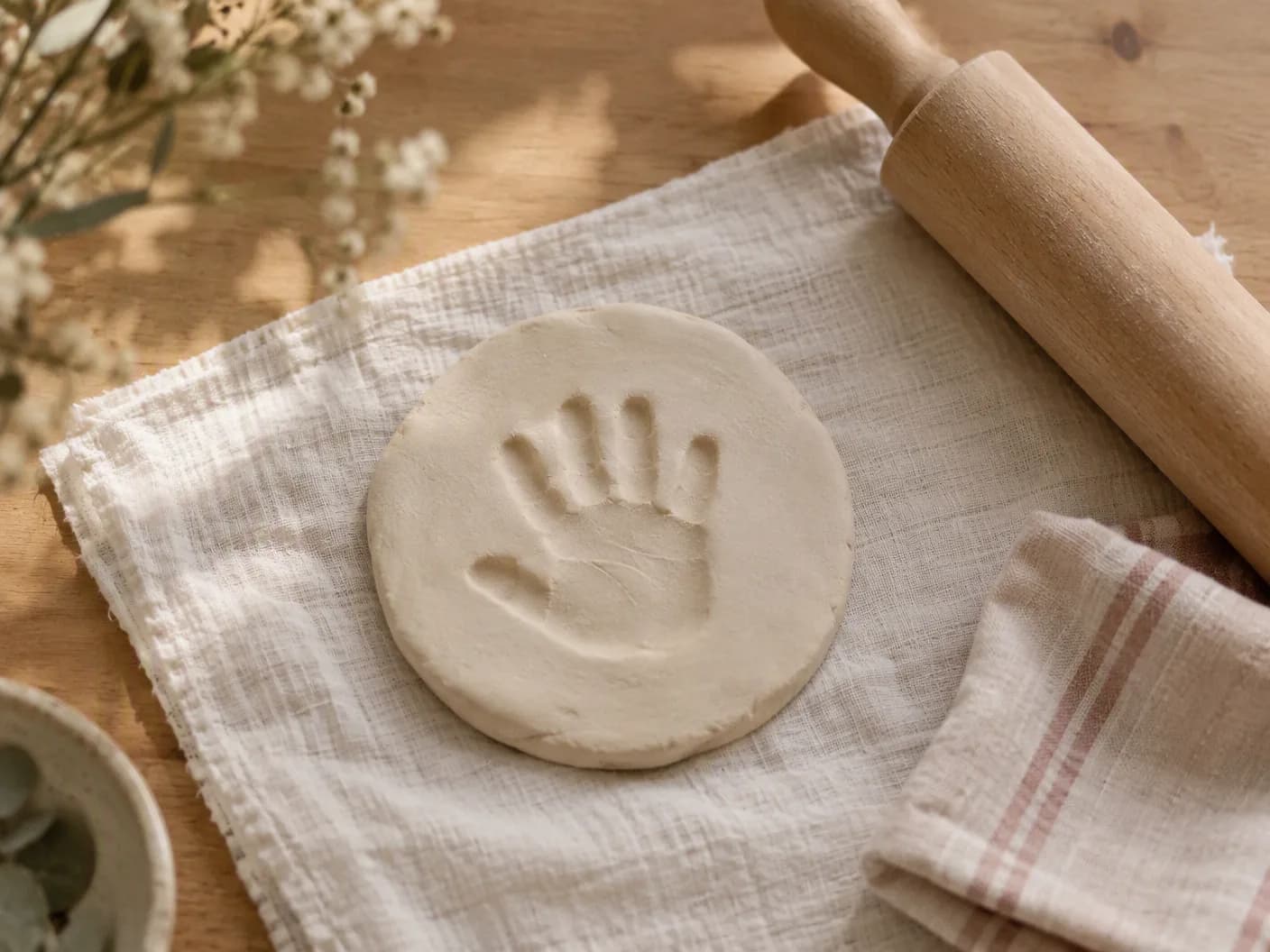
- Buy air-dry clay. No oven needed, sold in any stationery shop (kırtasiye), and there are versions made for baby skin. It’s the easiest material for a first handprint.
- Try it when the baby is drowsy. A fed, sleepy baby has an open palm. An awake baby makes a fist; nobody should attempt a cast with a crying newborn.
- Press slowly, lift quickly. Lay the palm on the clay, press gently, lift in one movement. If it doesn’t work the first time, knead the clay and go again — clay forgives.
- Write the date on the back. Once dry, scratch the name and date into the back with a toothpick. I promise you will not remember which print belongs to which child five years from now.
If it didn’t work at home
Sometimes the plaster won’t set, sometimes the baby won’t allow it, sometimes those first weeks simply aren’t the kind where you open a casting kit. That’s fine. There is another way to keep that little hand: the print you took — or a photograph — framed with their name and the date.
Frame that tiny hand
Their hand and foot at one week old, framed with their name and the date. They’ll never be that small again.
The print on the shelf
The other day Hamza reached up to the shelf and took the plaster down. He put his own palm over it. He didn’t say anything; he just looked. Then he put it back and wandered off. I was watching from the kitchen, and I understood once more why I kept it.
— Merve Doğan