The name on the door: the warmth of wood, and whose room it is
Hanging a baby’s name on their bedroom door is a small thing; but for everyone who opens that door, the room becomes someone’s in that instant. From the scrap of wood my father nailed above our door in Zonguldak to four boys and four doors: why wood is still the material that belongs on a door.
By Merve Çokal Doğan · · 3 min read
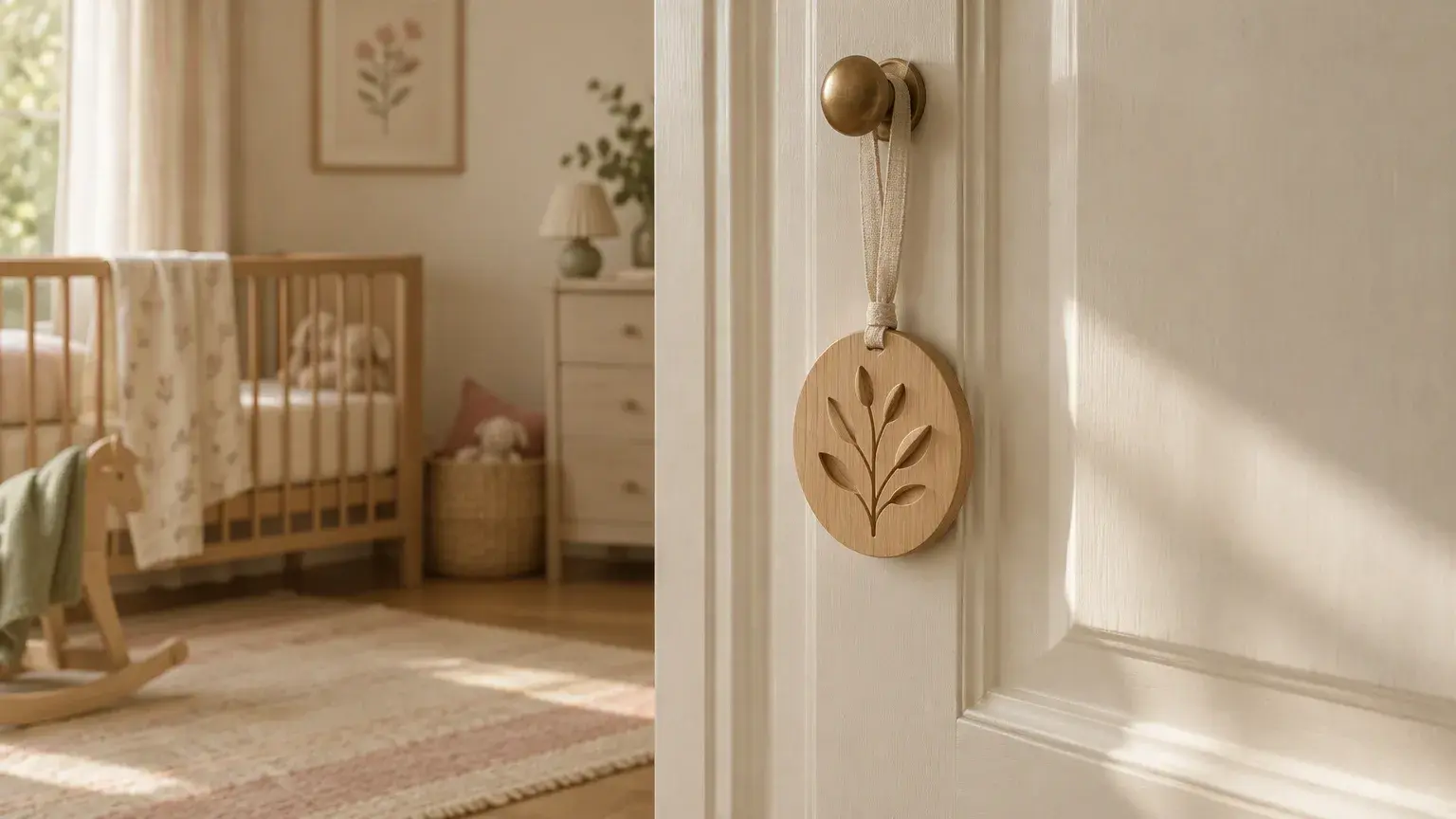
In our house in Zonguldak five sisters slept in two rooms, and nothing was written on either door. Then one summer my father brought a scrap of wood in from the garden, sanded it, and cut five small notches into it with a nail. Five sisters, five notches. He nailed it above the door. There was no name on it; but that day the room became “ours”.
Years later, hanging four names on four doors in my own home, I thought of that piece of wood every time.
Why the door?
When a baby’s name comes home it gets written on most things: the blanket, a box, a frame. The door comes last and stays longest. A door is the boundary of a room, and a name on that boundary says “from here inwards is theirs”. The baby doesn’t know. The one who knows is whoever opens the door: mother, father, visitor, and later a sibling.
Our first door was in Konya. Süleyman Taha’s room was really a corner of our bedroom; it had no door. So Abdullah hung a small piece of wood on the wardrobe. “If he can’t have a room, he can have a door,” he said. That piece is on Mehmet Emde’s door now — its fourth.
Why wood?
There are dozens of ways to put a name on a door: paper, fabric, paint. But wood is different, and I think the reason is simple: the door is wood. Wood on wood looks like part of the door — not stuck on, but grown there.
Then there is touch. At three, a child finds the name on the door with their hands, tracing the raised letters with a finger. Wood is warm, smooth, and it smells. Years later, taking the name down, it is the same: it has weight in your hand.
Wood has a flaw too: the colour turns, the edge wears, somewhere gets scratched. Not a flaw, really — a record of how many years that door opened and closed.
Four doors
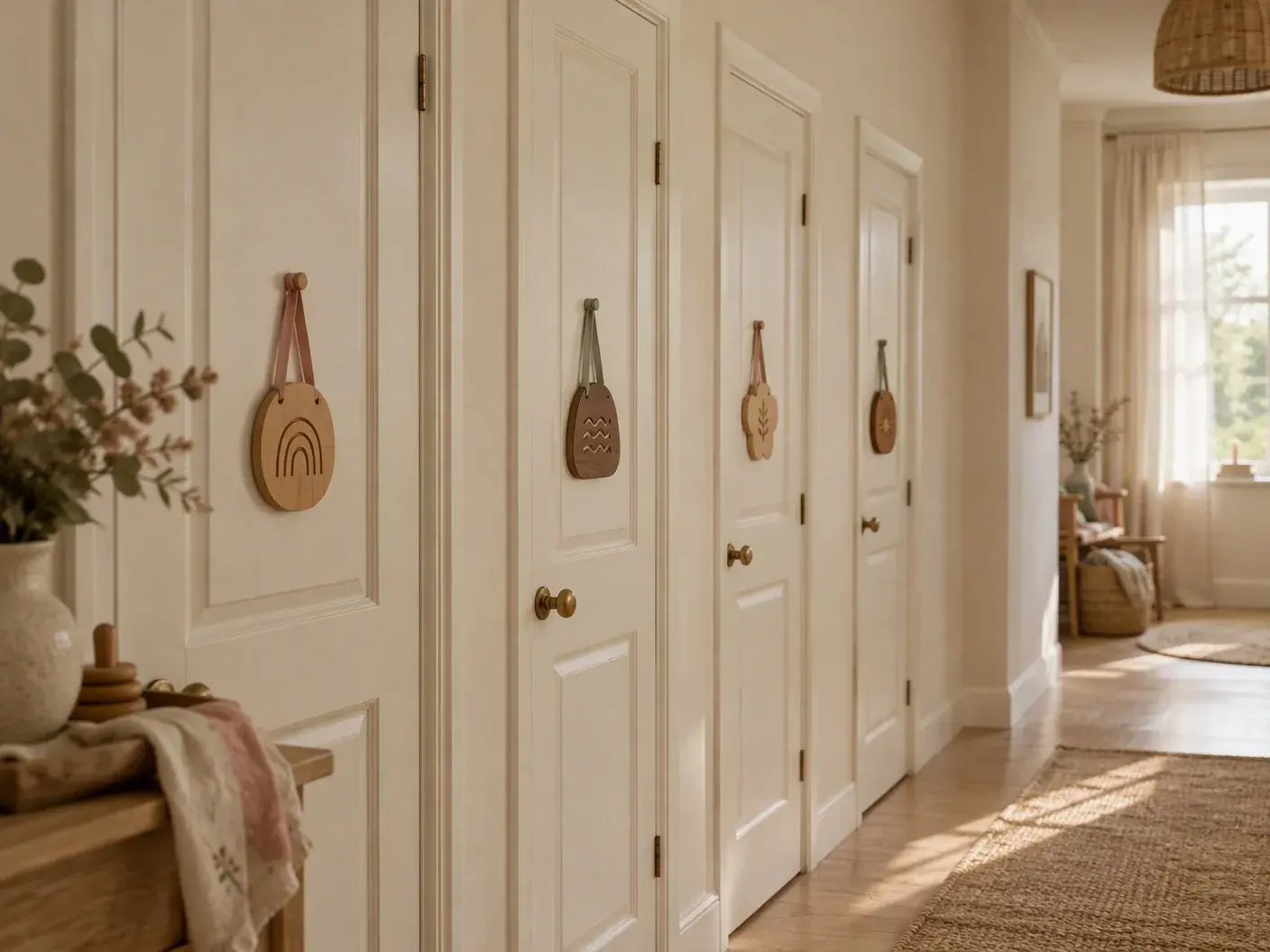
There are four doors in the house now, and a name on each. Süleyman Taha’s is the oldest and darkest; it came from Konya. Muammer Esat’s is a plain board from the tuhafiye with letters Abdullah burned into it. Hamza Bera’s was made by a carpenter the year we moved. Mehmet Emde’s, as I said, is inherited from the wardrobe.
All four different. All four wood. Walking down the hallway I look at four doors and see four separate years.
How to make one at home
- A piece of wood. From a carpenter or the nalbur (hardware shop): beech, oak or lime. Lime is soft and the best for a first attempt. Fifteen to twenty centimetres wide is enough.
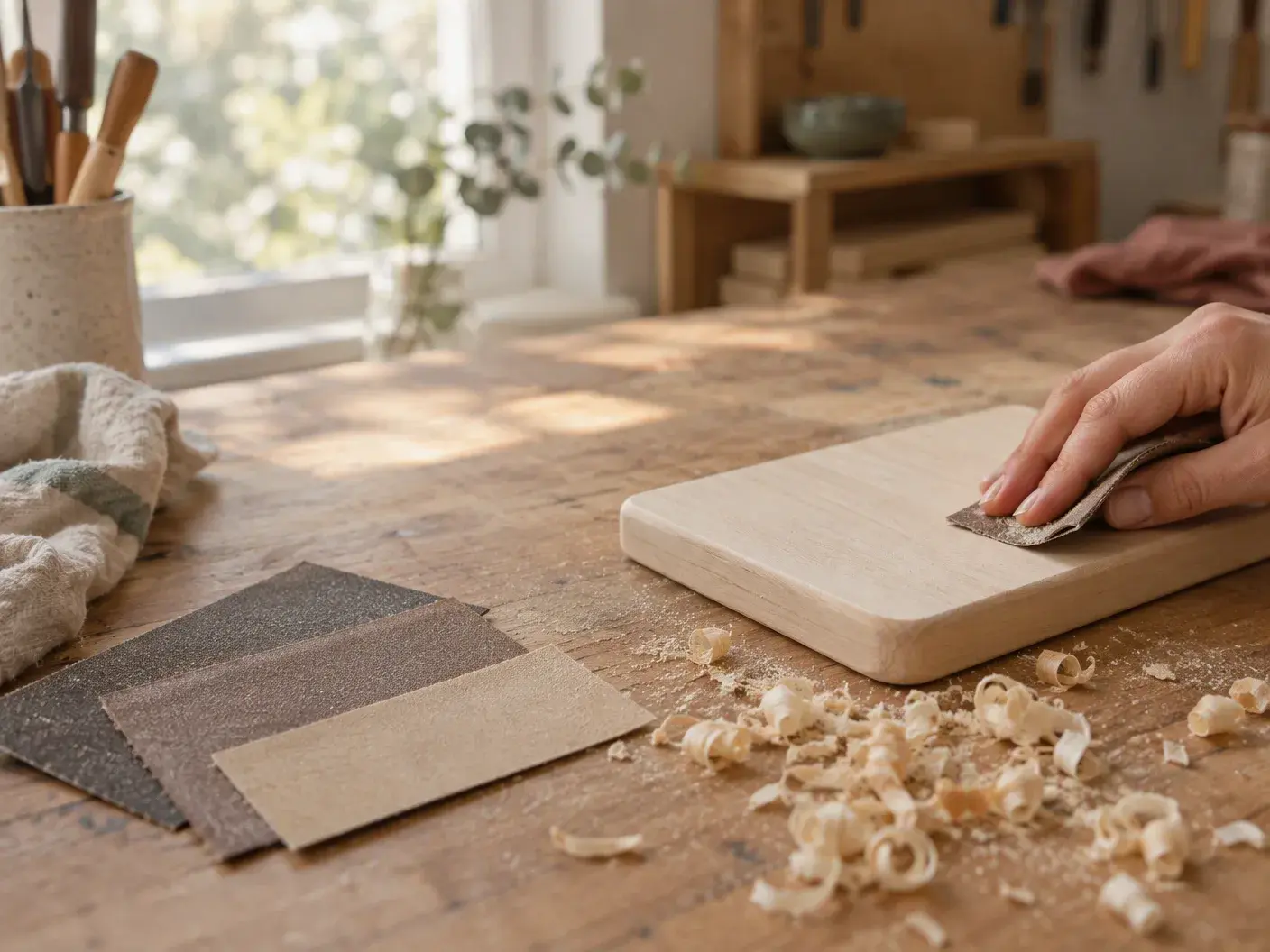
- Sandpaper, three grades. Coarse, medium, fine. Round the edges — a child’s hand will touch them.
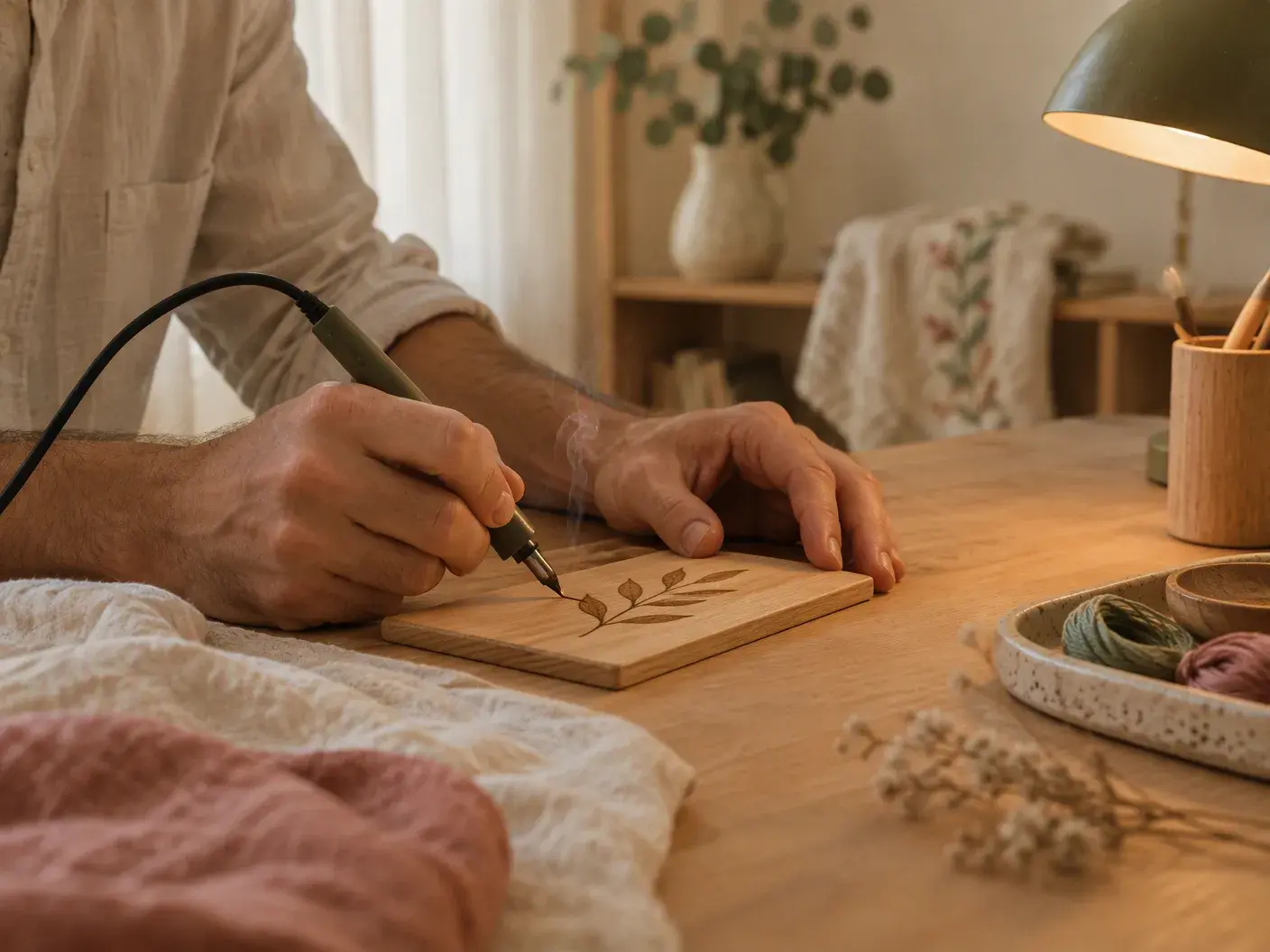
- Three ways to make the letters. Pencil them in and paint with acrylic (easiest); burn them with a pyrography pen (Abdullah’s way; ask for a pirografi kalemi); or carve them (leave that to a carpenter).
- Oil, not varnish. Linseed oil or a natural wood oil suitable for a nursery; let the wood keep its smell.
- Ribbon, not nails. Hang it on linen or cotton ribbon, so when the door changes the name moves with it. That is how our wardrobe piece has travelled four doors.
- Choose the height with the child. Once they walk, at a height where they can find their own name with their hands.
If there is no time for sanding
Not every home has sandpaper and a pyrography pen; ours wouldn’t either, if Abdullah weren’t the tinkering kind. A wooden name can still hang on the door.
A new friend for their room
The room you prepared has a new little friend: a plush bunny with their name on its chest.
Five notches
The piece of wood my father nailed up is still in Zonguldak, above that door. Five notches. No name. But five sisters still look up as they pass through. My sons’ doors carry names; years from now they will look up as they pass, too.
— Merve Çokal Doğan
Questions from readers
Mothers ask, we answer — questions under this story that others may have too.
Ask your own question
Ask the author anything about this story. We send a one-time code to your WhatsApp so real mothers, not bots, get answered — your number is never shown.
Keep reading
Woodwork
The smell of wood: a carpenter’s shop in Zonguldak and four boys’ first sandpaper
The best smell of my childhood was the sawdust drifting out of the carpenter’s shop at the top of our street. Years later I found it again at our kitchen table in İstanbul, in the hands of four boys holding sandpaper for the first time. Why wood is the most patient craft of all.
· 3 min read
Plaster & Clay
A plaster belly cast: keeping the shape of nine months
When a baby arrives, everything turns towards them; the belly that carried them for nine months survives only in photographs. A plaster belly cast keeps that shape in three dimensions — an old craft mothers have rediscovered. The story of the cast we made in an İstanbul kitchen one Saturday morning while I was expecting Hamza Bera.
· 4 min read
Mother & Baby
My nine-year-old son, our guest from Greece and Harry Potter
Zehra Topaç has taught English for many years. She recalls the moment her nine-year-old son fell into an excited conversation about Harry Potter with a guest from Greece — and why teaching a child a new language means opening a door onto the world.
· 2 min read